
苦荞黄酮和25-羟基维生素D减轻蛋鸡脂肪肝综合征:与盲肠微生物群重塑和脂质代谢稳态的关联
Tartary Buckwheat Flavonoids and 25-Hydroxyvitamin D Mitigate Fatty Liver Syndrome in Laying Hens: Association with Cecal Microbiota Remodeling and Lipid Metabolic Homeostasis.
作者信息
Li Dongdong, Chen Binlong, Zhang Yi, Huang Zengwen, Huang Zhiqiu, Chen Xi, Sun Caiyun, Qi Yunxia, Hu Yaodong, Chen Ting, Wang Silu
机构信息
College of Animal Science, Xichang University, Xichang 615013, China.
出版信息
Animals (Basel). 2025 Jul 27;15(15):2210. doi: 10.3390/ani15152210.
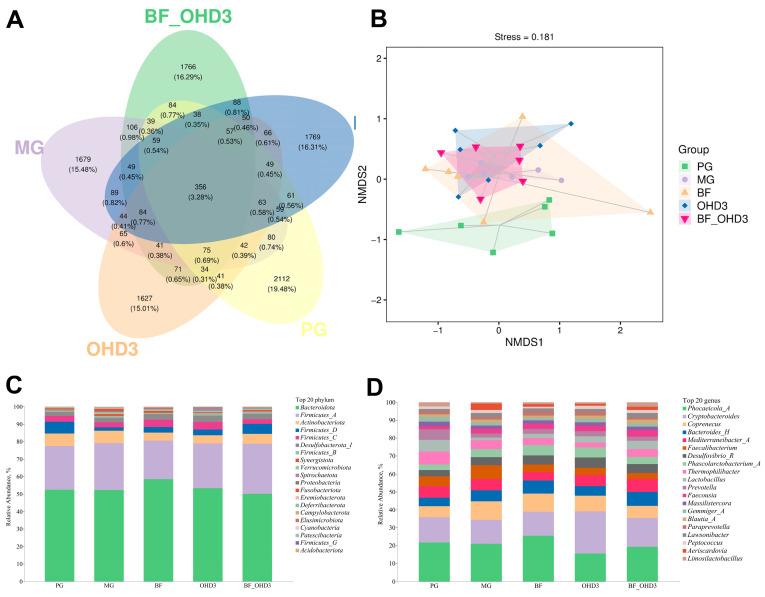
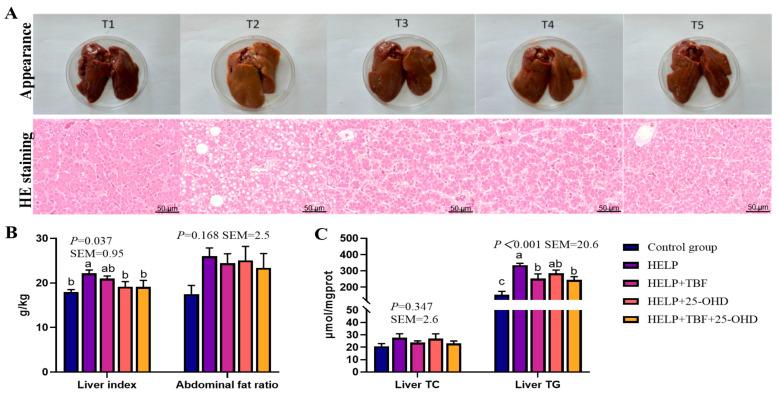
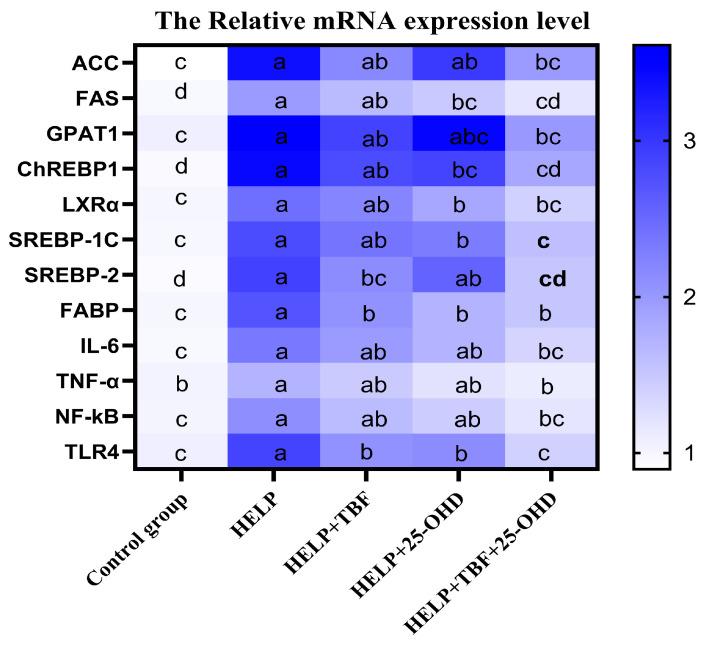
The objective of this experiment was to investigate the effects of tartary buckwheat flavonoids (TBF) and 25-hydroxyvitamin D (25-OHD) on fatty liver syndrome (FLS) in laying hens. A total of 450 35-wk-old Lohmann laying hens were selected and randomly divided into five groups, with six replicates per treatment and 15 laying hens in each replicate. The control group was fed a corn-soybean meal basal diet. The FLS group was fed a high- energy-low-protein (HELP) diet, and the other three experimental groups were fed HELP diets supplemented with 60 mg/kg TBF, 69 μg/kg 25-OHD, and 60 mg/kg TBF plus 69 μg/kg 25-OHD, respectively. The experiment lasted 8 weeks. The results demonstrated that feeding laying hens with a HELP diet led to a significant accumulation of fat in their livers, liver enlargement and yellowing, as well as a decline in liver antioxidant capacity and an aggravation of inflammation. TBF alone, 25-OHD alone, and their combination had no effect on the laying performance of laying hens fed with a HELP diet. However, 25-OHD significantly enhanced the albumin content, eggshell strength, and eggshell thickness of eggs ( < 0.05). Compared with the HELP group, TBF, 25-OHD, or their combination reduced serum LDL-C and TG ( < 0.05). The combined treatment further lowered serum NEFA and MDA, enhanced liver SOD activity ( < 0.05), and unlike TBF alone (which reduced hepatic TG) or 25-OHD alone (which decreased liver index), reduced both liver index and hepatic TG ( < 0.05). Liver gene expression analysis showed that combined TBF and 25-OHD significantly inhibited the expression of fat synthesis-related genes (ACC, FAS, GPAT1, ChREBP1, LXRα, SREBP-1C, SREBP-2, FABP) as well as inflammation-related genes (IL-6, TNF-α, NF-κB, TLR4) ( < 0.05). At the phylum level of the cecal microbiota, TBF increased the abundance of ( < 0.05), and combined TBF and 25-OHD tended to increase the abundance of . At the genus level, TBF increased the abundance of ( < 0.05). Furthermore, TBF, 25-OHD, or their combination reduced the abundance of ( < 0.05). These findings suggest that combined TBF and 25-OHD mitigates FLS in laying hens potentially through remodeling gut microbiota and maintaining lipid metabolic homeostasis.
本实验的目的是研究苦荞黄酮(TBF)和25-羟基维生素D(25-OHD)对蛋鸡脂肪肝综合征(FLS)的影响。选取450只35周龄的罗曼蛋鸡,随机分为五组,每组六个重复,每个重复15只蛋鸡。对照组饲喂玉米-豆粕基础日粮。FLS组饲喂高能低蛋白(HELP)日粮,其他三个实验组分别饲喂添加60 mg/kg TBF、69 μg/kg 25-OHD和60 mg/kg TBF加69 μg/kg 25-OHD的HELP日粮。实验持续8周。结果表明,给蛋鸡饲喂HELP日粮会导致肝脏脂肪大量堆积、肝脏肿大和发黄,以及肝脏抗氧化能力下降和炎症加剧。单独使用TBF、单独使用25-OHD及其组合对饲喂HELP日粮的蛋鸡产蛋性能没有影响。然而,25-OHD显著提高了鸡蛋的白蛋白含量、蛋壳强度和蛋壳厚度(P<0.05)。与HELP组相比,TBF、25-OHD或其组合降低了血清低密度脂蛋白胆固醇(LDL-C)和甘油三酯(TG)(P<0.05)。联合处理进一步降低了血清非酯化脂肪酸(NEFA)和丙二醛(MDA),提高了肝脏超氧化物歧化酶(SOD)活性(P<0.05),并且与单独使用TBF(降低肝脏TG)或单独使用25-OHD(降低肝脏指数)不同,联合处理降低了肝脏指数和肝脏TG(P<0.05)。肝脏基因表达分析表明,TBF和25-OHD联合显著抑制了脂肪合成相关基因(ACC、FAS、GPAT1、ChREBP1、LXRα、SREBP-1C、SREBP-2、FABP)以及炎症相关基因(IL-6、TNF-α、NF-κB, TLR4)的表达(P<0.05)。在盲肠微生物群的门水平上,TBF增加了某菌属的丰度(P<0.05),TBF和25-OHD联合有增加某菌属丰度的趋势。在属水平上,TBF增加了某菌属的丰度(P<0.05)。此外,TBF、25-OHD或其组合降低了某菌属的丰度(P<0.05)。这些发现表明,TBF和25-OHD联合可能通过重塑肠道微生物群和维持脂质代谢稳态来减轻蛋鸡的FLS。

 Zotero 插件