
环境基质中微塑料的提取方法:比较综述
Extraction Methods of Microplastics in Environmental Matrices: A Comparative Review.
作者信息
Larrea Garbiñe, Elustondo David, Durán Adrián
机构信息
BIOMA Institute for Biodiversity and the Environment, University of Navarra, Irunlarrea 1, 31008 Pamplona, Spain.
School of Sciences, Department of Chemistry, University of Navarra, Irunlarrea 1, 31008 Pamplona, Spain.
出版信息
Molecules. 2025 Jul 29;30(15):3178. doi: 10.3390/molecules30153178.
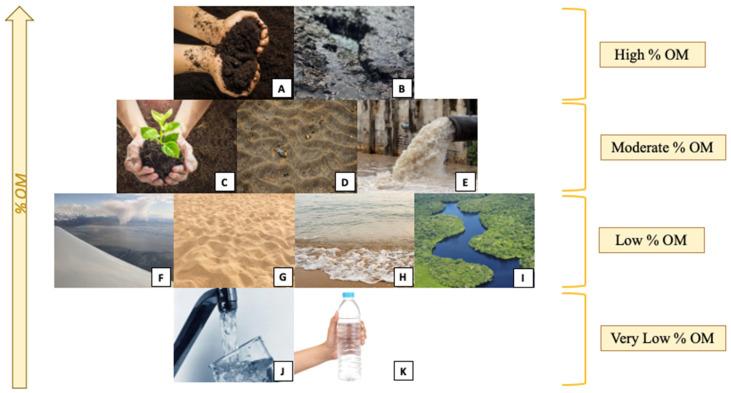
Due to the growing issue of plastic pollution over recent decades, it is essential to establish well-defined and appropriate methodologies for their extraction from diverse environmental samples. These particles can be found in complex agricultural matrices such as compost, sediments, agricultural soils, sludge, and wastewater, as well as in less complex samples like tap and bottled water. The general steps of MPs extraction typically include drying the sample, sieving to remove larger particles, removal of organic matter, density separation to isolate polymers, filtration using meshes of various sizes, oven drying of the filters, and polymer identification. Complex matrices with high organic matter content require specific removal steps. Most studies employ an initial drying process with temperature control to prevent polymer damage. For removal of organic matter, 30% HO is the most commonly used reagent, and for density separation, saturated NaCl and ZnCl solutions are typically applied for low- and high-density polymers, respectively. Finally, filtration is carried out using meshes selected according to the identification technique. This review analyzes the advantages and limitations of the different methodologies to extract microplastics from different sources, aiming to provide in-depth insight for researchers dedicated to the study of environmental samples.
由于近几十年来塑料污染问题日益严重,建立明确且合适的方法从各种环境样品中提取塑料至关重要。这些颗粒可存在于复杂的农业基质中,如堆肥、沉积物、农业土壤、污泥和废水中,也存在于不太复杂的样品中,如自来水和瓶装水。微塑料提取的一般步骤通常包括干燥样品、筛分以去除较大颗粒、去除有机物、密度分离以分离聚合物、使用不同尺寸的筛网过滤、烘箱干燥过滤器以及聚合物鉴定。含有高有机物含量的复杂基质需要特定的去除步骤。大多数研究采用带温度控制的初始干燥过程以防止聚合物受损。对于去除有机物,30%的过氧化氢是最常用的试剂,对于密度分离,饱和氯化钠溶液和氯化锌溶液通常分别用于低密度和高密度聚合物。最后,根据鉴定技术选择筛网进行过滤。本综述分析了从不同来源提取微塑料的不同方法的优缺点,旨在为致力于环境样品研究的研究人员提供深入见解。

 Zotero 插件