
某物种的化学成分与生物活性:对潜在抗炎机制的计算机模拟见解综述
Chemical Composition and Biological Activities of sp.: A Review with In Silico Insights into Potential Anti-Inflammatory Mechanism.
作者信息
Celi Diana, Jimenes-Vargas Karina, Machado António, Álvarez-Suárez José Miguel, Tejera Eduardo
机构信息
Facultad de Ingeniería y Ciencias Aplicadas, Universidad de Las Américas (UDLA), Quito 170504, Ecuador.
Bio-Cheminformatics Research Group, Universidad de Las Américas (UDLA), Quito 170504, Ecuador.
出版信息
Molecules. 2025 Jul 30;30(15):3198. doi: 10.3390/molecules30153198.
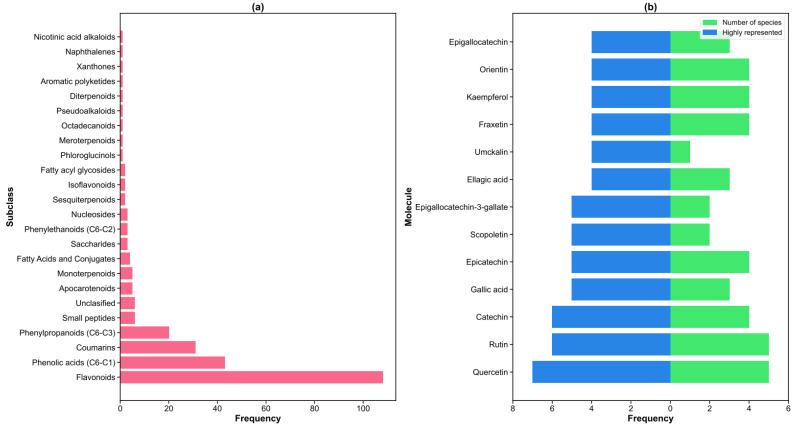
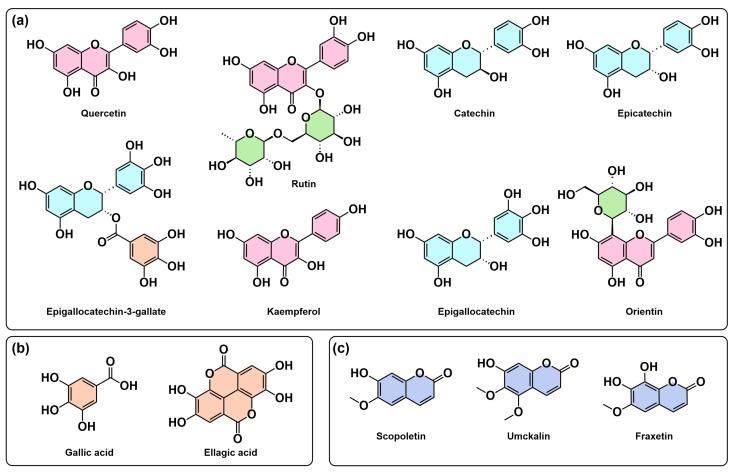
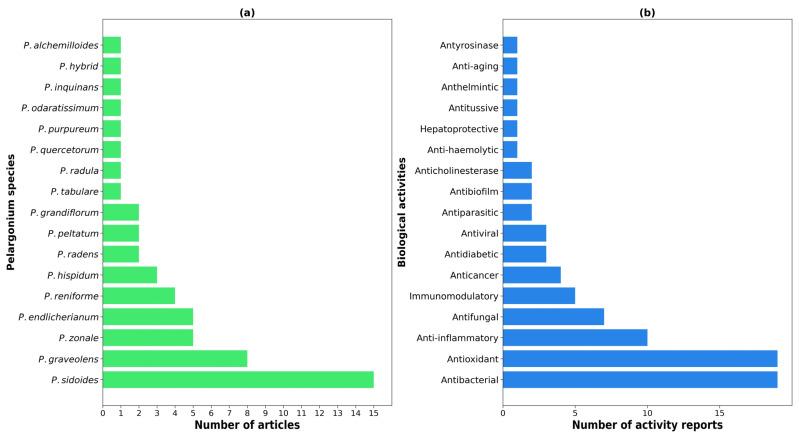
The genus, encompassing over 280 species, remains markedly underexplored despite extensive traditional use for respiratory, gastrointestinal, and dermatological disorders. This review of aqueous, alcoholic, and hydroalcoholic extracts reveals critical research gaps: only 10 species have undergone chemical characterization, while 17 have been evaluated for biological activities. Phytochemical analysis identified 252 unique molecules across all studies, with flavonoids emerging as the predominant class (n = 108). Glycosylated derivatives demonstrated superior bioactivity profiles compared to non-glycosylated analogs. Phenolic acids (n = 43) and coumarins (n = 31) represented additional major classes. Experimental studies primarily documented antioxidant, antibacterial, and anti-inflammatory effects, with emerging evidence for antidiabetic, anticancer, and hepatoprotective activities. However, methodological heterogeneity across studies limits comparative analysis and comprehensive understanding. In silico target prediction analysis was performed on 197 high-confidence molecular structures. Glycosylated flavonols, anthocyanidins, flavones, and coumarins showed strong predicted interactions with key inflammatory targets (ALOX15, ALOX5, PTGER4, and NOS2) and metabolic regulators (GSK3A and PI4KB), providing mechanistic support for observed therapeutic effects and suggesting potential applications in chronic inflammatory and metabolic diseases. These findings underscore the substantial therapeutic potential of underexplored species and advocate for systematic research employing untargeted metabolomics, standardized bioassays, and compound-specific mechanistic validation to fully unlock the pharmacological potential of this diverse genus.
该属包含280多种植物,尽管在治疗呼吸道、胃肠道和皮肤病方面有广泛的传统应用,但仍明显未得到充分研究。对水提取物、醇提取物和水醇提取物的综述揭示了关键的研究空白:只有10种植物进行了化学表征,而17种植物进行了生物活性评估。植物化学分析在所有研究中鉴定出252种独特分子,其中黄酮类化合物是主要类别(n = 108)。糖基化衍生物的生物活性谱优于非糖基化类似物。酚酸(n = 43)和香豆素(n = 31)是另外的主要类别。实验研究主要记录了抗氧化、抗菌和抗炎作用,并有新证据表明其具有抗糖尿病、抗癌和保肝活性。然而,各研究之间的方法异质性限制了比较分析和全面理解。对197个高可信度分子结构进行了计算机靶点预测分析。糖基化黄酮醇、花青素、黄酮和香豆素与关键炎症靶点(ALOX15、ALOX5、PTGER4和NOS2)和代谢调节因子(GSK3A和PI4KB)表现出强烈的预测相互作用,为观察到的治疗效果提供了机制支持,并提示其在慢性炎症和代谢疾病中的潜在应用。这些发现强调了未充分研究的物种的巨大治疗潜力,并主张采用非靶向代谢组学、标准化生物测定和化合物特异性机制验证进行系统研究,以充分释放这一多样属的药理潜力。


 Zotero 插件