
探索白花蛇舌草和半枝莲对头颈鳞状细胞癌的抗肿瘤机制:天然抗癌疗法的研究
Exploring the Antitumor Mechanisms of Bai-Hua-She-She-Cao and Ban-Zhi-Lian against Head and Neck Squamous Cell Carcinoma: A Study on Natural Anticancer Therapeutics.
作者信息
Zhang Yuchen, Pan Yuxing, Wang Kunpeng
机构信息
Department of Stomatology,Tianjin Union Medical Center, The First Affiliated Hospital of Nankai University, Tianjin 300121, China.
The School and Hospital of Stomatology,Tianjin Medical University, Tianjin 300070, China.
出版信息
ACS Omega. 2025 Jul 31;10(31):34528-34538. doi: 10.1021/acsomega.5c03068. eCollection 2025 Aug 12.
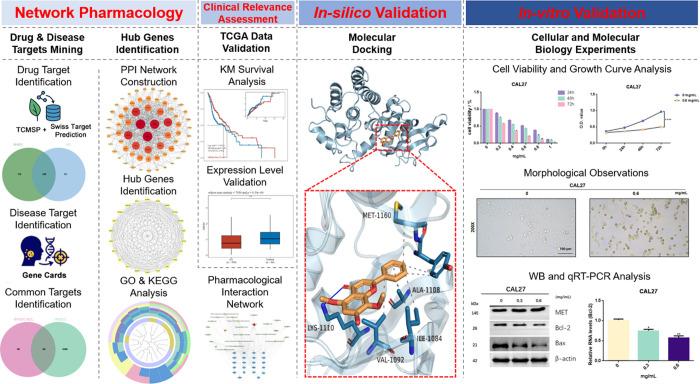
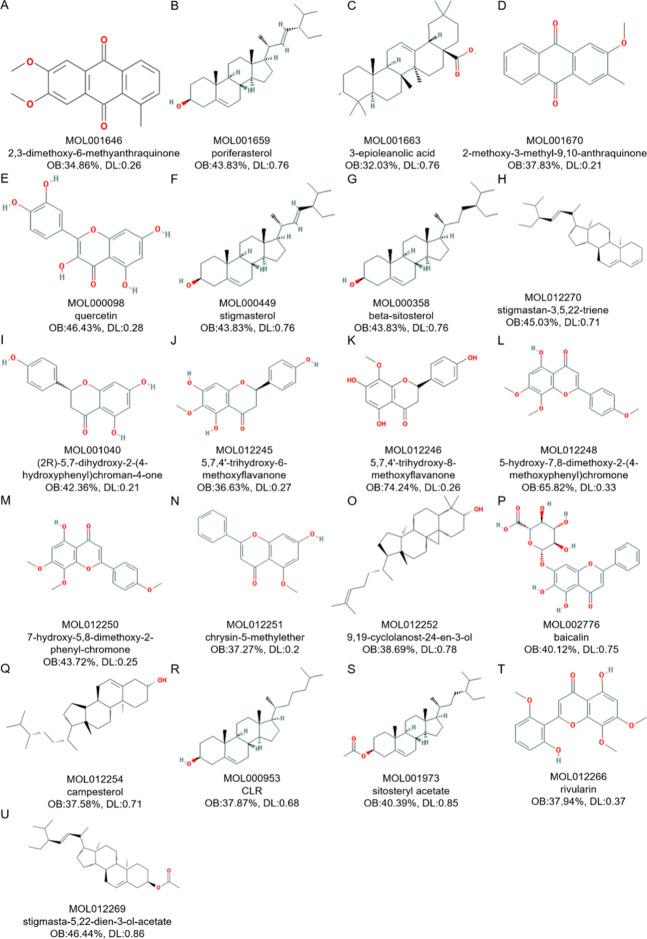
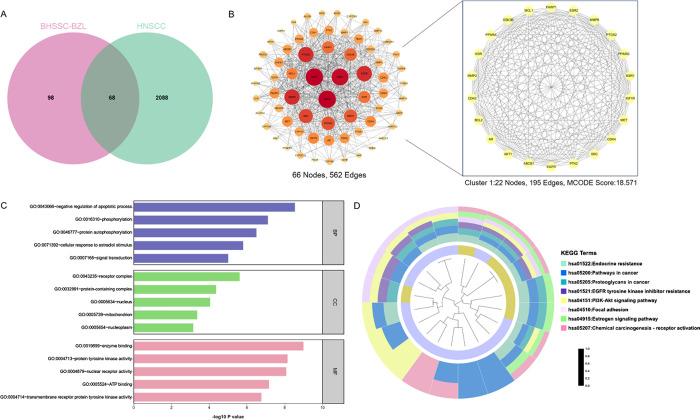
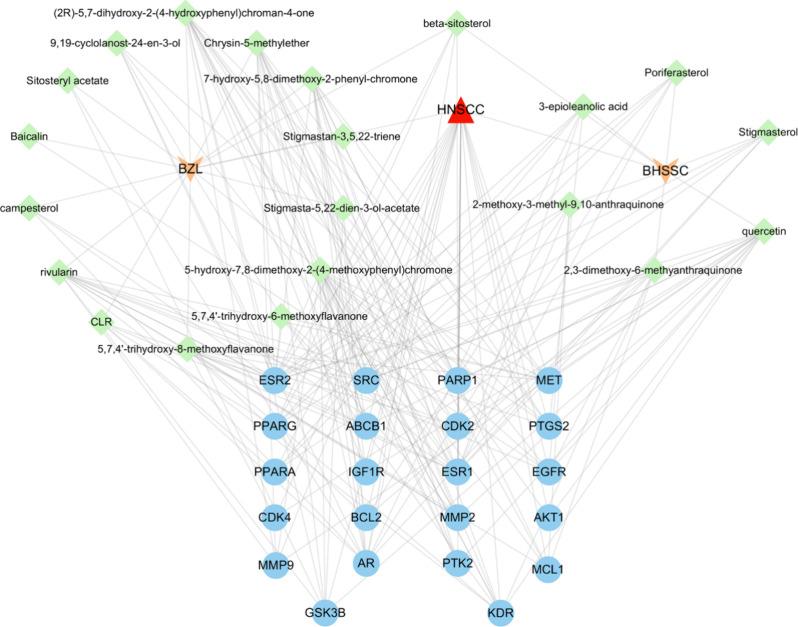
Head and neck squamous cell carcinoma (HNSCC) is a highly lethal cancer with a poor prognosis. This research assessed the in vitro effectiveness and molecular mechanisms of Bai-Hua-She-She-Cao (BHSSC) and Ban-Zhi-Lian (BZL), a traditional Chinese medicinal herb pair against HNSCC. Bioactive compounds and targets of BHSSC-BZL were identified using the Traditional Chinese Medicine Systems Pharmacology (TCMSP) and Swiss Target Prediction databases and cross-referenced with HNSCC-related targets from GeneCards and MalaCards. Network topology analysis identified hub genes, and The Cancer Genome Atlas (TCGA) data determined the protective and risk factors. Molecular docking verified target specificity, and in vitro experiments assessed BHSSC-BZL effects on CAL27 cell proliferation, apoptosis, and signaling pathways, with validation in SCC-25 cells. The study identified 21 bioactive compounds and 166 potential anti-HNSCC targets, highlighting 22 hub genes associated with cancer pathways, including phosphatidylinositol3-kinase/protein kinase b (PI3K/AKT) signaling and apoptosis regulation. Based on the TCGA data, ATP binding cassette transporter 1 (ABCB1) was identified as a protective factor, while the mesenchymal-epithelial transition factor (MET) was confirmed as a risk factor in HNSCC. Molecular docking analysis revealed that the MET protein could form stable complexes with seven candidate compounds derived from BHSSC-BZL. In vitro experiments further demonstrated that BHSSC-BZL significantly inhibited CAL27 and SCC-25 cell proliferation. BHSSC-BZL demonstrates anti-HNSCC potential by downregulating MET and Bcl-2, upregulating Bax and cleaved-Caspase-9, and inhibiting the PI3K/AKT/mTOR signaling. BHSSC-BZL demonstrates anti-HNSCC activity via a multicomponent, multitarget, and multipathway mechanism, highlighting its potential as a natural antitumor agent.
头颈部鳞状细胞癌(HNSCC)是一种预后较差的高致死性癌症。本研究评估了中药白花蛇舌草(BHSSC)和半枝莲(BZL)对HNSCC的体外有效性及分子机制。利用中药系统药理学(TCMSP)和瑞士靶点预测数据库鉴定了BHSSC - BZL的生物活性化合物和靶点,并与来自GeneCards和MalaCards的HNSCC相关靶点进行交叉引用。网络拓扑分析确定了枢纽基因,癌症基因组图谱(TCGA)数据确定了保护因素和风险因素。分子对接验证了靶点特异性,体外实验评估了BHSSC - BZL对CAL27细胞增殖、凋亡及信号通路的影响,并在SCC - 25细胞中进行了验证。该研究鉴定出21种生物活性化合物和166个潜在的抗HNSCC靶点,突出了22个与癌症通路相关的枢纽基因,包括磷脂酰肌醇3激酶/蛋白激酶b(PI3K/AKT)信号传导和凋亡调节。基于TCGA数据,ATP结合盒转运体1(ABCB1)被鉴定为保护因素,而间充质上皮转化因子(MET)被确认为HNSCC中的风险因素。分子对接分析表明,MET蛋白可与BHSSC - BZL衍生的7种候选化合物形成稳定复合物。体外实验进一步证明,BHSSC - BZL显著抑制CAL27和SCC - 25细胞增殖。BHSSC - BZL通过下调MET和Bcl - 2、上调Bax和裂解的Caspase - 9以及抑制PI3K/AKT/mTOR信号传导来展现抗HNSCC潜力。BHSSC - BZL通过多组分、多靶点和多途径机制展现抗HNSCC活性,突出了其作为天然抗肿瘤药物的潜力。





 Zotero 插件