
通过生命必需的8项指标优化心血管健康可降低妊娠期糖尿病风险:一项全国性队列研究中血小板活性和炎症途径的中介作用
Cardiovascular Health Optimization Through Life's Essential 8 Scores Reduces Gestational Diabetes Risk: Mediation by Platelet Activity and Inflammatory Pathways in a Nationwide Cohort.
作者信息
Li Xuemei, Yang Qimei, Zhang Xia, He Lidan, Chen Chen, Wu Jianbo
机构信息
Department of Obstetrics and Gynecology, The First Affiliated Hospital of Fujian Medical University, Fuzhou, People's Republic of China.
Department of Obstetrics and Gynecology, National Regional Medical Center, Binhai Campus of The First Affiliated Hospital, Fujian Medical University, Fuzhou, People's Republic of China.
出版信息
Int J Womens Health. 2025 Aug 11;17:2511-2522. doi: 10.2147/IJWH.S536082. eCollection 2025.
OBJECTIVE
This study explores the relationship between Life's Essential 8 (LE8) score and gestational diabetes mellitus (GDM), subsequent diabetes, and mortality, and analyzes the mediating effects of platelet-related indicators and inflammatory markers.
METHODS
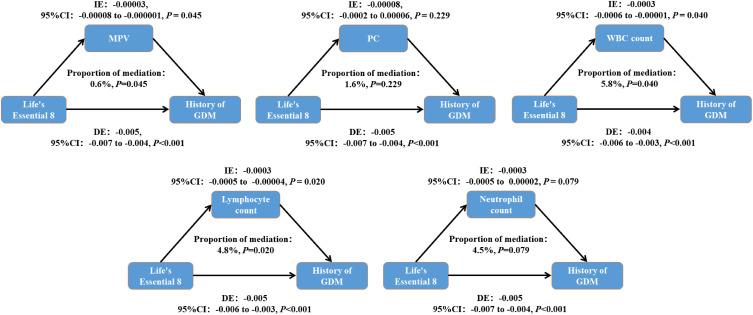
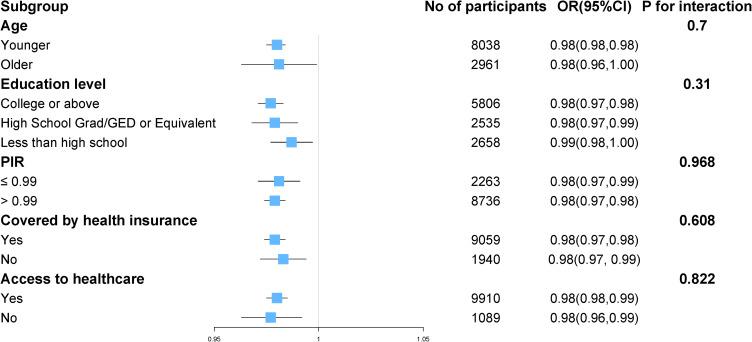
The study utilized cohort, data from the Nutrition Examination Survey (NHANES), applying logistic regression models and mediation effect analysis to assess the associations between LE8 score and GDM. Potential confounding factors such as age, race, education, PIR, health insurance, and access to healthcare were adjusted to ensure the reliability of the results. Linear mediation analysis, conducted using the "mediation" package with 1000 bootstrap replications, quantified the mediating roles of mean platelet volume (MPV), white blood cell (WBC), and lymphocyte (LYM) counts.
RESULTS
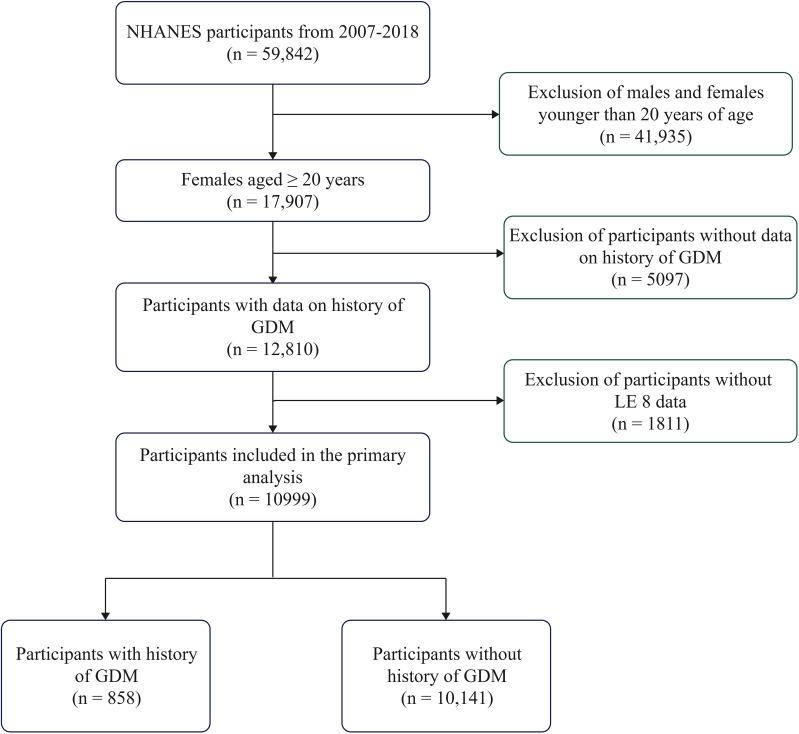
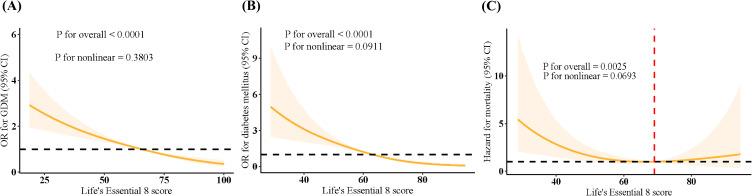
We analyzed data from the NHANES from 2007 to 2018, involving 59,842 participants. Among them, 858 had a history of GDM. Each unit increase in LE8 score reduced GDM odds by 3%. High Cardiovascular health (CVH) individuals exhibited 70% lower GDM risk versus low CVH. WBC (5.8%), LYM (4.8%), and MPV (0.6%) partially mediated LE8-GDM associations, highlighting inflammation's mechanistic role. High LE8 scores predicted 94% lower diabetes risk post-GDM. Mortality analysis revealed a U-shaped association between LE8 scores and mortality risk, with borderline evidence of nonlinearity (P = 0.069).
CONCLUSION
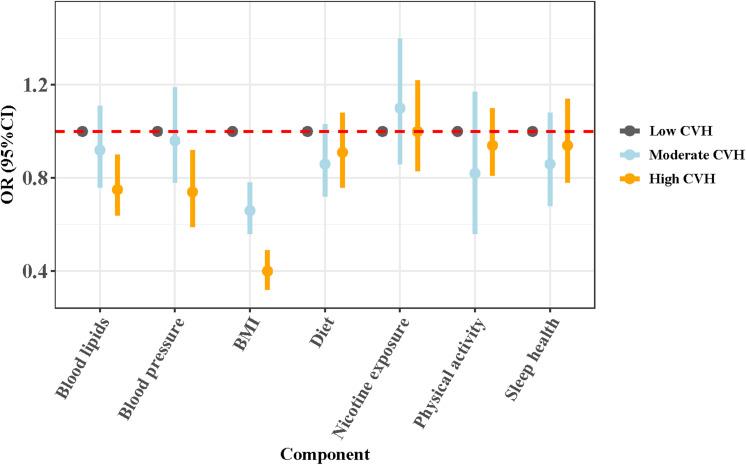
As the first study to integrate CVH metrics with platelet/inflammatory biomarkers in GDM pathogenesis, our findings demonstrate that optimizing LE8 scores, particularly through BMI, blood pressure, and lipid control, significantly mitigates GDM risk and complications. Integrating LE8 assessment at first prenatal visit may enable early risk stratification and personalized interventions.
目的
本研究探讨生命基本八项(LE8)评分与妊娠期糖尿病(GDM)、后续糖尿病及死亡率之间的关系,并分析血小板相关指标和炎症标志物的中介作用。
方法
本研究利用营养检查调查(NHANES)的队列数据,应用逻辑回归模型和中介效应分析来评估LE8评分与GDM之间的关联。对年龄、种族、教育程度、贫困收入比、医疗保险和医疗保健可及性等潜在混杂因素进行了调整,以确保结果的可靠性。使用“mediation”软件包进行1000次自抽样重复的线性中介分析,量化平均血小板体积(MPV)、白细胞(WBC)和淋巴细胞(LYM)计数的中介作用。
结果
我们分析了2007年至2018年NHANES的数据,涉及59842名参与者。其中,858人有GDM病史。LE8评分每增加一个单位,GDM发生几率降低3%。心血管健康(CVH)状况高的个体患GDM的风险比CVH状况低的个体低70%。WBC(5.8%)、LYM(4.8%)和MPV(0.6%)部分介导了LE8与GDM的关联,突出了炎症的机制作用。高LE8评分预测GDM后糖尿病风险降低94%。死亡率分析显示LE8评分与死亡风险之间呈U形关联,有非线性的临界证据(P = 0.069)。
结论
作为第一项将CVH指标与GDM发病机制中的血小板/炎症生物标志物相结合的研究,我们的研究结果表明,优化LE8评分,特别是通过控制体重指数、血压和血脂,可显著降低GDM风险和并发症。在首次产前检查时纳入LE8评估可能有助于早期风险分层和个性化干预。
 Zotero 插件