
移动遗传元件和生物合成基因簇在嗜酸古菌适应极端污染环境中的作用。
Roles of mobile genetic elements and biosynthetic gene clusters in environmental adaptation of acidophilic archaeon to extreme polluted environments.
作者信息
Li Yiran, Ma Liyuan, Huang Shanshan, Chen Shiqi, Begum Shadab, Ibrahim Nazidi, Liang Yili, Liu Xueduan
机构信息
School of Minerals Processing and Bioengineering, Central South University, Changsha, China.
Key Laboratory of Biohydrometallurgy, Ministry of Education, Changsha, China.
出版信息
Front Microbiol. 2025 Jul 31;16:1654373. doi: 10.3389/fmicb.2025.1654373. eCollection 2025.
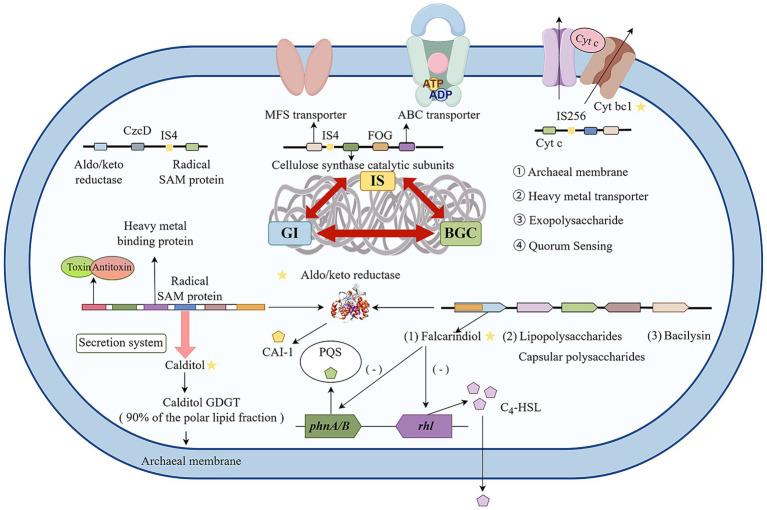
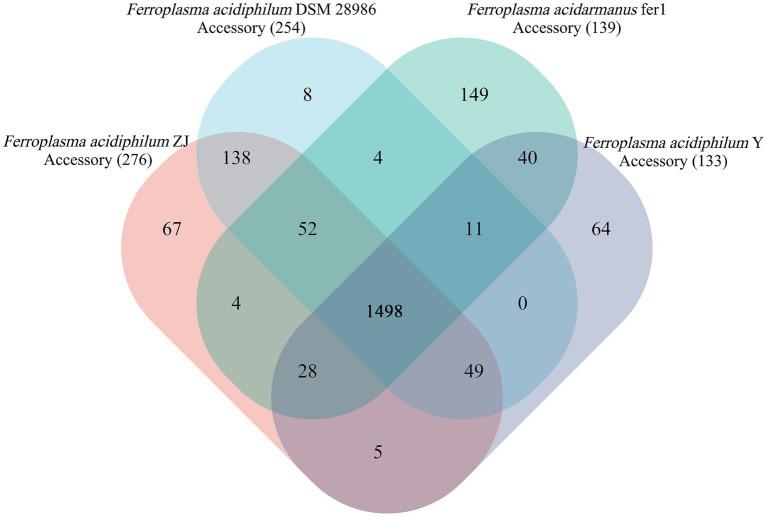
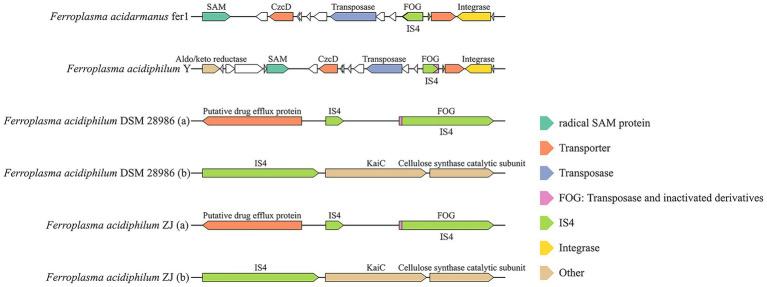
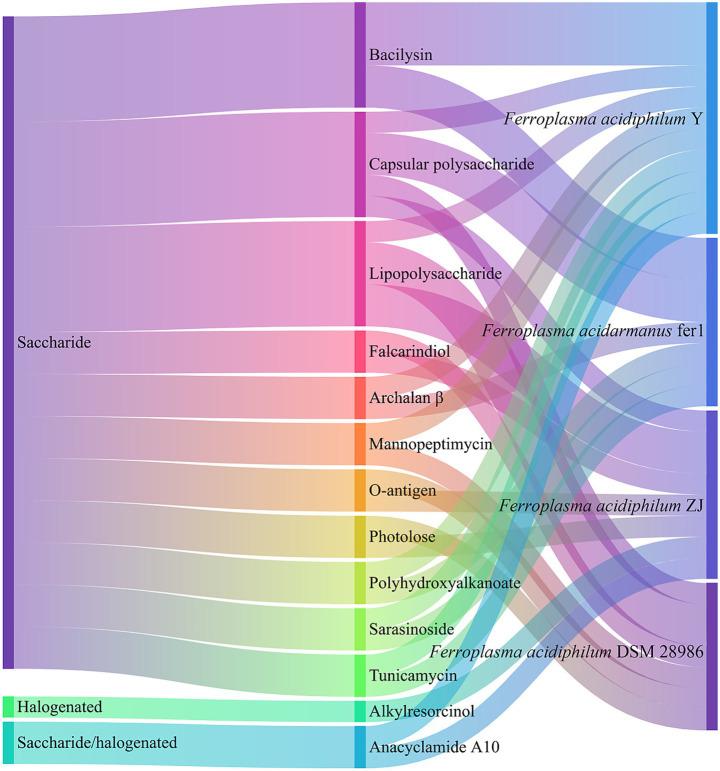
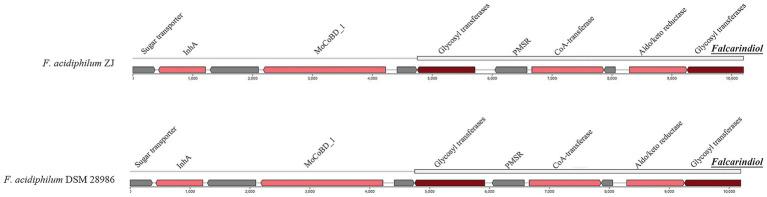
Acid mine drainage (AMD), characterized by high concentrations of heavy metals and strong acidity, presents a significant challenge in environmental remediation. The acidophilic archaeon facilitates soluble electron shuttles secreting and iron precipitate formation to immobilize heavy metals and demonstrating significant remediation capabilities in microbial consortia. However, its environmental adaptation mechanisms in highly polluted environments during remediation remain unclear. Biosynthetic gene clusters (BGCs), which encode specialized metabolites with ecological roles, and mobile genetic elements (MGEs), known to mediate genomic function through gene disruption, rearrangement, and regulatory interference, represent crucial evolutionary means for environmental adaptation. In this study, ZJ was screened from the traditional AMD of the Zijinshan copper mine, China. Then, it was sequenced, annotated and compared to three other sequenced strains focusing on the distribution and function of genes concerning MGEs and BGCs. Genome-wide analysis indicated that MGEs, especially IS4 family insertion sequences (ISs) as well as genomic islands (GIs), were located close to functional regions, such as those related to heavy metal translocation, structural stability of cells, and the formation of archaeal ether-linked membranes. Further analysis showed strains contained over 10 BGCs, with predicted functions spanning antibiotics, exopolysaccharide (EPS), and quorum sensing (QS). The employed specialized MGEs and BGCs as key environmental adaptation mechanisms. This study provides a genetic framework for understanding the survival strategies of extremophiles in contaminated environments and explores the potential role of archaeal secondary metabolism (SM) in enhancing microbial processes for sustainable AMD bioremediation, by contributing to the detoxification and stabilization of heavy metals typically found in such environments.
酸性矿山排水(AMD)以高浓度重金属和强酸性为特征,在环境修复中构成重大挑战。嗜酸古菌促进可溶性电子穿梭体的分泌和铁沉淀的形成,以固定重金属,并在微生物群落中展现出显著的修复能力。然而,其在修复过程中于高污染环境下的环境适应机制仍不明确。生物合成基因簇(BGCs)编码具有生态作用的特殊代谢产物,而移动遗传元件(MGEs)则通过基因破坏、重排和调控干扰来介导基因组功能,它们是环境适应的关键进化手段。在本研究中,从中国紫金山铜矿的传统AMD中筛选出ZJ。然后,对其进行测序、注释,并与其他三株已测序菌株进行比较,重点关注与MGEs和BGCs相关基因的分布和功能。全基因组分析表明,MGEs,尤其是IS4家族插入序列(ISs)以及基因组岛(GIs),位于靠近功能区域的位置,如与重金属转运、细胞结构稳定性以及古菌醚键连接膜形成相关的区域。进一步分析显示,这些菌株含有超过10个BGCs,其预测功能涵盖抗生素、胞外多糖(EPS)和群体感应(QS)。该菌株采用特殊的MGEs和BGCs作为关键的环境适应机制。本研究提供了一个遗传框架,用于理解极端微生物在污染环境中的生存策略,并通过促进此类环境中常见重金属的解毒和稳定化,探索古菌次级代谢(SM)在增强微生物过程以实现可持续AMD生物修复中的潜在作用。


 Zotero 插件