
糖尿病肾病中的Notch信号传导:最新进展
Notch signaling in diabetic kidney disease: recent progress.
作者信息
Wang Zhi-Hui, Tu Wei, Long Ya-Ni, Li Peng-Fei, He Kai-Ying, Wu Jing
机构信息
First Clinical Medical College, Fujian University of Traditional Chinese Medicine, Fujian, Fuzhou, China.
Department of Dermatology, The Second Affiliated Hospital of Chongqing Medical University, Chongqing, China.
出版信息
Front Endocrinol (Lausanne). 2025 Jul 31;16:1537769. doi: 10.3389/fendo.2025.1537769. eCollection 2025.
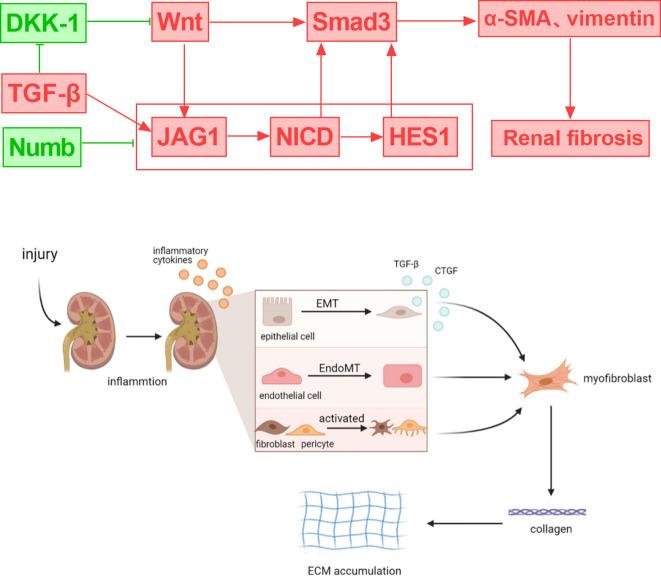
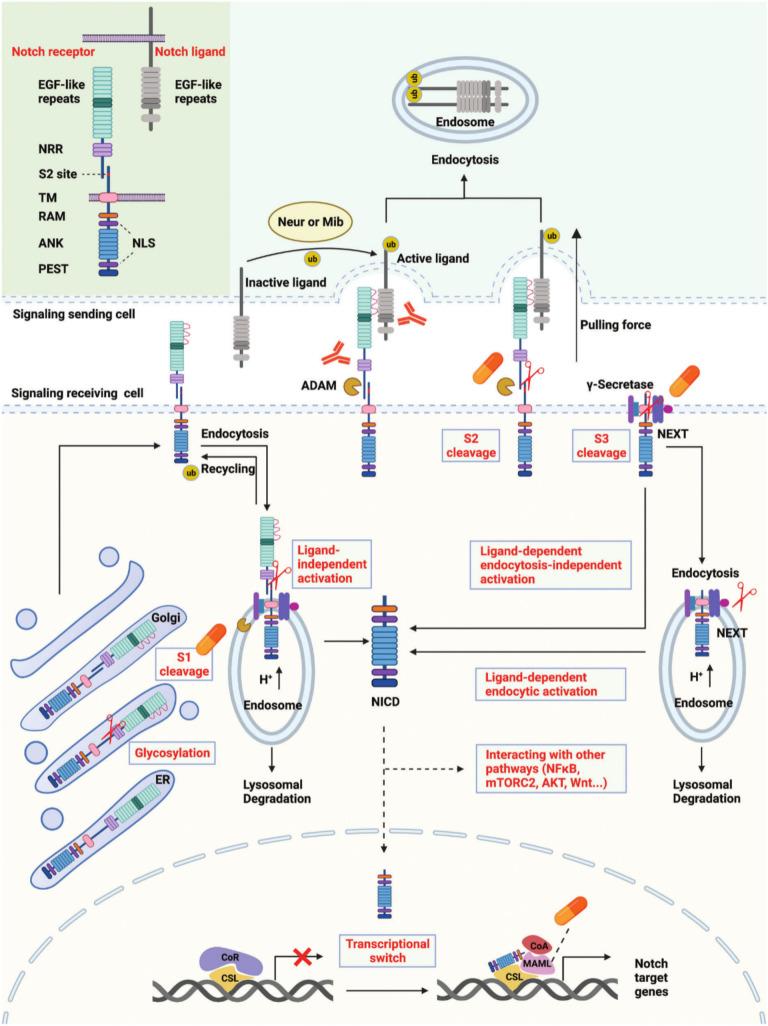
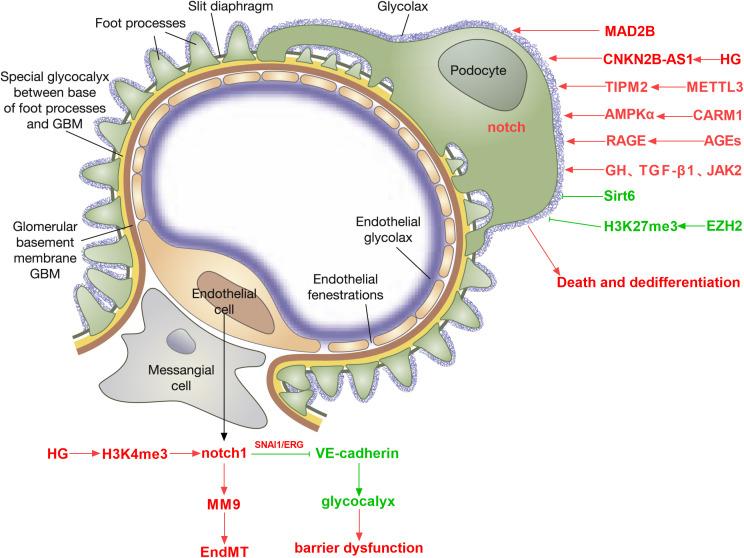
Diabetic kidney disease (DKD) is one of the most serious complications of diabetes mellitus (DM) and the main cause of end-stage renal disease (ESRD). The number of affected patients is increasing annually worldwide. Therefore, it is necessary to establish new strategies to treat DKD and improve prognosis. The Notch signaling pathway is involved in multiple mechanisms in DKD, including glomerular endothelial dysfunction, filtration barrier damage, podocyte EMT and dedifferentiation, tubulointerstitial fibrosis, proximal tubule cell dedifferentiation, macrophage polarization, etc. In addition, Notch signaling interacts with other pathways involved in DKD progression, such as TGF-β, Wnt/β-catenin, mTOR, AMPK, autophagy, etc. Therefore, new ideas for the future treatment of DKD may be provided through clarification of the role of the Notch signaling pathway and development of novel drugs.
糖尿病肾病(DKD)是糖尿病(DM)最严重的并发症之一,也是终末期肾病(ESRD)的主要原因。全球范围内,受影响患者的数量每年都在增加。因此,有必要建立新的策略来治疗DKD并改善预后。Notch信号通路参与了DKD的多种机制,包括肾小球内皮功能障碍、滤过屏障损伤、足细胞上皮-间质转化和去分化、肾小管间质纤维化、近端肾小管细胞去分化、巨噬细胞极化等。此外,Notch信号与参与DKD进展的其他通路相互作用,如TGF-β、Wnt/β-连环蛋白、mTOR、AMPK、自噬等。因此,通过阐明Notch信号通路的作用和开发新型药物,可能为未来DKD的治疗提供新思路。
 Zotero 插件