
母体免疫激活会改变非人类灵长类动物模型中婴儿的注意力处理方式。
Maternal immune activation alters infant attentional processing in a nonhuman primate model.
作者信息
Hubbard J A, Chen S, Iosif A M, Ryan A M, Murai T, Hogrefe C E, Lesh T A, Smucny J, Maddock R J, Schumann C M, Hanks T D, Van de Water J, McAllister A K, Carter C S, Paukner A, Capitanio J P, Bauman M D
机构信息
California National Primate Research Center, University of California Davis, California, 95616, USA.
Department of Public Health Sciences, School of Medicine, University of California Davis, Sacramento, CA, 95817, USA.
出版信息
Brain Behav Immun Health. 2025 Jul 28;48:101075. doi: 10.1016/j.bbih.2025.101075. eCollection 2025 Oct.
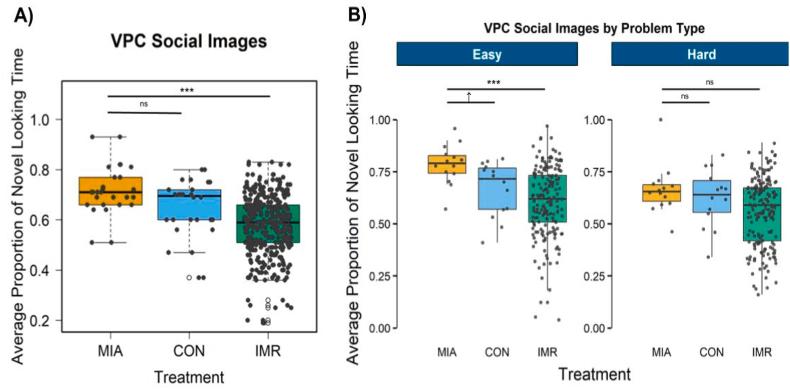
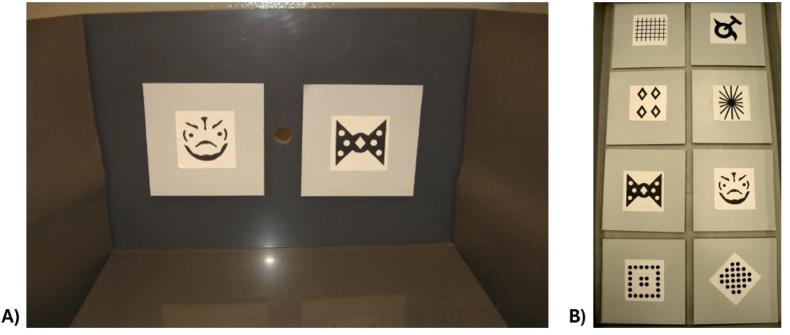
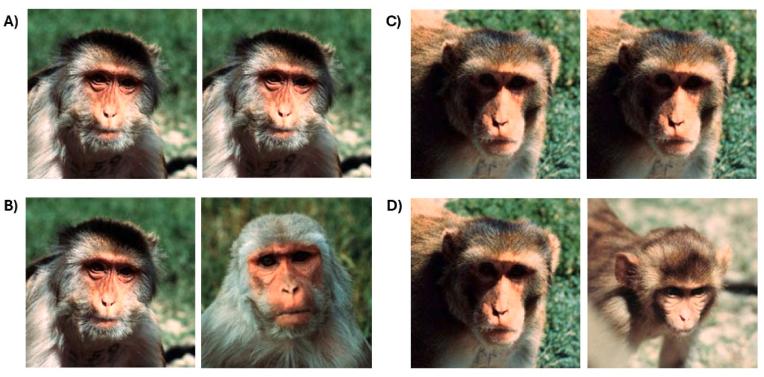
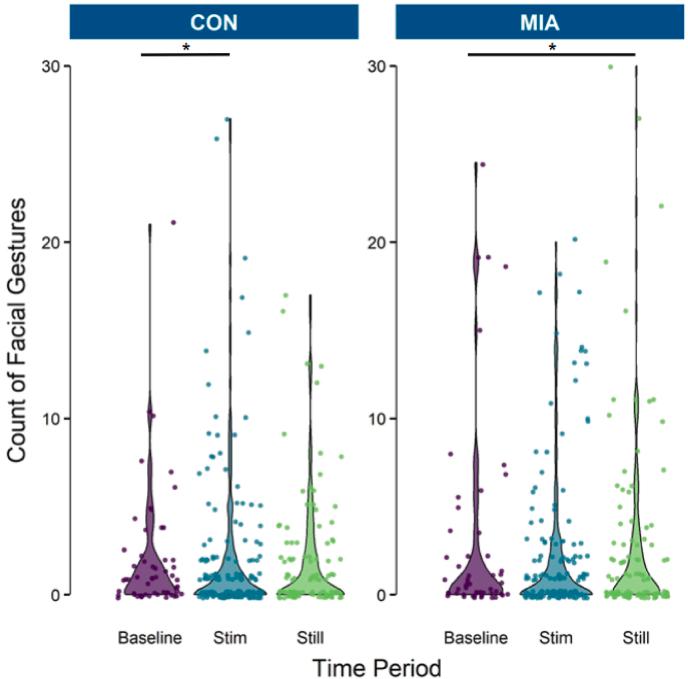
Maternal infection during pregnancy has been linked to the emergence of neurodevelopmental disorders. Preclinical animal models of maternal immune activation (MIA) have provided critical mechanistic links between maternal cytokines and alterations in offspring brain and behavioral development. While most preclinical work on MIA used rodent models, nonhuman primate (NHP) models have strong translational potential due to their greater similarity with humans. Previous NHP MIA models have replicated rodent findings of atypical offspring behavior emerging as animals mature, but few studied MIA-induced alterations in infancy. Here, we present a unique contribution on early milestones of attention in males using a rhesus monkey NHP MIA model. During an assessment of imitation conducted at 1 week-old, MIA-exposed offspring deviated from species-typical abilities to imitate social signals from human demonstrators. During a visual paired comparison task at 1 month, MIA-exposed offspring looked longer at novel abstract stimuli than control animals. A similar response was observed at 3-4 months when MIA-exposed offspring looked longer at novel monkey faces than control animals. The atypical response to novel social stimuli exhibited by MIA-exposed offspring appears contingent on how different the novel stimuli looked compared to the familiar stimuli, where MIA animals looked longer at easy discriminations compared to control animals. These results indicate that attentional processes in MIA-exposed offspring may be disrupted early in development, potentially resulting in longer visual stimuli processing times. Disruption of early attentional processes in the NHP MIA model may provide translational insights to identify children impacted by gestational exposure to maternal infections.
孕期母体感染与神经发育障碍的出现有关。母体免疫激活(MIA)的临床前动物模型揭示了母体细胞因子与后代大脑及行为发育改变之间的关键机制联系。虽然大多数关于MIA的临床前研究使用啮齿动物模型,但由于非人灵长类动物(NHP)模型与人类的相似性更高,因此具有很强的转化潜力。先前的NHP MIA模型复制了啮齿动物模型的研究结果,即随着动物成熟,后代会出现非典型行为,但很少有研究探讨MIA在婴儿期引起的变化。在此,我们使用恒河猴NHP MIA模型对雄性动物早期注意力发展里程碑做出了独特贡献。在对1周龄动物进行的模仿评估中,暴露于MIA的后代在模仿人类示范者的社交信号时偏离了物种典型能力。在1月龄时的视觉配对比较任务中,暴露于MIA的后代对新的抽象刺激的注视时间比对照动物更长。在3 - 4月龄时也观察到了类似的反应,即暴露于MIA的后代对新的猴子面孔的注视时间比对照动物更长。暴露于MIA的后代对新社交刺激的非典型反应似乎取决于新刺激与熟悉刺激的差异程度,与对照动物相比,MIA动物对易于区分的刺激注视时间更长。这些结果表明,暴露于MIA的后代的注意力过程可能在发育早期就受到干扰,这可能导致视觉刺激处理时间延长。NHP MIA模型中早期注意力过程受到干扰,可能为识别受孕期母体感染影响的儿童提供转化性见解。


 Zotero 插件