
评估自身免疫性疾病患者消化系统癌症的风险:一项侧重于偏倚评估的系统评价和荟萃分析
Evaluating the risk of digestive system cancer in autoimmune disease patients: a systematic review and meta-analysis focusing on bias assessment.
作者信息
Reizner Julia, Fischer Simone, Linseisen Jakob, Meisinger Christa, Freuer Dennis
机构信息
Epidemiology, Faculty of Medicine, University of Augsburg, University Hospital of Augsburg, Stenglinstr. 2, 86156, Augsburg, Germany.
出版信息
EClinicalMedicine. 2025 Aug 7;87:103410. doi: 10.1016/j.eclinm.2025.103410. eCollection 2025 Sep.
BACKGROUND
There is emerging evidence that certain autoimmune diseases can modulate the risk for digestive system cancer. However, limitations of non-experimental studies may lead to diverging results. Thus, the aim was to evaluate the available evidence and provide bias-minimized estimates for the associations between celiac disease (CD), systemic lupus erythematosus (SLE), multiple sclerosis (MS), and type 1 diabetes (T1D) and different digestive system cancers.
METHODS
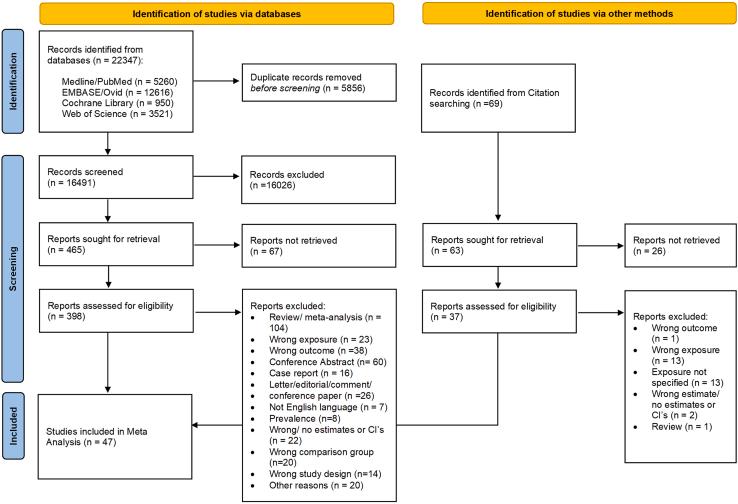
Systematic review (PROSPERO: CRD42024553216) was conducted according to PRISMA guidelines. Scientific publications were searched in PubMed, Web of Science, Embase, and Cochrane Library from inception up to May 2, 2025, with no restrictions on publication date. ROBINS-E tool was used for examining the study-specific risk of bias. Inverse-variance weighted random-effects models were performed as the primary meta-analytic approach. Heterogeneity was quantified and adjusted for in a comprehensive bias assessment including several analyses.
FINDINGS
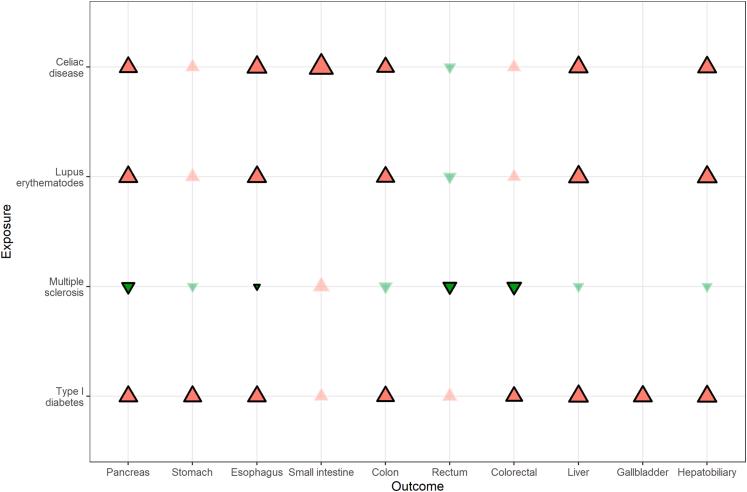
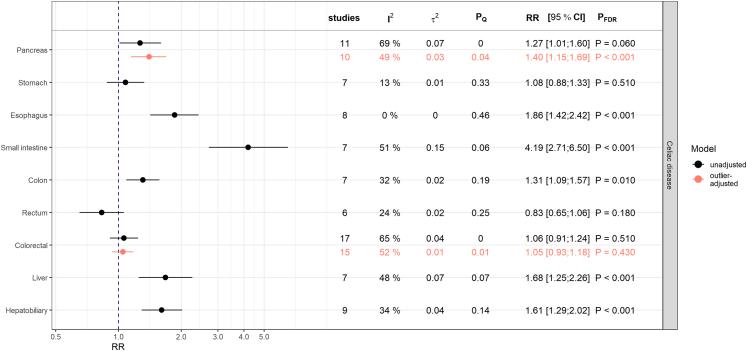
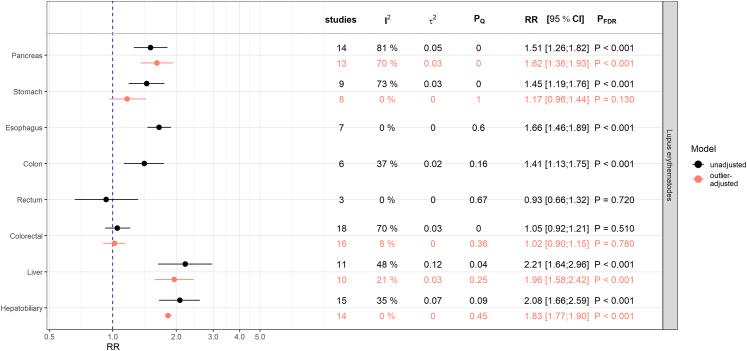
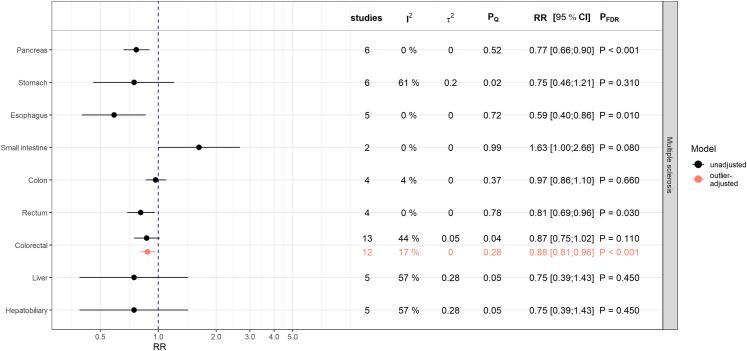
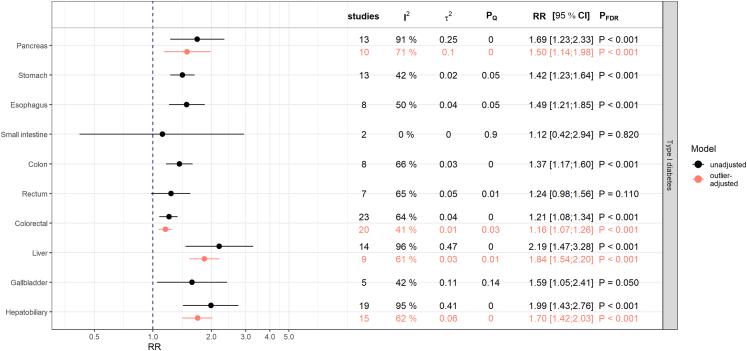
This study included 237 estimates from 47 studies covering over 1.5 million cases of any ethnicity. CD, SLE, and T1D were positively associated with pancreatic, esophageal, colon, liver, and hepatobiliary cancers. Additionally, T1D was positively associated with stomach and colorectal cancers. The strongest bias-corrected association was found between CD and small intestine cancer (RR = 4.19; 95% CI: [2.71; 6.50]). MS was inversely associated with pancreatic, esophageal, rectal, and colorectal cancers.
INTERPRETATION
This study provides new insights into the evidence for digestive system cancer risk related to autoimmune diseases by adjusting for multiple sources of bias. As a next step, potential mechanisms responsible for the different associations should be investigated.
FUNDING
The study received academic funding from the Faculty of Medicine, University of Augsburg, Germany.
背景
越来越多的证据表明,某些自身免疫性疾病会调节消化系统癌症的风险。然而,非实验性研究的局限性可能导致结果存在差异。因此,本研究旨在评估现有证据,并对乳糜泻(CD)、系统性红斑狼疮(SLE)、多发性硬化症(MS)和1型糖尿病(T1D)与不同消化系统癌症之间的关联提供偏差最小化的估计。
方法
根据PRISMA指南进行系统评价(PROSPERO:CRD42024553216)。在PubMed、Web of Science、Embase和Cochrane图书馆中检索自数据库建立至2025年5月2日的科学出版物,对出版日期无限制。使用ROBINS-E工具检查特定研究的偏倚风险。采用逆方差加权随机效应模型作为主要的荟萃分析方法。在包括多项分析的综合偏倚评估中对异质性进行量化和调整。
结果
本研究纳入了来自47项研究的237个估计值,涵盖超过150万例任何种族的病例。CD、SLE和T1D与胰腺癌、食管癌、结肠癌、肝癌和肝胆癌呈正相关。此外,T1D与胃癌和结直肠癌呈正相关。CD与小肠癌之间的偏倚校正关联最强(RR = 4.19;95% CI:[2.71;6.50])。MS与胰腺癌、食管癌、直肠癌和结直肠癌呈负相关。
解读
本研究通过调整多种偏倚来源,为自身免疫性疾病相关的消化系统癌症风险证据提供了新的见解。下一步,应研究造成不同关联的潜在机制。
资金来源
本研究获得了德国奥格斯堡大学医学院的学术资助。
 Zotero 插件