
巨噬细胞和巨噬细胞外囊泡通过PRDX6介导的线粒体自噬抑制赋予癌症铁死亡抗性。
Macrophages and macrophage extracellular vesicles confer cancer ferroptosis resistance via PRDX6-mediated mitophagy inhibition.
作者信息
Zheng Naisheng, Li Fuli, Huang Qing, Huang Xian, Maj Tomasz
机构信息
Institute of Molecular Medicine, Renji Hospital, Shanghai Jiao Tong University School of Medicine, Shanghai 200125, PR China.
Institute of Molecular Medicine, Renji Hospital, Shanghai Jiao Tong University School of Medicine, Shanghai 200125, PR China.
出版信息
Redox Biol. 2025 Aug 16;86:103826. doi: 10.1016/j.redox.2025.103826.
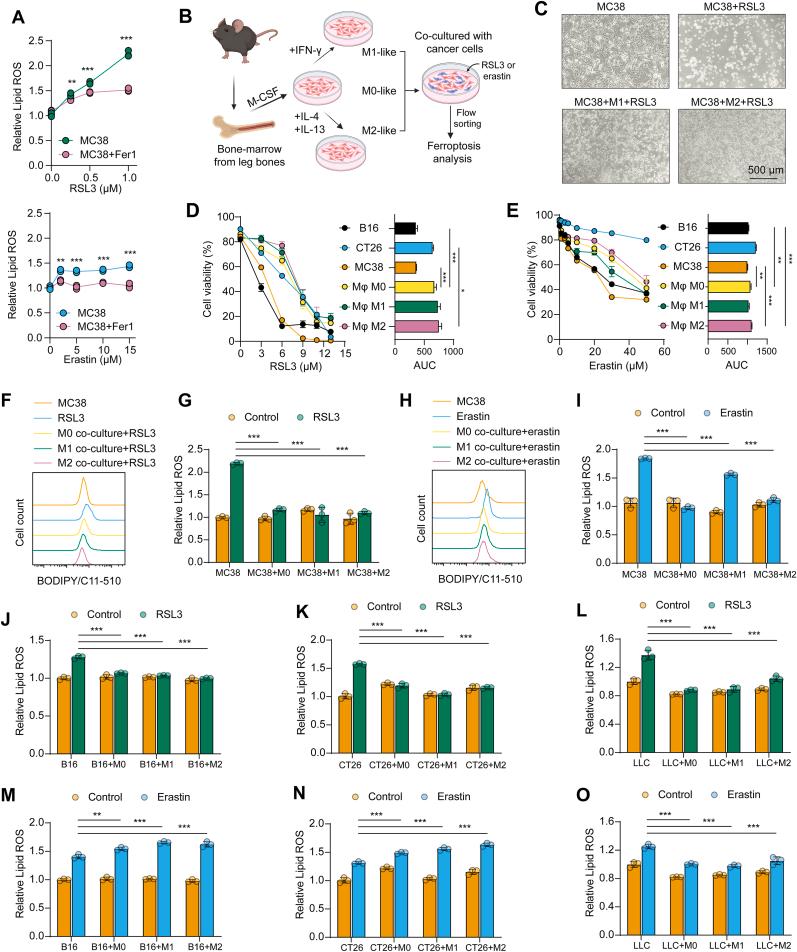
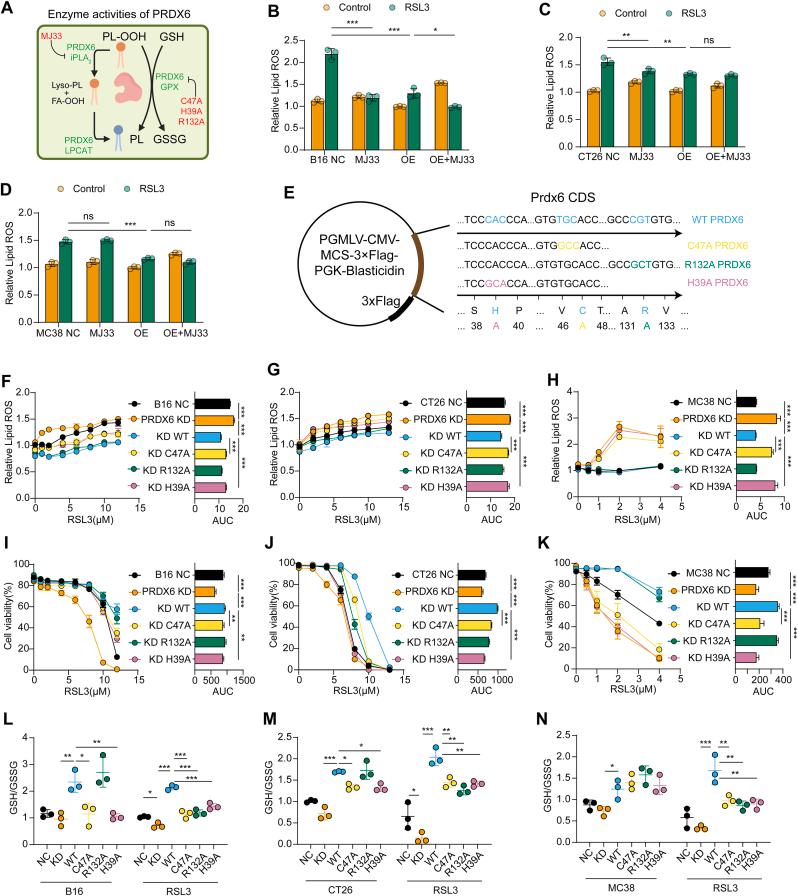
Ferroptosis has emerged as a promising therapeutic target in cancer therapy, with the tumor microenvironment (TME) playing a pivotal role in regulating ferroptosis. Although macrophages contribute to ferroptosis regulation within TME, the underlying mechanisms remain unclear. In this study, we demonstrate that macrophages consistently attenuate GPX4 inhibitor-induced lipid peroxidation and cell death in various tumor cell lines, whereas their resistance to cysteine transport inhibitor-triggered ferroptosis varies across cell types. This tumor protection from ferroptosis is mediated through macrophage-tumor cell contact and the delivery of macrophage-derived extracellular vesicles (Mφ-EV). Transcriptomic and proteomic analyses revealed that macrophages and Mφ-EV enhance glutathione metabolism in tumor cells. Notably, Mφ-EV are uniquely enriched with the glutathione metabolism-related protein PRDX6. Mechanistically, the glutathione peroxidase activity of PRDX6 elevates intracellular reduced glutathione, suppresses lipid peroxidation, and thereby mitigates ferroptosis. Furthermore, macrophage-derived PRDX6 reduces mitochondrial superoxide accumulation, alleviates ferroptosis-induced mitophagy, and enhances tumor cell viability, ultimately promoting tumor growth. Together, our findings provide a novel mechanism of ferroptosis resistance in TME, wherein macrophages confer tumor cell resilience by bypassing GPX4 inhibition.
铁死亡已成为癌症治疗中一个有前景的治疗靶点,肿瘤微环境(TME)在调节铁死亡中起关键作用。尽管巨噬细胞在TME内参与铁死亡调节,但其潜在机制仍不清楚。在本研究中,我们证明巨噬细胞始终能减轻GPX4抑制剂诱导的各种肿瘤细胞系中的脂质过氧化和细胞死亡,而它们对半胱氨酸转运抑制剂引发的铁死亡的抗性在不同细胞类型中有所不同。这种对铁死亡的肿瘤保护作用是通过巨噬细胞与肿瘤细胞的接触以及巨噬细胞衍生的细胞外囊泡(Mφ-EV)的传递介导的。转录组学和蛋白质组学分析表明,巨噬细胞和Mφ-EV增强了肿瘤细胞中的谷胱甘肽代谢。值得注意的是,Mφ-EV独特地富集了与谷胱甘肽代谢相关的蛋白PRDX6。从机制上讲,PRDX6的谷胱甘肽过氧化物酶活性提高了细胞内还原型谷胱甘肽水平,抑制了脂质过氧化,从而减轻了铁死亡。此外,巨噬细胞衍生的PRDX6减少了线粒体超氧化物的积累,减轻了铁死亡诱导的线粒体自噬,并增强了肿瘤细胞的活力,最终促进了肿瘤生长。总之,我们的研究结果提供了一种TME中铁死亡抗性的新机制,其中巨噬细胞通过绕过GPX4抑制赋予肿瘤细胞抗性。





 Zotero 插件