
用于治疗失眠的中药:一项系统评价与网状Meta分析
Chinese herbal medicine for insomnia: A systematic review and network meta-analysis.
作者信息
Li Weiwei, Wang Qinxuan, Dang Chun, Xiong Ying, Lu Yaoheng
机构信息
Department of General Surgery, Chengdu Integrated Traditional Chinese Medicine and Western Medicine Hospital, Chengdu, China.
West China Hospital, West China School of Medicine, Sichuan University, Chengdu, China.
出版信息
Medicine (Baltimore). 2025 Aug 15;104(33):e43789. doi: 10.1097/MD.0000000000043789.
OBJECTIVE
Insomnia represents a significant public health issue, with a notable impact on the global burden of disease. Traditional pharmacological interventions, while effective, often entail limitations and adverse effects, necessitating the exploration of alternative therapeutic modalities. Chinese herbal medicines, with their extensive historical use and presumed multifaceted pharmacological actions, emerge as potential candidates for insomnia management.
METHODS
In strict adherence to the PRISMA-NMA guidelines, we systematically reviewed randomized controlled trials (RCTs) that investigated the therapeutic effects of Chinese herbal medicines on insomnia. The primary outcomes assessed were improvements in sleep quality as measured by the Pittsburgh Sleep Quality Index (PSQI), clinical effectiveness rates, and the incidence of adverse reactions. Comprehensive searches were conducted across several databases including MEDLINE, Cochrane Library, EMBASE, Wanfang Data, CNKI, and gray literature. Both direct and indirect evidence was synthesized using Bayesian network meta-analysis techniques to ascertain the relative performance of various herbal interventions.
RESULTS
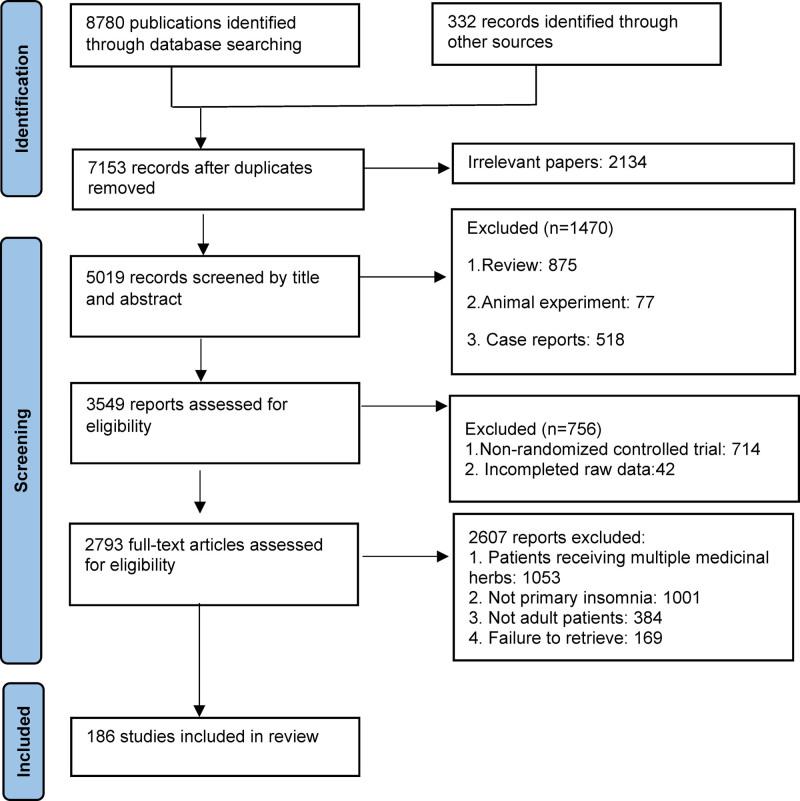
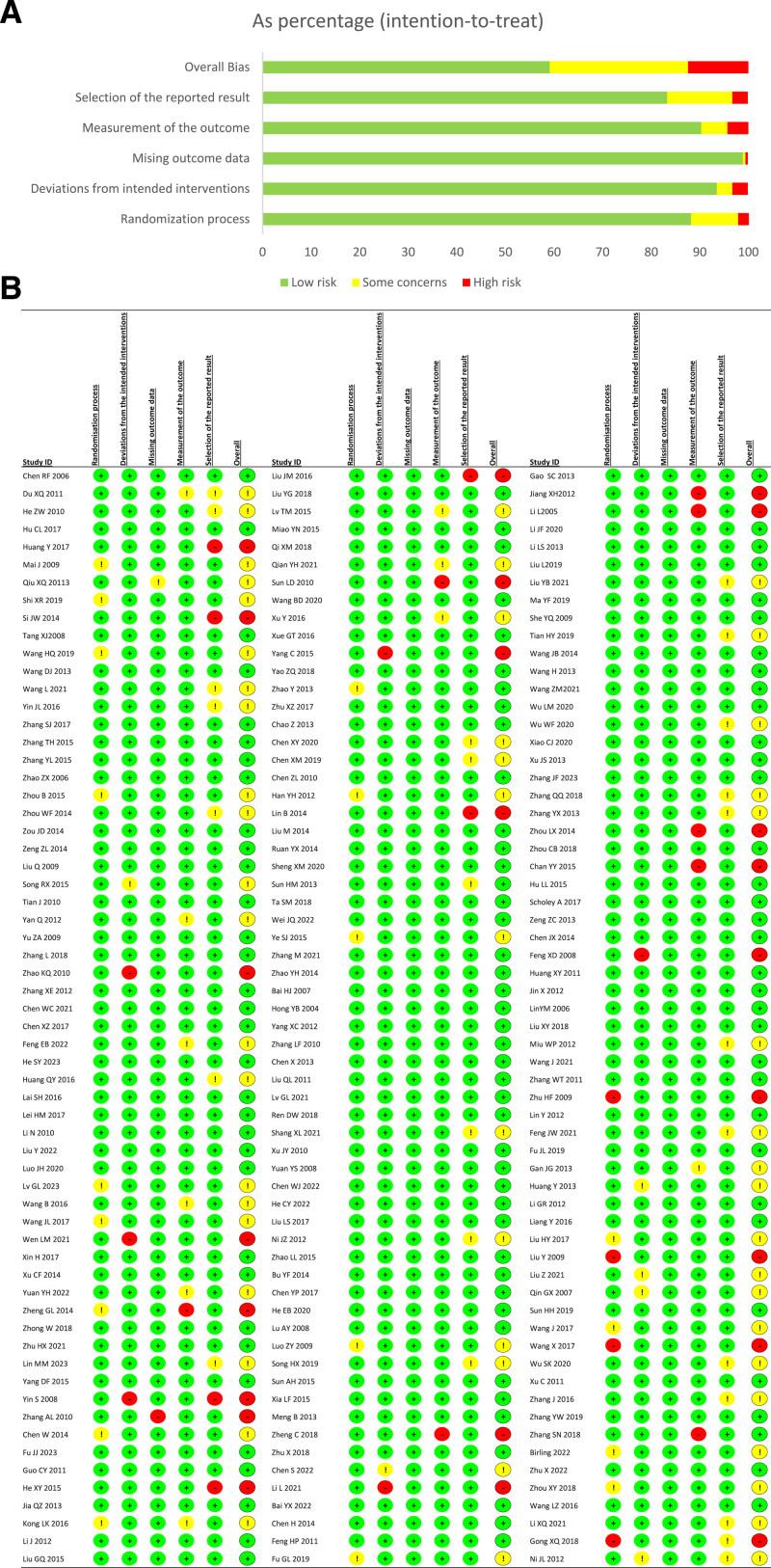
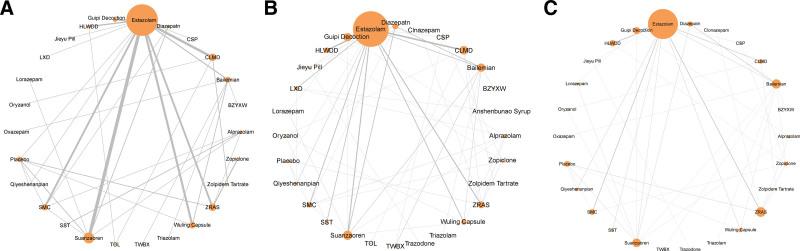
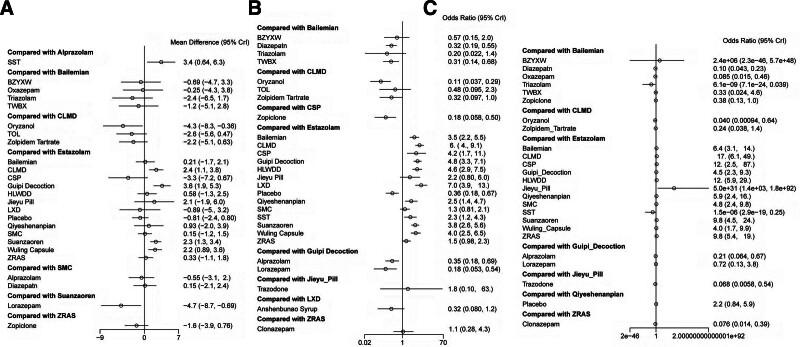
The analysis included 186 RCTs involving 13 different herbal interventions. Overall, the included studies exhibited a low-to-moderate risk-of-bias. Key findings from our study suggest that for PSQI scores, the top 5 treatments were guipi decoction, shenqi schisandra tablet, chaihu longgu muli decoction (CLMD), suanzaoren, and wuling capsule. Notably, the highest rankings for effective rate were achieved by longdan xiegan decoction, CLMD, guipi decoction, Huanglian Wendan decoction, and chaihu shugan powder. In terms of safety, jieyu pill, trazodone, and CLMD were the top 3, indicating superior safety profiles among all treatments. Crucially, both the PSQI scores and the effective rate, alongside the safety profile of most Chinese herbal medicines, were generally superior to conventional pharmaceutical treatments.
CONCLUSION
The study provides robust evidence that certain herbal medicines may offer effective and safe alternatives for managing insomnia, potentially reducing the reliance on conventional pharmacological interventions.
目的
失眠是一个重大的公共卫生问题,对全球疾病负担有显著影响。传统药物干预虽有效,但往往存在局限性和不良反应,因此需要探索替代治疗方法。中药有着悠久的使用历史且具有多种药理作用,成为治疗失眠的潜在选择。
方法
严格遵循PRISMA-NMA指南,我们系统回顾了研究中药治疗失眠疗效的随机对照试验(RCT)。评估的主要结局包括匹兹堡睡眠质量指数(PSQI)衡量的睡眠质量改善情况、临床有效率和不良反应发生率。在多个数据库进行全面检索,包括MEDLINE、Cochrane图书馆、EMBASE、万方数据、中国知网和灰色文献。使用贝叶斯网络荟萃分析技术综合直接和间接证据,以确定各种草药干预措施的相对疗效。
结果
分析纳入了186项RCT,涉及13种不同的草药干预措施。总体而言,纳入研究的偏倚风险为低到中度。我们研究的主要发现表明,对于PSQI评分,排名前五的治疗方法是归脾汤、参芪五味子片、柴胡龙骨牡蛎汤(CLMD)、酸枣仁、以及乌灵胶囊。值得注意的是,龙胆泻肝汤、CLMD、归脾汤、黄连温胆汤和柴胡疏肝散的有效率排名最高。在安全性方面,解郁丸、曲唑酮和CLMD位列前三,表明在所有治疗方法中安全性更高。至关重要的是,大多数中药的PSQI评分、有效率以及安全性通常优于传统药物治疗。
结论
该研究提供了有力证据,表明某些草药可能为治疗失眠提供有效且安全的替代方法,有可能减少对传统药物干预的依赖。




 Zotero 插件