
1990-2021年40-64岁成年人头颈癌的全球负担及性别差异:来自《2021年全球疾病负担研究》的系统分析
Global Burden and Gender Disparities in Head and Neck Cancers Among Adults Aged 40-64, 1990-2021: A Systematic Analysis From the Global Burden of Disease Study 2021.
作者信息
Luo Zhuoding, Huang Yihan, Ye Renjing, Yin Min
机构信息
Department of Otorhinolaryngology, The First Affiliated Hospital of Nanjing Medical University, Nanjing, China.
The First School of Clinical Medicine, Nanjing Medical University, Nanjing, China.
出版信息
Cancer Rep (Hoboken). 2025 Aug;8(8):e70287. doi: 10.1002/cnr2.70287.
BACKGROUND
Head and neck cancer (HNC) is a significant global health concern, with incidence rising after the age of 40. This study aims to analyze the trends in prevalence, incidence, mortality, and disability-adjusted life years (DALYs), focusing on regional and gender differences.
METHODS
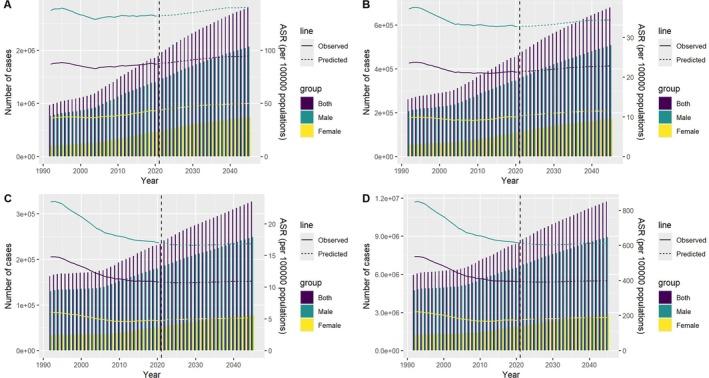
This research utilized data from the Global Burden of Disease (GBD) 2021 study. Key metrics such as the age-standardized prevalence rate (ASPR), age-standardized incidence rate (ASIR), age-standardized mortality rate (ASMR), and age-standardized disability-adjusted life years rate (ASDR) were analyzed. These metrics were used to examine trends from 1990 to 2021, focusing on gender and regional differences, and projections were made using the Nordpred method to predict future disease burdens up to 2045. The analysis covered 204 countries and regions and focused on cancers of the lip and oral cavity, nasopharynx, other pharynx, and larynx.
RESULTS
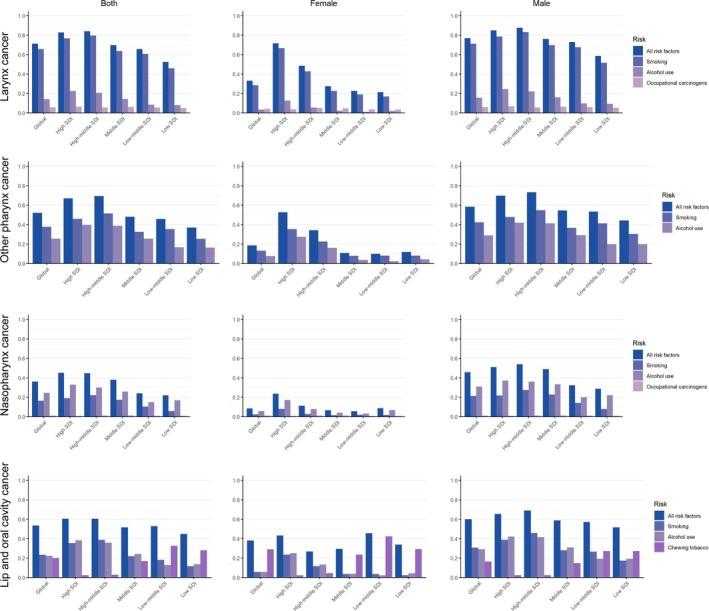
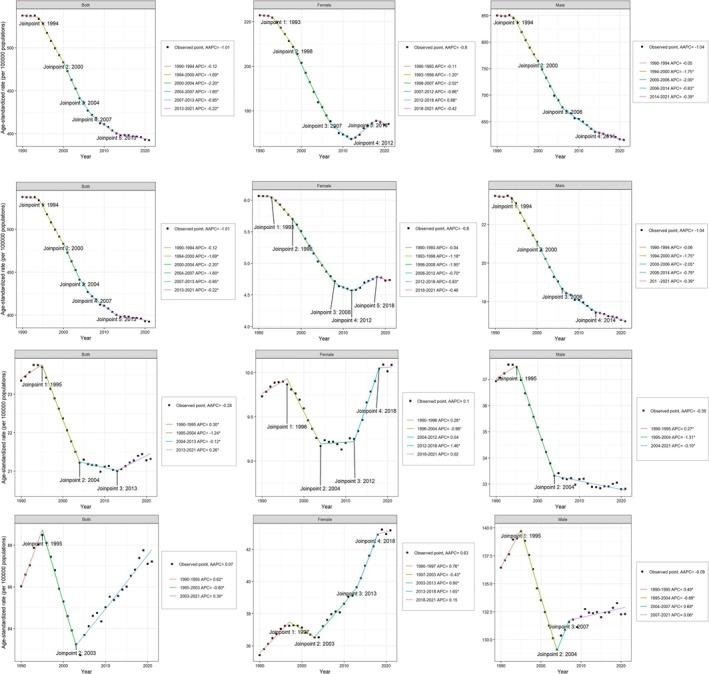
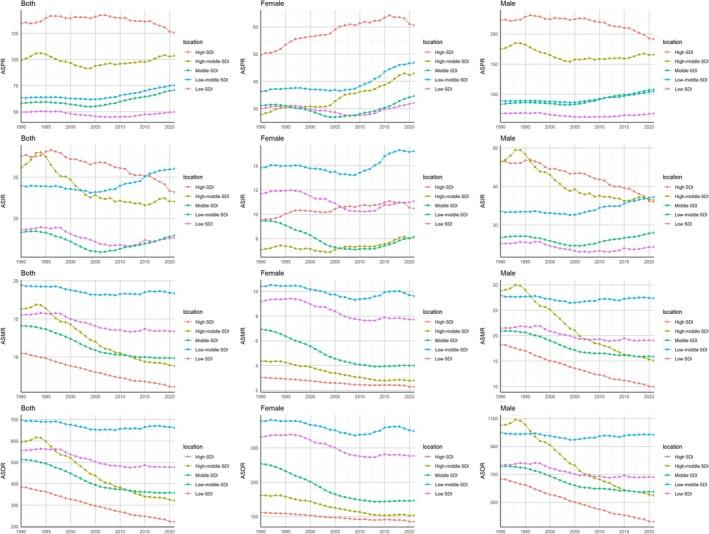
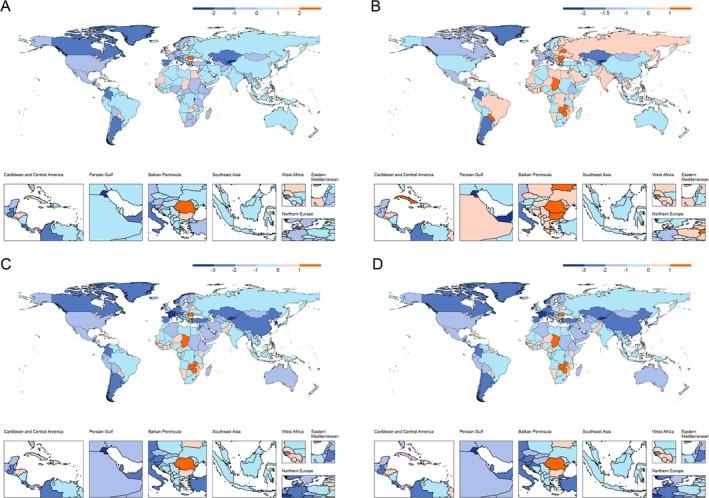
From 1990 to 2021, the prevalence of HNC in the 40-64 age group nearly doubled, yet the ASPR remained stable. In contrast, ASIR, ASMR, and ASDR showed a decreasing trend. The analysis revealed significant gender differences, with males generally exhibiting higher ASIR, ASMR, and ASDR than females. However, the prevalence and incidence rates among females showed a faster increase in certain regions, particularly in lower SDI countries.
CONCLUSION
The study concludes that while the overall burden of HNC has shifted with a stable ASPR and decreasing ASIR, ASMR, and ASDR, gender-specific and region-specific strategies are essential to effectively address the risk factors associated with HNC.
背景
头颈癌(HNC)是一个重大的全球健康问题,40岁以后发病率呈上升趋势。本研究旨在分析患病率、发病率、死亡率和伤残调整生命年(DALYs)的趋势,重点关注地区和性别差异。
方法
本研究利用了《2021年全球疾病负担(GBD)》研究的数据。分析了年龄标准化患病率(ASPR)、年龄标准化发病率(ASIR)、年龄标准化死亡率(ASMR)和年龄标准化伤残调整生命年率(ASDR)等关键指标。这些指标用于研究1990年至2021年的趋势,重点关注性别和地区差异,并使用Nordpred方法进行预测,以预测到2045年的未来疾病负担。该分析涵盖了204个国家和地区,重点关注唇癌和口腔癌、鼻咽癌、其他咽癌和喉癌。
结果
从1990年到2021年,40 - 64岁年龄组的头颈癌患病率几乎翻了一番,但年龄标准化患病率保持稳定。相比之下,年龄标准化发病率、年龄标准化死亡率和年龄标准化伤残调整生命年率呈下降趋势。分析显示出显著的性别差异,男性的年龄标准化发病率、年龄标准化死亡率和年龄标准化伤残调整生命年率通常高于女性。然而,女性的患病率和发病率在某些地区,特别是在社会人口指数较低的国家,增长更快。
结论
该研究得出结论,虽然头颈癌的总体负担有所变化,年龄标准化患病率稳定,年龄标准化发病率、年龄标准化死亡率和年龄标准化伤残调整生命年率下降,但针对性别和地区的策略对于有效应对与头颈癌相关的风险因素至关重要。
 Zotero 插件