
先天性心脏病成人的共病和多重共病:一项基于多地点人群研究的结果
Comorbidity and Multimorbidity in Adults With Congenital Heart Disease: Findings From a Multi-Site Population-Based Study.
作者信息
Botto Lorenzo D, Reeder Matthew R, Lui George K, Glidewell M Jill, Book Wendy M, Crume Tessa L, DeLaRosa Jesse M, d'Ottavio Alfred, Downing Karrie F, Feldkamp Marcia L, Hsu Daphne T, Khanna Amber D, Krikov Sergey, Pinto Nelangi M, Raskind Hood Cheryl L, Rodriguez Fred H, Soim Aida S, Whitehead Kevin J, Chiswell Karen, Li Jennifer S
机构信息
Department of Pediatrics, University of Utah, Salt Lake City, Utah, USA.
Stanford University School of Medicine, Palo Alto, California, USA.
出版信息
Birth Defects Res. 2025 Aug;117(8):e2515. doi: 10.1002/bdr2.2515.
BACKGROUND
Survival of individuals with congenital heart disease (CHD) has improved, leading to a growing and aging population of adults living with these conditions. Over their lifetime, they often face an array of comorbidities that affect outcomes and complicate medical management. However, population-based information on such comorbidities is scarce, reducing opportunities for prevention.
METHODS
This population-based, cross-sectional study assessed comorbid conditions in adults with CHD residing in five geographic areas in the United States (in Colorado, Georgia, New York, North Carolina, and Utah). The study included 18,672 adults aged 19 to 64 years who had a healthcare encounter between 2011 and 2013 associated with ≥ 1 CHD-related diagnosis code. Data were derived from linked clinical and administrative sources, reflecting inpatient, outpatient, and emergency department encounters.
RESULTS
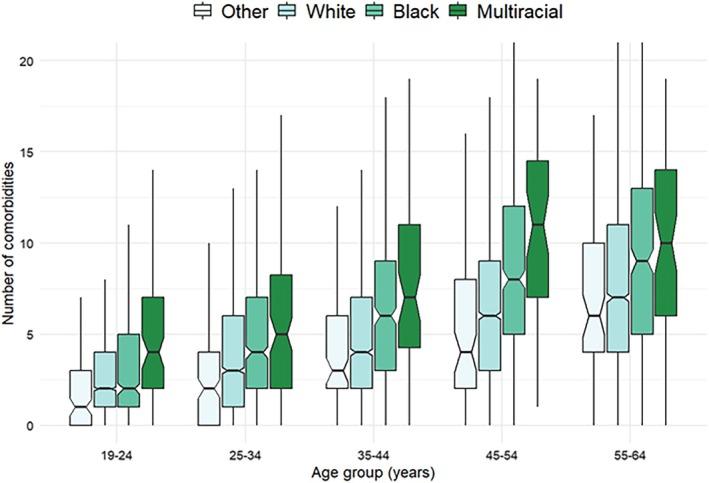
Most adults with CHD experienced at least one (88.5%) and usually multiple (76%) comorbidities. Overall, noncardiac comorbidities exceeded cardiac comorbidities. The most frequent noncardiac comorbidities were endocrine/metabolic conditions (e.g., diabetes, hyperlipidemia, hypothyroidism), hypertension, and neuropsychiatric conditions (e.g., anxiety, depression). The presence and number of comorbidities varied in different sociodemographic groups. Men and older individuals experienced higher rates of many comorbidities, cardiac and noncardiac, regardless of CHD type.
CONCLUSIONS
Preventable and treatable comorbidity and multimorbidity are common in adults with CHD, with patterns shaped by sociodemographic factors and CHD type. Reducing preventable mortality in this growing population will require sustained tracking of health metrics and coordinated, data-driven, and lifelong care.
背景
先天性心脏病(CHD)患者的生存率有所提高,导致患有这些疾病的成年人口不断增加且老龄化。在他们的一生中,经常面临一系列影响预后并使医疗管理复杂化的合并症。然而,基于人群的此类合并症信息匮乏,减少了预防的机会。
方法
这项基于人群的横断面研究评估了居住在美国五个地理区域(科罗拉多州、佐治亚州、纽约州、北卡罗来纳州和犹他州)的成年CHD患者的合并症情况。该研究纳入了18672名年龄在19至64岁之间的成年人,他们在2011年至2013年期间有过与≥1个CHD相关诊断代码相关的医疗接触。数据来自相关的临床和行政来源,反映了住院、门诊和急诊科的接触情况。
结果
大多数成年CHD患者至少经历过一种合并症(88.5%),并且通常有多种合并症(76%)。总体而言,非心脏合并症超过了心脏合并症。最常见的非心脏合并症是内分泌/代谢疾病(如糖尿病、高脂血症、甲状腺功能减退)、高血压和神经精神疾病(如焦虑、抑郁)。合并症的存在和数量在不同的社会人口学群体中有所不同。无论CHD类型如何,男性和年龄较大的个体经历许多合并症(包括心脏和非心脏合并症)的比率更高。
结论
可预防和可治疗的合并症及多种合并症在成年CHD患者中很常见,其模式受社会人口学因素和CHD类型影响。要降低这一不断增长的人群中的可预防死亡率,需要持续跟踪健康指标并提供协调、数据驱动的终身护理。
 Zotero 插件