
一种用于超高分辨率屏状核分割的对比度无关方法。
A Contrast-Agnostic Method for Ultra-High Resolution Claustrum Segmentation.
作者信息
Mauri Chiara, Fritz Ryan, Mora Jocelyn, Billot Benjamin, Iglesias Juan Eugenio, Van Leemput Koen, Augustinack Jean, Greve Douglas N
机构信息
Department of Radiology, Athinoula A. Martinos Center for Biomedical Imaging, Massachusetts General Hospital, Charlestown, Massachusetts, USA.
Department of Radiology, Harvard Medical School, Boston, Massachusetts, USA.
出版信息
Hum Brain Mapp. 2025 Aug 15;46(12):e70303. doi: 10.1002/hbm.70303.
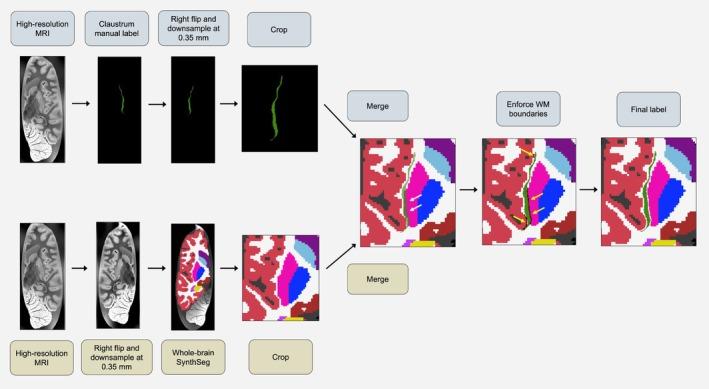
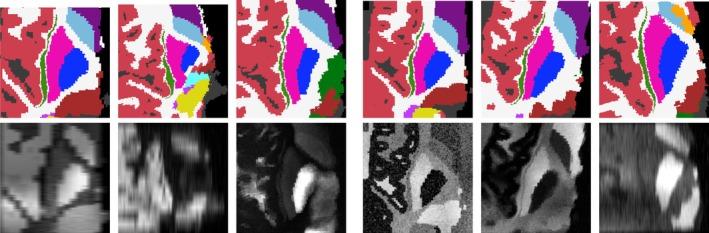
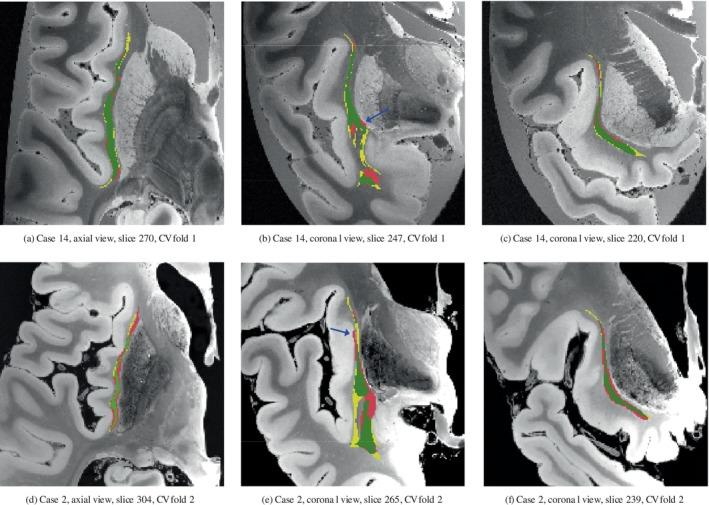
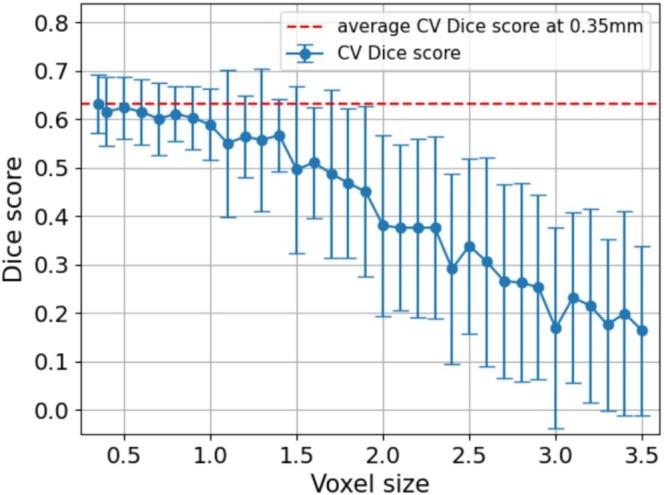
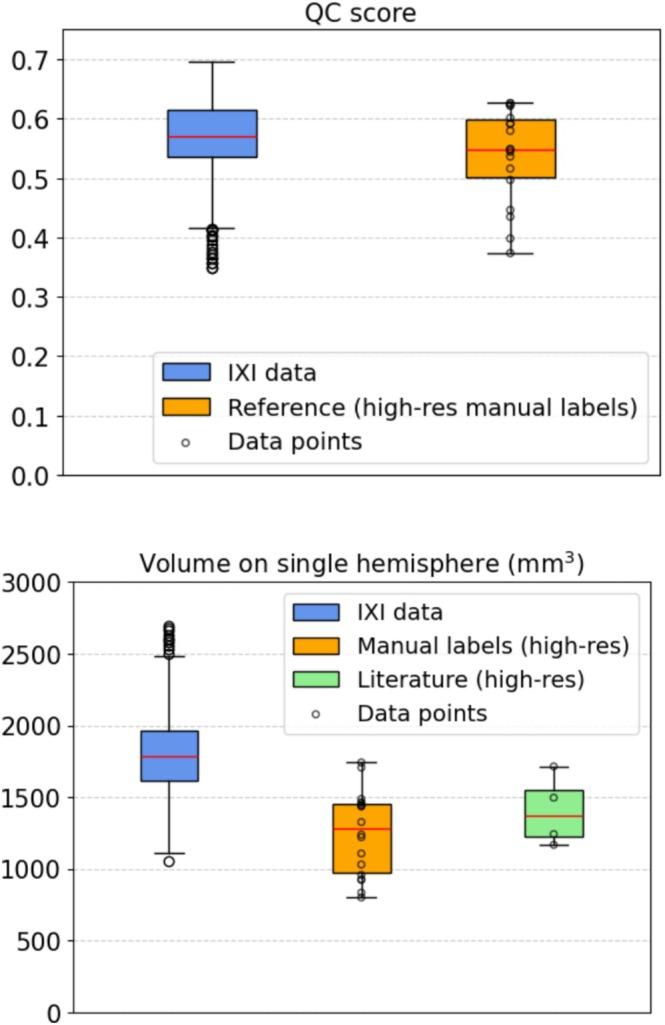
The claustrum is a band-like gray matter structure located between putamen and insula whose exact functions are still actively researched. Its sheet-like structure makes it barely visible in in vivo magnetic resonance imaging (MRI) scans at typical resolutions, and neuroimaging tools for its study, including methods for automatic segmentation, are currently very limited. In this paper, we propose a contrast- and resolution-agnostic method for claustrum segmentation at ultra-high resolution (0.35 mm isotropic); the method is based on the SynthSeg segmentation framework, which leverages the use of synthetic training intensity images to achieve excellent generalization. In particular, SynthSeg requires only label maps to be trained, since corresponding intensity images are synthesized on the fly with random contrast and resolution. We trained a deep learning network for automatic claustrum segmentation, using claustrum manual labels obtained from 18 ultra-high resolution MRI scans (mostly ex vivo). We demonstrated the method to work on these 18 high resolution cases (Dice score = 0.632, mean surface distance = 0.458 mm, and volumetric similarity = 0.867 using 6-fold cross validation (CV)), and also on in vivo T1-weighted MRI scans at typical resolutions (≈1 mm isotropic). We also demonstrated that the method is robust in a test-retest setting and when applied to multimodal imaging (T2-weighted, proton density, and quantitative T1 scans). To the best of our knowledge this is the first accurate method for automatic ultra-high resolution claustrum segmentation, which is robust against changes in contrast and resolution. The method is released at https://github.com/chiara-mauri/claustrum_segmentation and as part of the neuroimaging package FreeSurfer.
屏状核是位于壳核和脑岛之间的带状灰质结构,其确切功能仍在积极研究中。其片状结构使得在典型分辨率的活体磁共振成像(MRI)扫描中几乎无法看到它,并且用于研究它的神经成像工具,包括自动分割方法,目前非常有限。在本文中,我们提出了一种用于超高分辨率(各向同性0.35毫米)屏状核分割的对比度和分辨率无关方法;该方法基于SynthSeg分割框架,该框架利用合成训练强度图像来实现出色的泛化。特别是,SynthSeg只需要标签图进行训练,因为相应的强度图像是在运行时通过随机对比度和分辨率合成的。我们使用从18次超高分辨率MRI扫描(大多为离体扫描)中获得的屏状核手动标签,训练了一个用于自动屏状核分割的深度学习网络。我们证明了该方法在这18个高分辨率病例上有效(使用6折交叉验证(CV)时,骰子系数=0.632,平均表面距离=0.458毫米,体积相似度=0.867),并且在典型分辨率(各向同性≈1毫米)的活体T1加权MRI扫描上也有效。我们还证明了该方法在重测设置以及应用于多模态成像(T2加权、质子密度和定量T1扫描)时具有鲁棒性。据我们所知,这是第一种用于自动超高分辨率屏状核分割的准确方法,它对对比度和分辨率的变化具有鲁棒性。该方法已在https://github.com/chiara - mauri/claustrum_segmentation上发布,并作为神经成像软件包FreeSurfer的一部分。






 Zotero 插件