
实体瘤中的细胞因子释放综合征
Cytokine release syndrome in solid tumors.
作者信息
Synnott David, O'Reilly David, De Freitas Declan, Naidoo Jarushka
机构信息
Beaumont Hospital, Dublin, Ireland.
Department of Nephrology and Transplantation, Beaumont Hospital, Dublin, Ireland.
出版信息
Cancer. 2025 Sep 1;131(17):e70069. doi: 10.1002/cncr.70069.
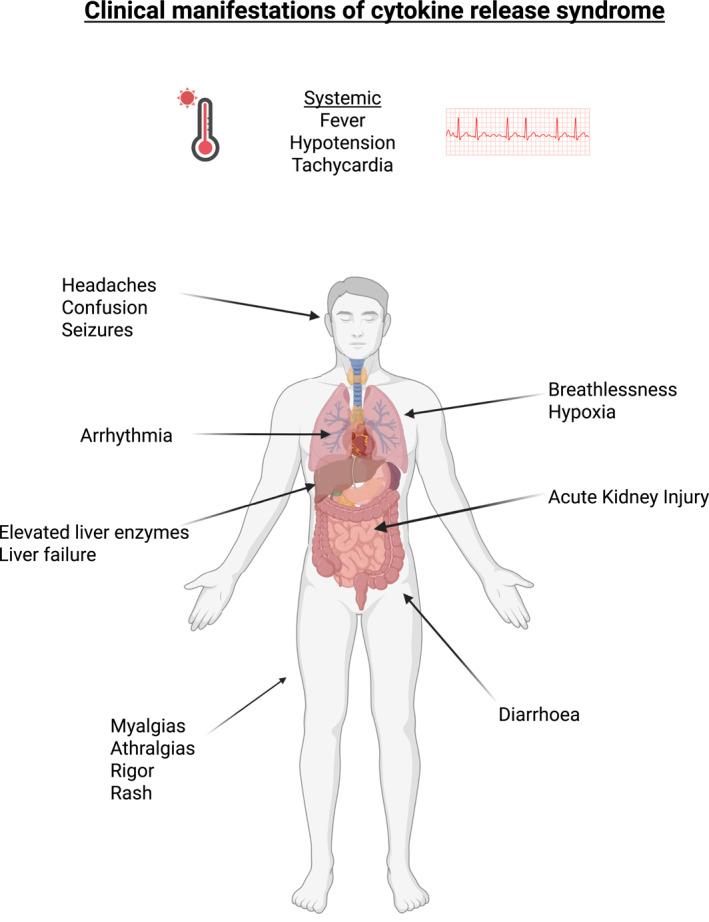
Cytokine release syndrome (CRS) is a common and potentially severe complication of cancer immunotherapy, including CAR T-cell therapies, bispecific T-cell engagers, and less commonly immune checkpoint inhibitors. Although extensive research has established guidelines for managing CRS in hematological malignancies, there is a growing need to address CRS in the context of solid organ tumors due to differences in tumor microenvironment, immunotherapy indications, and patient population. This review aims to provide an overview of CRS in solid tumors, outlining its pathophysiology, clinical presentation, and current management strategies. The complexities of CRS in solid tumors arise from challenges such as the immunosuppressive nature of the tumor microenvironment and the overlap of tumor-associated antigens with healthy tissues, potentially increasing the risk of severe on-target off-tumor toxicities. The review emphasizes early detection and grading of CRS as essential for patient safety and effective intervention. Management of CRS involves supportive care for mild cases, whereas severe presentations often require targeted therapies like tocilizumab, corticosteroids, and escalation to the intensive care unit for organ support. The decision to rechallenge or withhold immunotherapy requires careful consideration of patient-specific goals and risks. Emerging treatments such as other cytokine inhibitors, plasma exchange, and suicide gene systems are promising avenues for mitigating severe CRS. Future research focuses on refining risk stratification tools, novel therapeutic agents, and evaluating long-term outcomes. A deeper understanding of CRS in solid tumors will enable more personalized treatment approaches, enhancing the safety and efficacy of immunotherapies for this patient population.
细胞因子释放综合征(CRS)是癌症免疫治疗常见且可能严重的并发症,包括嵌合抗原受体(CAR)T细胞疗法、双特异性T细胞衔接器,较少见的还有免疫检查点抑制剂。尽管广泛研究已确立血液系统恶性肿瘤中CRS的管理指南,但由于肿瘤微环境、免疫治疗适应证和患者群体存在差异,在实体器官肿瘤背景下处理CRS的需求日益增加。本综述旨在概述实体瘤中的CRS,阐述其病理生理学、临床表现和当前管理策略。实体瘤中CRS的复杂性源于肿瘤微环境的免疫抑制性质以及肿瘤相关抗原与健康组织的重叠等挑战,这可能增加严重的靶向非肿瘤毒性风险。该综述强调CRS的早期检测和分级对患者安全及有效干预至关重要。CRS的管理对轻症病例采用支持性治疗,而重症表现通常需要托珠单抗、皮质类固醇等靶向治疗,并升级到重症监护病房进行器官支持。重新挑战或停用免疫治疗的决定需要仔细考虑患者的特定目标和风险。其他细胞因子抑制剂、血浆置换和自杀基因系统等新兴治疗方法是减轻严重CRS的有前景途径。未来研究聚焦于完善风险分层工具、新型治疗药物以及评估长期结局。对实体瘤中CRS的更深入理解将有助于采取更个性化的治疗方法,提高该患者群体免疫治疗的安全性和疗效。

 Zotero 插件