
用于增强光声成像的银纳米颗粒的结构工程
Structural engineering of silver nanoparticles for enhanced photoacoustic imaging.
作者信息
Zhang Rui, Dias Manuel, Li Yanchen, Rütten Stephan, Kiessling Fabian, Lammers Twan, Pallares Roger M
机构信息
Institute for Experimental Molecular Imaging, RWTH Aachen University Hospital Aachen 52074 Germany
Department of Physics, Faculty of Science, University of Lisbon 1500-274-Lisboa Portugal.
出版信息
Nanoscale Adv. 2025 Aug 21. doi: 10.1039/d5na00636h.
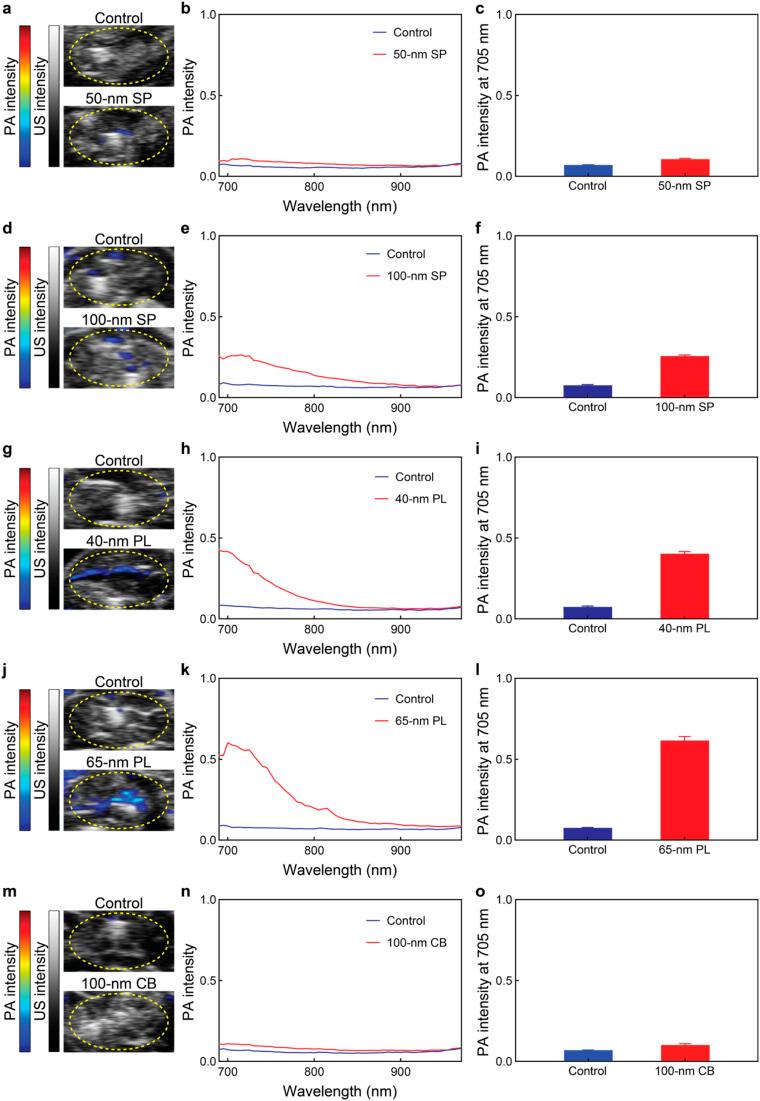
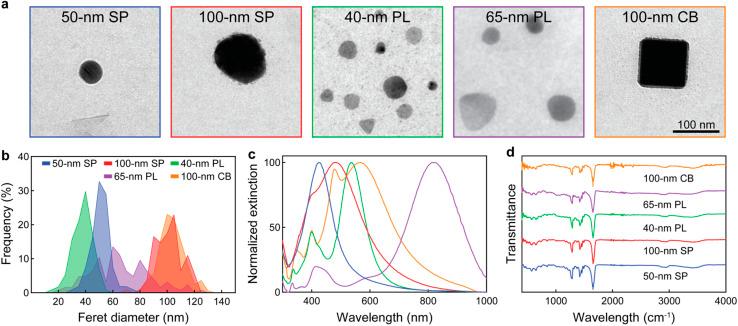
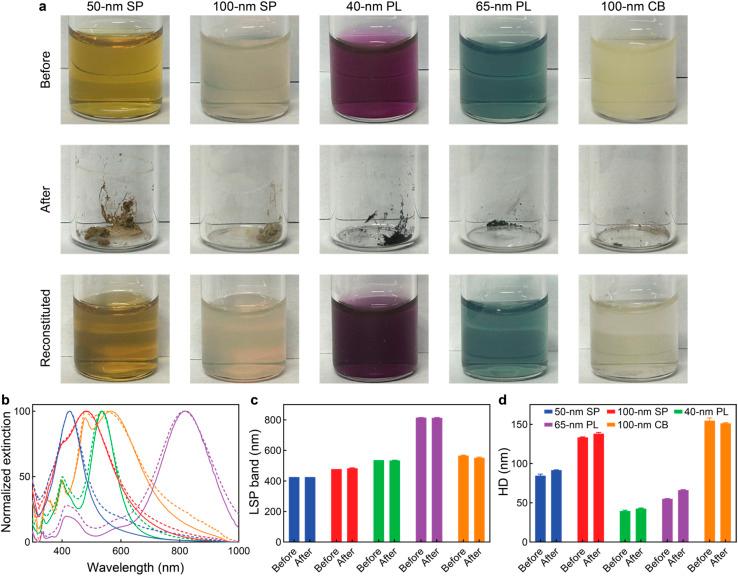
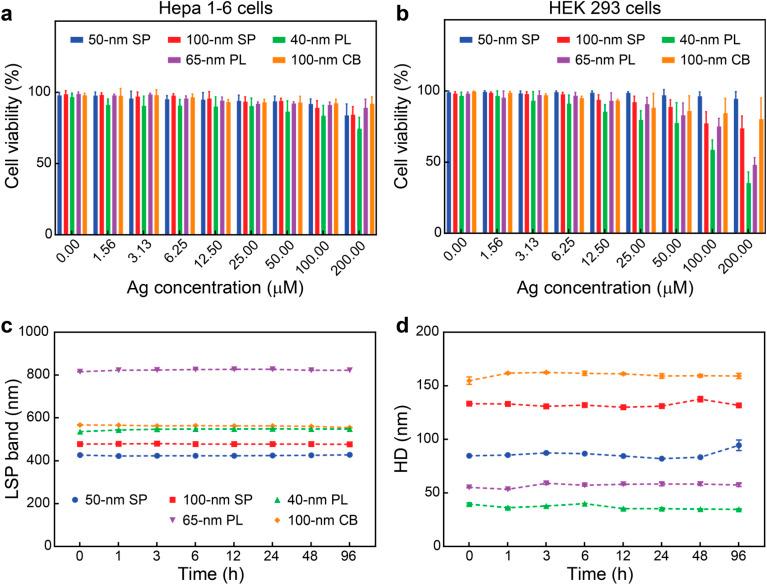
Photoacoustic (PA) imaging is a diagnostic tool widely explored in (pre)clinical settings, as it combines the strengths of optical and ultrasound imaging, resulting in high contrast resolution and deep tissue penetration. Although PA imaging can directly visualize some endogenous molecules ( deoxygenated and oxygenated hemoglobin), most of its applications require the administration of external probes, including organic dyes and inorganic nanoparticles. Despite being historically used for antimicrobial and wound healing applications, silver nanoparticles (AgNPs) possess clear merits for PA imaging, including tunable optical properties, high-quality localized surface plasmon (LSP) resonances, strong photothermal conversions, and photostability. In this study, we explored new PA imaging probes based on silver nanocores (with different morphologies and sizes) and polymer shells, and identified the structural features that provide improved biocompatibility, stability, and probe performance. Notably, the size and morphology of the cores strongly impacted the PA signal of the silver probes. For example, among the different particles tested, plate-shaped AgNPs generated up to 3-fold greater signal, as their optical properties, specifically LSP bands and extinction coefficients, were better suited for PA imaging. Even if nanoconstructs displayed apparent inadequate optical features, in the case of spherical AgNPs with LSP bands centered in the blue region of the spectrum, a strong PA signal could still be obtained by manipulating the core size, resulting in up to 2-fold greater signal for larger particles in comparison to their smaller counterparts. All AgNPs were stable in biological environments, did not photobleach, and preserved strong PA imaging signals in setups. Taken together, our results exemplify the merits of AgNPs as PA imaging agents, providing a better understanding of the nanoengineering of new imaging probes and thereby extending the applications of AgNPs beyond traditional antimicrobial and wound healing applications. Since some of the nanoconstructs we explored in this study are currently being investigated as photothermal agents in clinical trials, new opportunities may arise in intraoperative imaging and image-guided therapy.
光声(PA)成像作为一种诊断工具,在(临床前)临床环境中得到了广泛探索,因为它结合了光学成像和超声成像的优势,具有高对比度分辨率和深层组织穿透能力。尽管PA成像可以直接可视化一些内源性分子(脱氧血红蛋白和氧合血红蛋白),但其大多数应用需要使用外部探针,包括有机染料和无机纳米颗粒。尽管银纳米颗粒(AgNPs)在历史上曾用于抗菌和伤口愈合应用,但它在PA成像方面具有明显优势,包括可调节的光学性质、高质量的局域表面等离子体(LSP)共振、强大的光热转换能力和光稳定性。在本研究中,我们探索了基于银纳米核(具有不同形态和尺寸)和聚合物壳的新型PA成像探针,并确定了能够提高生物相容性、稳定性和探针性能的结构特征。值得注意的是,核的尺寸和形态对银探针的PA信号有很大影响。例如,在测试的不同颗粒中,板状AgNPs产生的信号高达3倍,因为其光学性质,特别是LSP带和消光系数,更适合PA成像。即使纳米结构显示出明显不足的光学特征,如LSP带位于光谱蓝色区域的球形AgNPs,通过控制核尺寸仍可获得较强的PA信号,与较小颗粒相比,较大颗粒的信号增强了2倍。所有AgNPs在生物环境中都很稳定,不会发生光漂白,并且在实验装置中保留了较强的PA成像信号。综上所述,我们的结果例证了AgNPs作为PA成像剂的优点,有助于更好地理解新型成像探针的纳米工程,从而将AgNPs的应用扩展到传统抗菌和伤口愈合应用之外。由于我们在本研究中探索的一些纳米结构目前正在临床试验中作为光热剂进行研究,术中成像和图像引导治疗可能会出现新的机遇。

 Zotero 插件