
用于增强防腐性能和促进内皮化潜力的半胱氨酸-丙氨酸-甘氨酸肽与两亲性甲氧基聚乙二醇-聚乳酸-羟基乙酸共聚物修饰的ZE21B镁合金
Cys-Ala-Gly Peptides and Amphiphilic mPEG-PLGA Polymer Modified ZE21B Magnesium Alloy for Enhanced Anticorrosion and Pro-Endothelialization Potential.
作者信息
Jia Man, Gu Yunwei, Wang Qi, Bai Lingchuang, Guan Shaokang
机构信息
School of Material Science and Engineering, Zhengzhou University, 100 Science Road, Zhengzhou 450001, P R China.
Henan Key Laboratory of Advanced Light Alloy, 100 Science Road, Zhengzhou 450001, P R China.
出版信息
ACS Omega. 2025 Aug 5;10(32):36351-36363. doi: 10.1021/acsomega.5c04556. eCollection 2025 Aug 19.
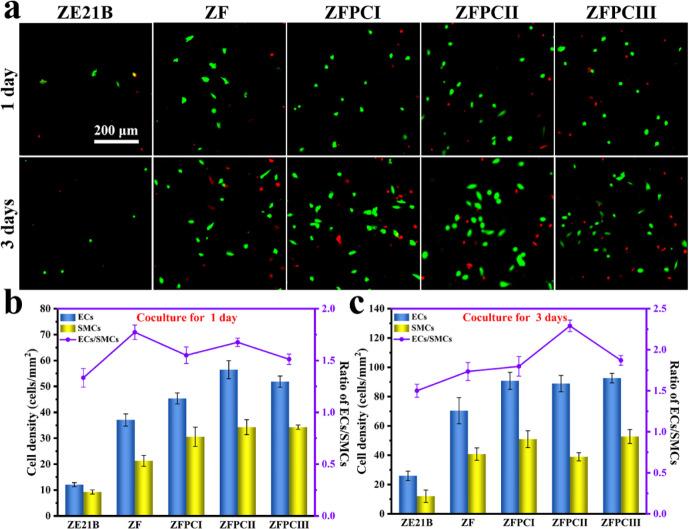
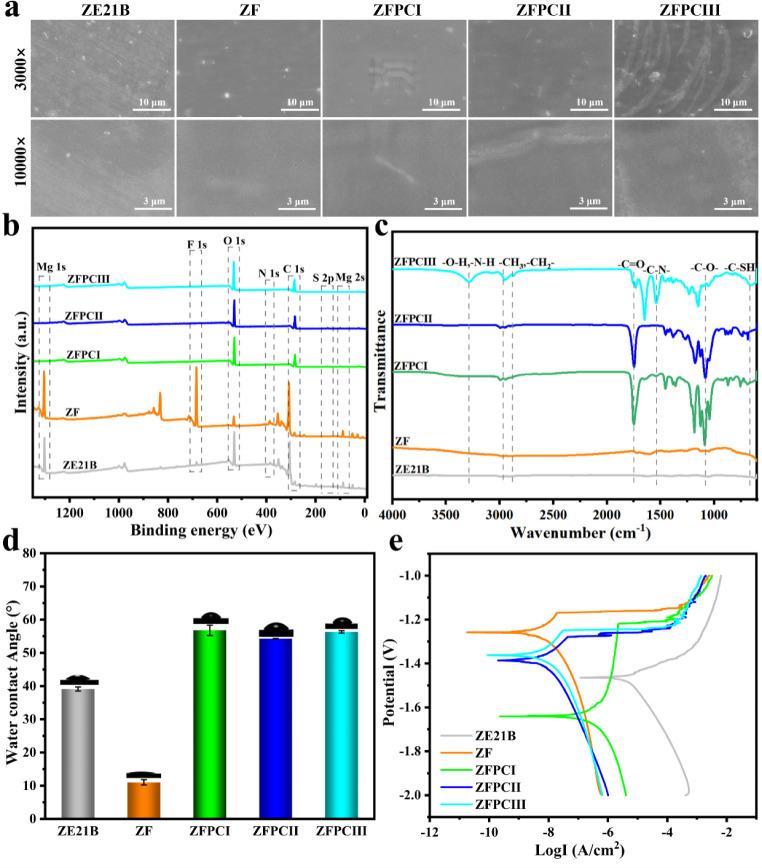
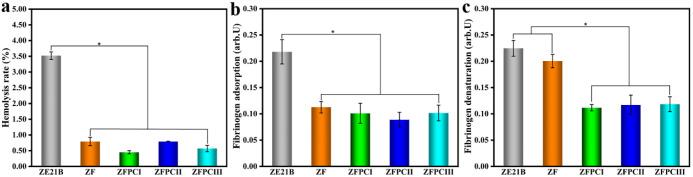
Magnesium alloy stents (MASs) provide significant therapeutic benefits for the treatment of cardiovascular disease. Unlike conventional permanent stents, MASs gradually degrade after fulfilling their mechanical support function, thereby reducing the risk of long-term complications. However, the clinical application of MAS is hindered by two primary challenges: excessively rapid degradation in physiological environments and inadequate biocompatibility resulting from the alloy's corrosion behavior. Herein, we developed a multifunctional composite coating on Mg-Zn-Y-Nd (ZE21B) alloy that incorporated a MgF layer, amphiphilic methoxy-terminated poly-(ethylene glycol)--poly-(lactide--glycolide) (mPEG-PLGA) polymer, and bioactive CAG peptides to enhance its corrosion resistance, hemocompatibility, and pro-endothelialization potential. The ZE21B with mPEG-PLGA/CAG coating showed a slower degradation rate. In addition, the modified ZE21B alloy exhibited the appropriate lower levels of hemolysis rate, fibrinogen adsorption, and denaturation. Furthermore, the mPEG-PLGA/CAG composite coating promoted the adhesion and proliferation of endothelial cells (ECs), inhibited the same behaviors of smooth muscle cells (SMCs), and enhanced the competitive growth of ECs over SMCs. These findings suggested that the mPEG-PLGA/CAG coating effectively enhanced the corrosion resistance and pro-endothelialization capacity of the ZE21B magnesium alloy, addressing urgent clinical demands for biodegradable vascular stents that balance degradation rate with biological safety, and offering a promising strategy for its advancement. By improving both corrosion resistance and endothelialization, this work contributed to the development of next-generation stents with the potential to reduce long-term complications and healthcare burdens.
镁合金支架(MASs)为心血管疾病的治疗提供了显著的治疗益处。与传统的永久性支架不同,MASs在完成其机械支撑功能后会逐渐降解,从而降低长期并发症的风险。然而,MAS的临床应用受到两个主要挑战的阻碍:在生理环境中降解过快以及合金腐蚀行为导致的生物相容性不足。在此,我们在Mg-Zn-Y-Nd(ZE21B)合金上开发了一种多功能复合涂层,该涂层包含MgF层、两亲性甲氧基封端的聚(乙二醇)-聚(丙交酯-乙交酯)(mPEG-PLGA)聚合物和生物活性CAG肽,以增强其耐腐蚀性、血液相容性和促进内皮化的潜力。具有mPEG-PLGA/CAG涂层的ZE21B显示出较慢的降解速率。此外,改性后的ZE21B合金表现出适当较低水平的溶血率、纤维蛋白原吸附和变性。此外,mPEG-PLGA/CAG复合涂层促进了内皮细胞(ECs)的黏附和增殖,抑制了平滑肌细胞(SMCs)的相同行为,并增强了ECs相对于SMCs的竞争性生长。这些发现表明,mPEG-PLGA/CAG涂层有效地增强了ZE21B镁合金的耐腐蚀性和促进内皮化能力,满足了可降解血管支架在降解速率与生物安全性之间取得平衡的迫切临床需求,并为其发展提供了一种有前景的策略。通过提高耐腐蚀性和内皮化,这项工作有助于开发下一代支架,有可能减少长期并发症和医疗负担。



 Zotero 插件