
用于增强骨关节炎抗炎和成骨作用的线粒体靶向肉桂酸基纳米前药
Mitochondria-Targeted Cassic Acid Base Nanoprodrug for Enhanced Anti-Inflammatory and Osteogenic Effects in Osteoarthritis.
作者信息
Yu Peng, Sun Kai, Cheng Chengjin, Li Hua, Hu Xingbo, Yi Yongtao, Li Xi, Manickam Thiyagarajan, Thirumugam Gowripriya, Dharman Govindaraj, Jayaprakasam Kalaiyarasi
机构信息
Department of Orthopedic, First People's Hospital of Kunming, Kunming 650034, China.
Department of Spine Surgery, Affiliated Hospital of Yunnan University, Kunming 650051, China.
出版信息
ACS Omega. 2025 Aug 11;10(32):35940-35953. doi: 10.1021/acsomega.5c03216. eCollection 2025 Aug 19.
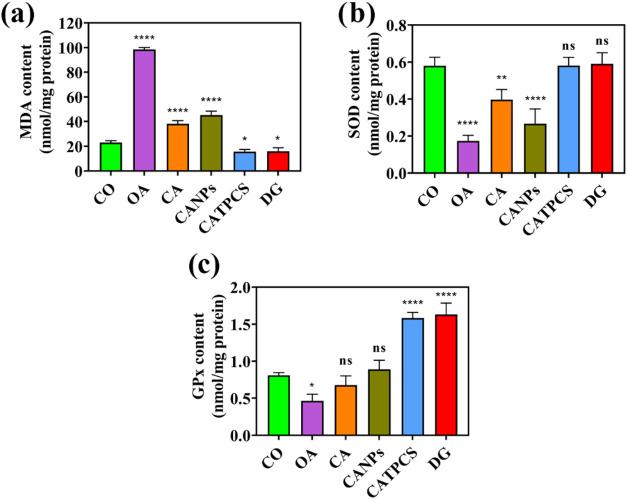
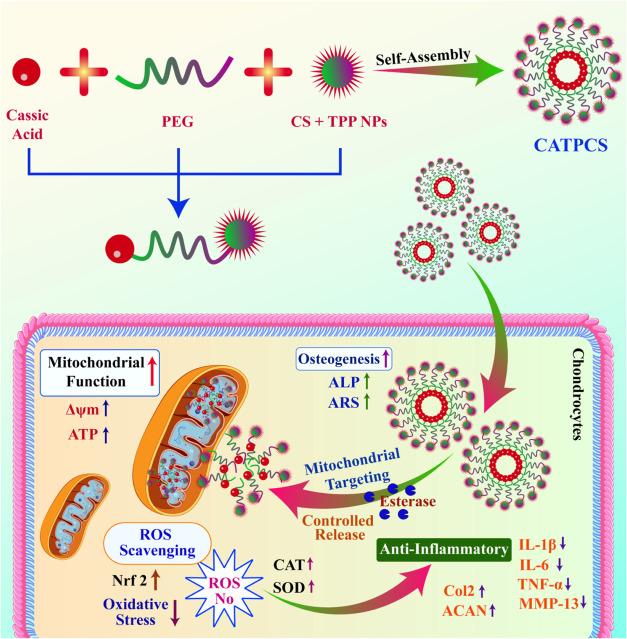
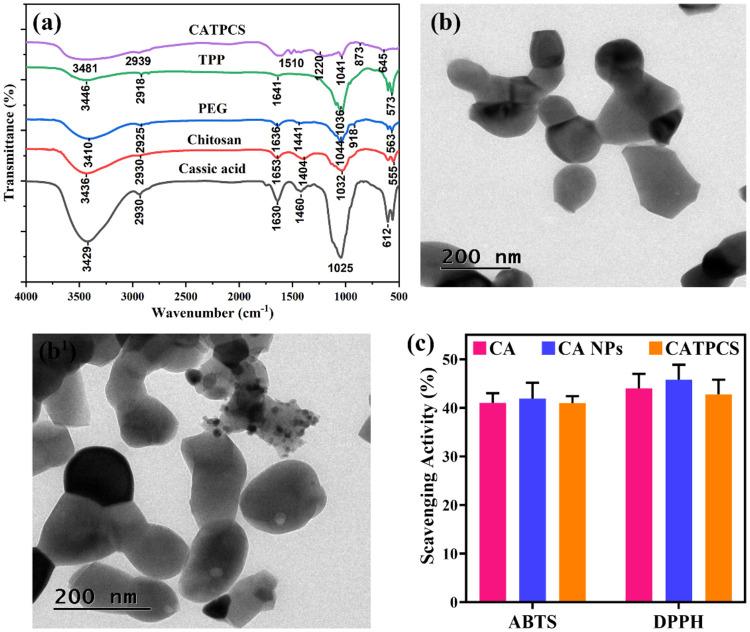
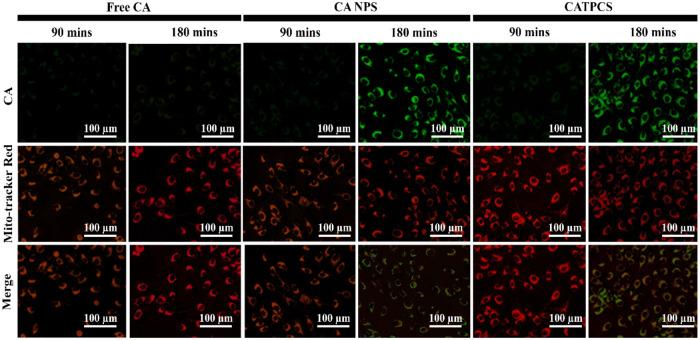
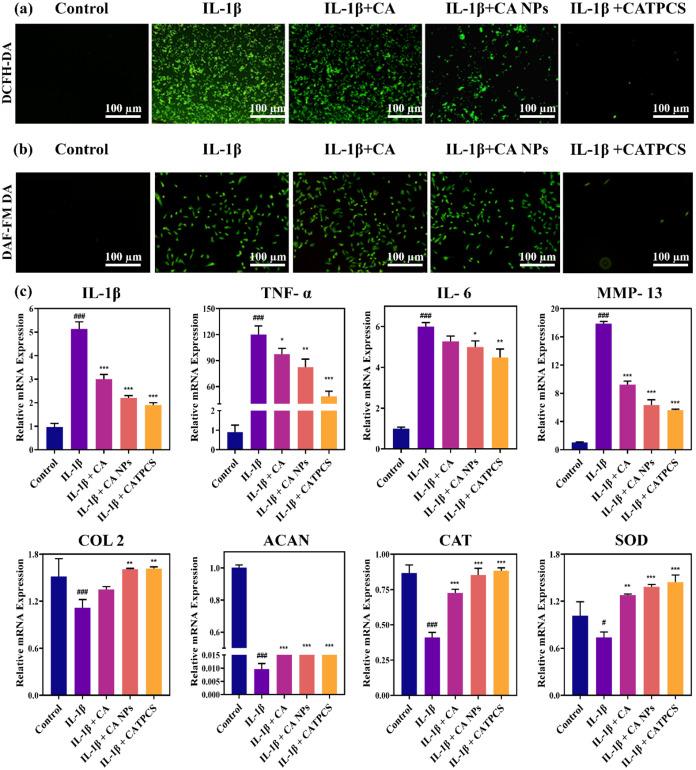
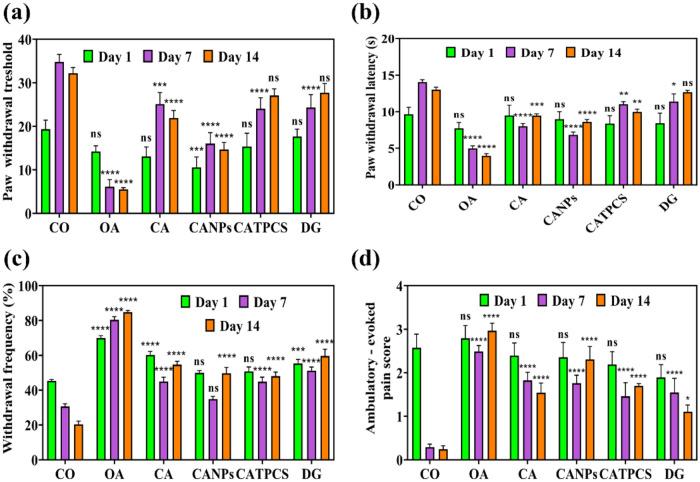
CATPCS prodrug-based nanodrug delivery system (PNDDS), a mitochondria-targeted nanoprodrug combining Cassic acid (CA) with a PEG-modified chitosan-tripolyphosphate (TPP) molecule (CATPCS), overcomes the limitations of free Cassic acid in treating osteoarthritis (OA) and bone regeneration. FTIR and DLS confirm that lyophilized CATPCS self-assembles into stable, homogeneous spherical nanoparticles (230.8 ± 45.5 nm, PDI: 0.180, ζ potential: 30.5 ± 9.2 mV). For targeted delivery, HR-TEM scans verified this spherical morphology. studies show that IL-1β-stimulated chondrocytes internalize and colocalize CATPCS more effectively than free CA and CA NPs owing to the positively charged TPP moiety. CATPCS and CA NPs have in vitro cytotoxicity lower than that of free CA, indicating biocompatibility. In IL-1β-stimulated chondrocytes, CATPCS significantly reduced the level of ROS and RNS, increased cartilage-specific markers (COL2A1, ACAN), and lowered inflammatory factors. Increased levels of alkaline phosphatase (ALP) and alizarin red staining (ARS) protected mitochondrial membrane potential, reduced chondrocyte apoptosis, and increased osteogenesis. Comparable to Diclofenac (DG), CATPCS decreased mechanical allodynia, cold hypersensitivity, and thermal hyperalgesia in MIA-induced OA rats. CATPCS reduced oxidative stress by lowering MDA and restoring SOD and GPx activity according to biochemical studies. Histopathology demonstrated that CATPCS reduced inflammation and preserved the OA animals' articular cartilage thickness. Mitochondrial-targeted CATPCS PNDDS is an excellent osteoarthritis and bone regeneration therapy because of its enhanced delivery, anti-inflammatory, antioxidant, and osteogenic effects.
基于环孢素A(CA)前药的纳米药物递送系统(PNDDS),是一种将环孢素A与聚乙二醇修饰的壳聚糖-三聚磷酸钠(TPP)分子(CATPCS)相结合的线粒体靶向纳米前药,克服了游离环孢素A在治疗骨关节炎(OA)和骨再生方面的局限性。傅里叶变换红外光谱(FTIR)和动态光散射(DLS)证实,冻干的CATPCS自组装成稳定、均匀的球形纳米颗粒(230.8±45.5nm,多分散指数:0.180,ζ电位:30.5±9.2mV)。为了实现靶向递送,高分辨率透射电子显微镜(HR-TEM)扫描验证了这种球形形态。研究表明,由于带正电荷的TPP部分,白细胞介素-1β刺激的软骨细胞比游离CA和CA纳米颗粒更有效地内化和共定位CATPCS。CATPCS和CA纳米颗粒的体外细胞毒性低于游离CA,表明具有生物相容性。在白细胞介素-1β刺激的软骨细胞中,CATPCS显著降低活性氧(ROS)和活性氮(RNS)水平,增加软骨特异性标志物(Ⅱ型胶原蛋白(COL2A1)、聚集蛋白聚糖(ACAN)),并降低炎症因子。碱性磷酸酶(ALP)水平升高和茜素红染色(ARS)保护线粒体膜电位,减少软骨细胞凋亡,并增加成骨作用。与双氯芬酸(DG)相当,CATPCS降低了木瓜蛋白酶诱导的OA大鼠的机械性痛觉过敏、冷超敏反应和热痛觉过敏。根据生化研究,CATPCS通过降低丙二醛(MDA)并恢复超氧化物歧化酶(SOD)和谷胱甘肽过氧化物酶(GPx)活性来降低氧化应激。组织病理学表明,CATPCS减轻炎症并保留OA动物的关节软骨厚度。线粒体靶向的CATPCS PNDDS由于其增强的递送、抗炎、抗氧化和成骨作用,是一种优秀的骨关节炎和骨再生治疗方法。



 Zotero 插件