
从基因和人群角度看与肺癌组织学亚型相关的循环蛋白。
Circulating proteins associated with histological subtypes of lung cancer from genetic and population-based perspectives.
作者信息
Lyu Zhangyan, Si Guojin, Xing Mengbo, Li Wenxuan, Gao Ximin, Wang Meng, Song Fengju, Chen Kexin
机构信息
Department of Epidemiology and Biostatistics, Key Laboratory of Molecular Cancer Epidemiology, Key Laboratory of Prevention and Control of Human Major Diseases, Ministry of Education, Tianjin's Clinical Research Center for Cancer, National Clinical Research Center for Cancer, State Key Laboratory of Druggability Evaluation and Systematic Translational Medicine, Tianjin Medical University Cancer Institute and Hospital, Tianjin Medical University, Tianjin, China.
Department of Lung Cancer, Key Laboratory of Cancer Prevention and Therapy, National Clinical Research Center for Cancer, Tianjin's Clinical Research Center for Cancer, Tianjin Medical University Cancer Institute & Hospital, Tianjin, China.
出版信息
PLoS Genet. 2025 Aug 25;21(8):e1011821. doi: 10.1371/journal.pgen.1011821. eCollection 2025 Aug.
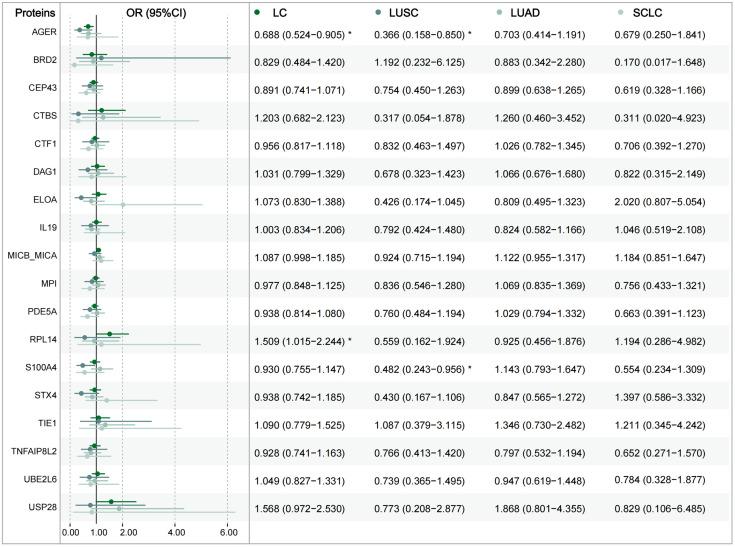
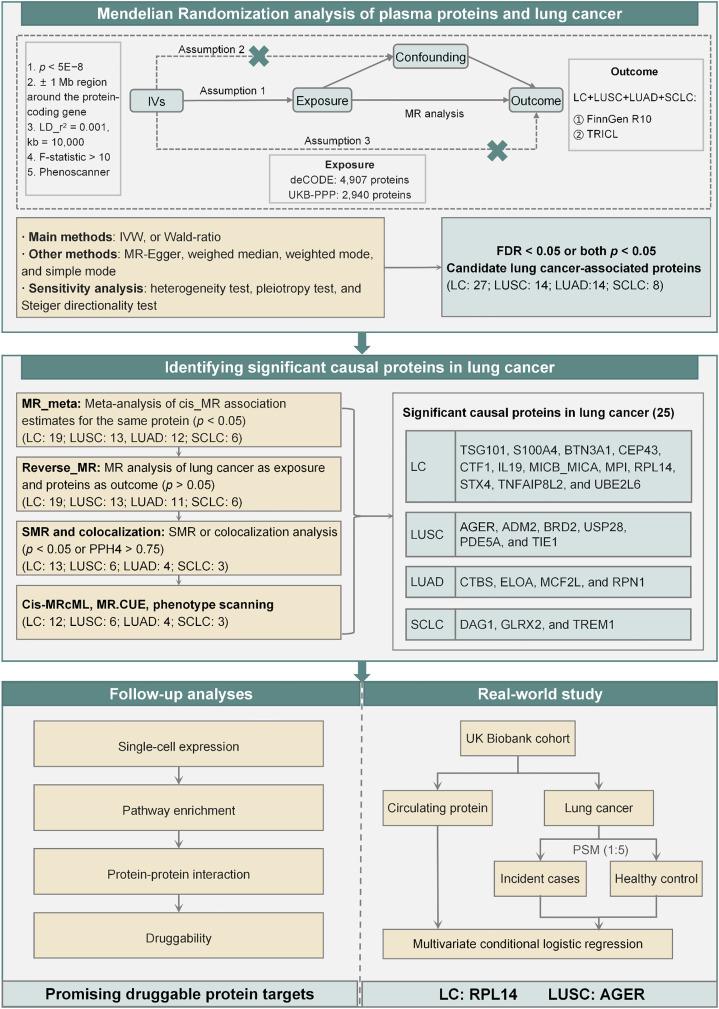
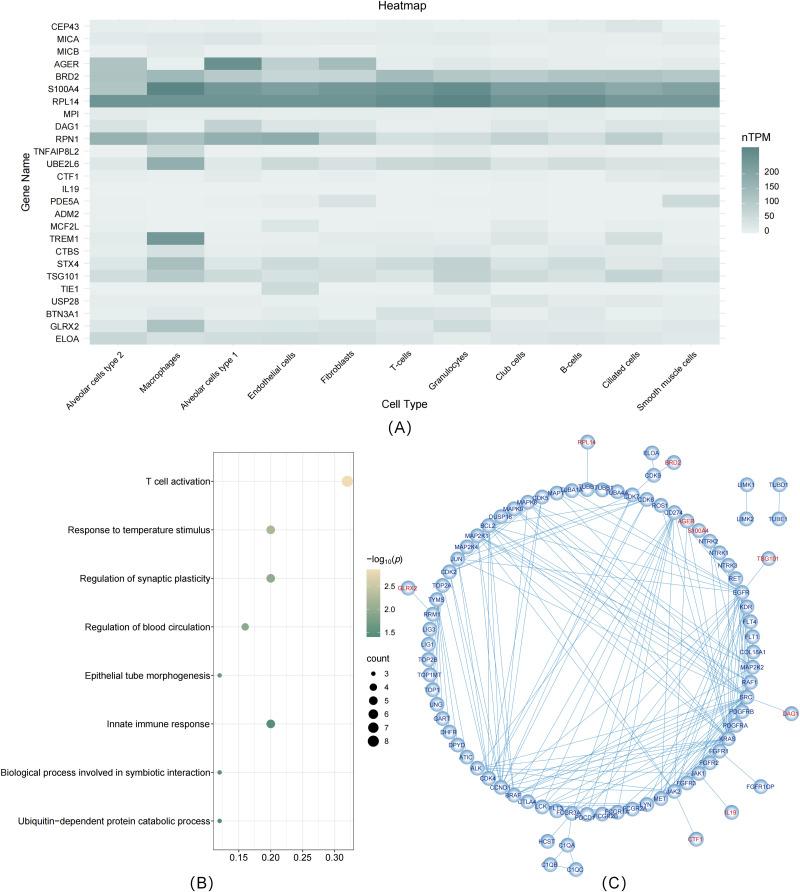
Lung cancer (LC) is the leading cause of cancer-related mortality worldwide, accounting for millions of deaths annually. Its major subtypes-lung squamous carcinoma (LUSC), lung adenocarcinoma, and small-cell LC-exhibit distinct risk factors and genetic susceptibilities, necessitating the use of subtype-specific biomarkers. Two-sample Mendelian randomization (MR) analyses were conducted using protein quantitative trait loci from the UK Biobank Pharma Proteomics Project and deCODE datasets. A robust analytical framework, including reverse MR, meta-analysis, summary-data-based MR tests, and colocalization, cisMR-cML, MR.CUE and phenotype scanning analyses were used to identify proteins associated with LC risk. We conducted a systematic review to contextualize our research findings. Follow-up analyses, including pathway enrichment, protein-protein interaction network analysis, and druggability evaluations, were used to explore the mechanisms and therapeutic potential of the identified proteins. Significant proteins were validated using population-level proteomic data from the UK Biobank (UKB). The results showed that twenty-five proteins were significantly associated with LC or its subtypes, including 15 novel findings. 60S ribosomal protein L14 (RPL14) and advanced glycosylation end-product-specific receptor (AGER) emerged as the strongest discovery, demonstrating consistent and significant associations across both MR and population-level analyses. RPL14 exhibited positive associations with overall LC risk (MR_meta: odds ratio [OR]: 2.012, 95% confidence interval [CI]: 1.297-3.119; UKB: OR: 1.509, 95% CI: 1.015-2.244). Similarly, AGER showed significant protective effects against LUSC risk (MR_meta: OR: 0.572, 95%CI: 0.368-0.889; UKB: OR: 0.366, 95% CI: 0.158-0.850). Pathway analysis revealed the involvement of these proteins in immune regulation and tumorigenesis. Among the 13 identified druggable targets, RPL14 and AGER showed therapeutic potential as approved or investigational drugs targeting these proteins. These findings offer new insights into the pathogenesis of LC and potential therapeutic targets.
肺癌(LC)是全球癌症相关死亡的主要原因,每年导致数百万人死亡。其主要亚型——肺鳞状细胞癌(LUSC)、肺腺癌和小细胞肺癌——表现出不同的危险因素和遗传易感性,因此需要使用亚型特异性生物标志物。利用英国生物银行药物蛋白质组学项目和deCODE数据集的蛋白质定量性状位点进行了两样本孟德尔随机化(MR)分析。采用了一个强大的分析框架,包括反向MR、荟萃分析、基于汇总数据的MR检验以及共定位、顺式MR-cML、MR.CUE和表型扫描分析,以确定与LC风险相关的蛋白质。我们进行了一项系统综述,以将我们的研究结果置于背景中。后续分析,包括通路富集、蛋白质-蛋白质相互作用网络分析和可成药评估,用于探索所鉴定蛋白质的作用机制和治疗潜力。使用来自英国生物银行(UKB)的人群水平蛋白质组学数据对重要蛋白质进行了验证。结果表明,25种蛋白质与LC或其亚型显著相关,其中包括15项新发现。60S核糖体蛋白L14(RPL14)和晚期糖基化终产物特异性受体(AGER)是最显著的发现,在MR和人群水平分析中均显示出一致且显著的关联。RPL14与总体LC风险呈正相关(MR_meta:优势比[OR]:2.012,95%置信区间[CI]:1.297-3.119;UKB:OR:1.509,95%CI:1.015-2.244)。同样,AGER对LUSC风险显示出显著的保护作用(MR_meta:OR:0.572,95%CI:0.368-0.889;UKB:OR:0.366,95%CI:0.158-0.850)。通路分析揭示了这些蛋白质参与免疫调节和肿瘤发生。在13个已鉴定的可成药靶点中,RPL14和AGER作为针对这些蛋白质的已批准或研究性药物显示出治疗潜力。这些发现为LC的发病机制和潜在治疗靶点提供了新的见解。


 Zotero 插件