
伊朗护士中新冠病毒病后抑郁症的患病率:一项系统评价与荟萃分析
Post-COVID-19 depression prevalence in Iranian nurses: a systematic review and meta-analysis.
作者信息
Sharif-Nia Hamid, Heidari Mohammad, Moshtagh Mozhgan, Nabi Foodani Mahdi, Goudarzian Amir Hossein
机构信息
Psychosomatic Research Center, Mazandaran University of Medical Sciences, Sari, Iran.
Department of Nursing, Amol Faculty of Nursing and Midwifery, Mazandaran University of Medical Sciences, Sari, Iran.
出版信息
BMJ Open. 2025 Aug 25;15(8):e103969. doi: 10.1136/bmjopen-2025-103969.
OBJECTIVES
This systematic review and meta-analysis aimed to assess the pooled prevalence of post-COVID-19 depression among Iranian nurses, identify at-risk groups and provide practical recommendations for intervention.
DESIGN
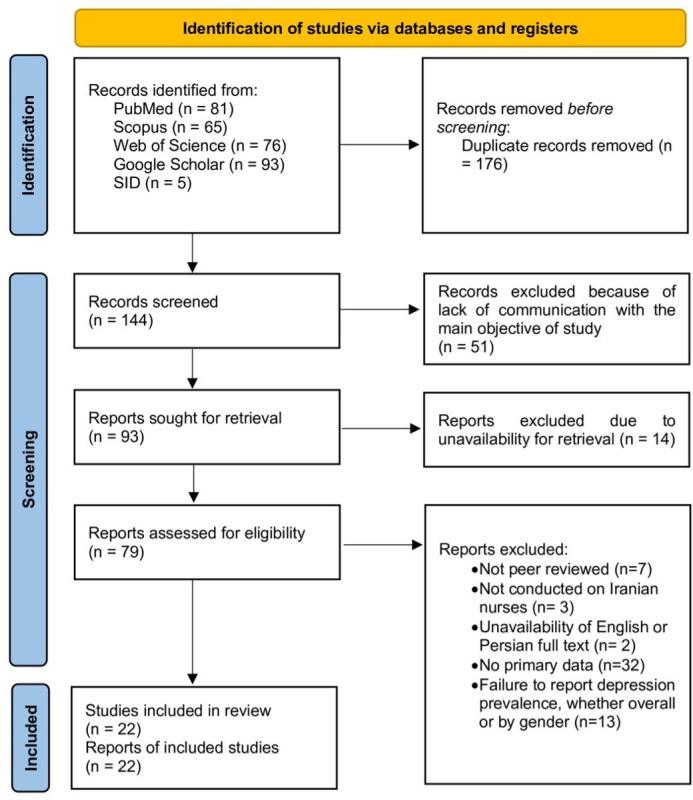
In adherence to the Preferred Reporting Items for Systematic Reviews and Meta-Analyses guidelines, we conducted a systematic review and meta-analysis, encompassing studies published from 2019 to 2024. Comprehensive searches were performed across international and Iranian databases.
DATA SOURCES
PubMed, Scopus, Web of Science, Google Scholar and Scientific Information Database.
ELIGIBILITY CRITERIA FOR SELECTING STUDIES
Studies meeting the following criteria were included in the analysis: (1) conducted on the population of Iranian nurses, (2) keywords explicitly included in the title or abstract, (3) studies published between 2019 and 2024, (4) published in Persian or English and (5) reported the prevalence of depression either in the entire population or differentiated by gender.
DATA EXTRACTION AND SYNTHESIS
Data extraction was conducted independently by two reviewers, and quality assessment was performed using the Newcastle-Ottawa Scale. Statistical analyses were executed using random effects models to estimate pooled prevalence rates, with subgroup analyses and sensitivity tests conducted to explore sources of heterogeneity and confirm result robustness.
RESULTS
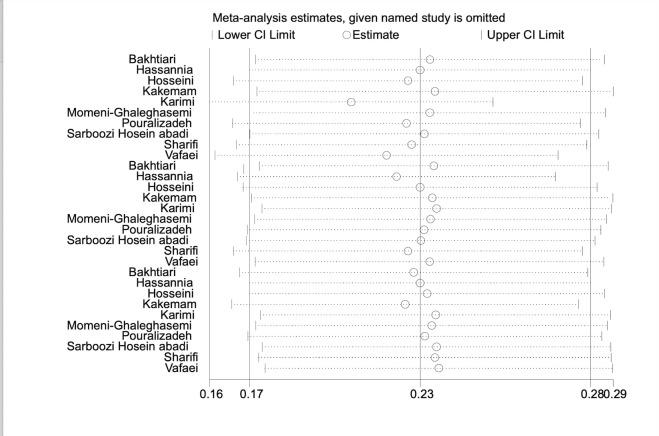
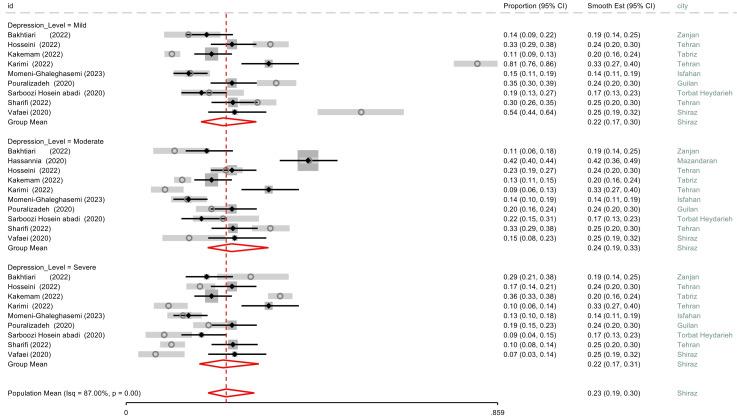
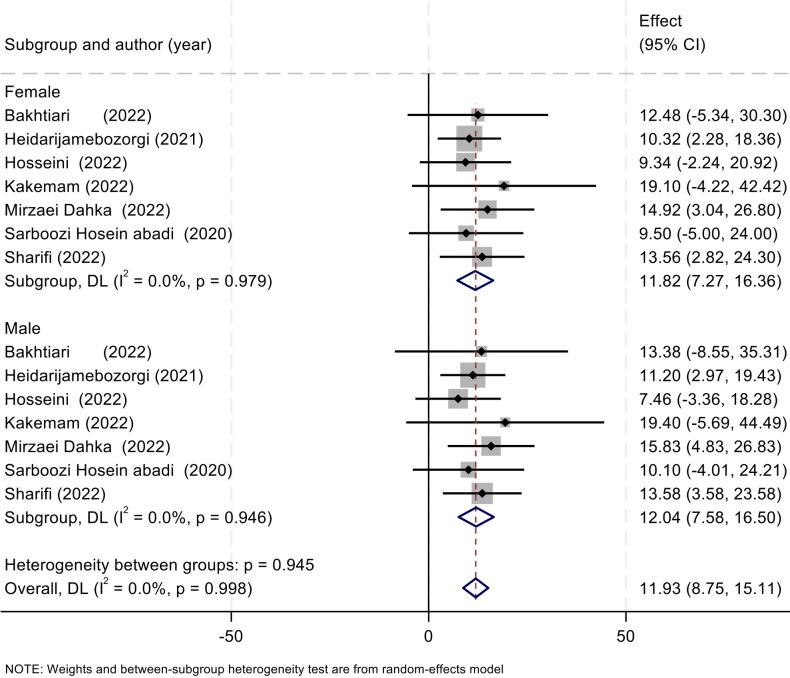
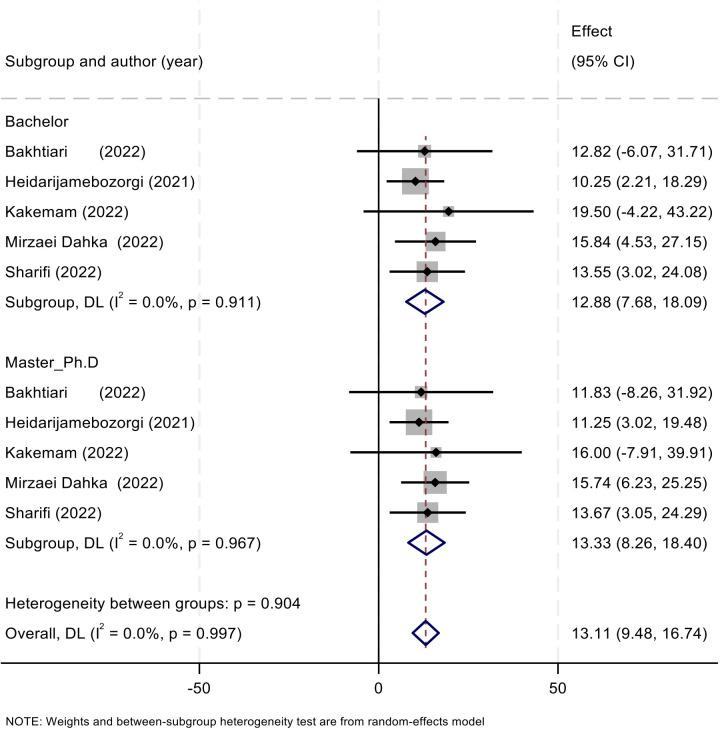
A total of 22 studies met the inclusion criteria, capturing data from various provinces across Iran. The pooled prevalence of depression among Iranian nurses post-COVID-19 was estimated at 23% (95% CI 19% to 30%), indicating a substantial mental health burden within this population. Subgroup analyses revealed notable disparities in depression rates across demographic and professional characteristics. Nurses holding advanced degrees exhibited a higher mean depression score (13.33, 95% CI 9.48 to 16.74) compared with those with bachelor's degrees. Male nurses also reported slightly higher depression scores (12.04, 95% CI 7.58 to 16.50) than their female counterparts. Furthermore, moderate depression emerged as the most common severity level, affecting 24% of nurses. Sensitivity analyses demonstrated that no single study disproportionately influenced the pooled estimates, reinforcing the reliability of the findings.
CONCLUSIONS
This review and meta-analysis illuminate the mental health challenges faced by Iranian nurses in the wake of COVID-19. With a significant proportion of nurses experiencing depression, addressing their psychological needs is imperative. Tailored interventions, such as stress management workshops, access to professional counselling and workplace policies that prioritise mental health, are essential to enhance resilience and sustain healthcare quality during future public health crises. Efforts must also focus on structural changes to create a supportive environment that fosters well-being and professional satisfaction among nurses, ultimately improving patient outcomes and overall healthcare system performance.
目的
本系统评价和荟萃分析旨在评估伊朗护士中新冠后抑郁症的合并患病率,确定高危人群,并提供实用的干预建议。
设计
按照系统评价和荟萃分析的首选报告项目指南,我们进行了一项系统评价和荟萃分析,纳入了2019年至2024年发表的研究。在国际和伊朗数据库中进行了全面检索。
数据来源
PubMed、Scopus、科学网、谷歌学术和科学信息数据库。
研究选择的纳入标准
符合以下标准的研究纳入分析:(1)针对伊朗护士群体进行;(2)标题或摘要中明确包含关键词;(3)2019年至2024年发表的研究;(4)以波斯语或英语发表;(5)报告了整个人口中抑郁症的患病率或按性别区分的患病率。
数据提取与综合
由两名审阅者独立进行数据提取,并使用纽卡斯尔-渥太华量表进行质量评估。使用随机效应模型进行统计分析以估计合并患病率,并进行亚组分析和敏感性测试以探索异质性来源并确认结果的稳健性。
结果
共有22项研究符合纳入标准,涵盖了伊朗不同省份的数据。估计伊朗护士新冠后抑郁症的合并患病率为23%(95%可信区间19%至30%),表明该人群存在相当大的心理健康负担。亚组分析显示,不同人口统计学和专业特征的抑郁症患病率存在显著差异。拥有高级学位的护士平均抑郁得分(13.33,95%可信区间9.48至16.74)高于拥有学士学位的护士。男护士的抑郁得分(12.04,95%可信区间7.58至16.50)也略高于女护士。此外,中度抑郁症是最常见的严重程度级别,影响了24%的护士。敏感性分析表明,没有一项研究对合并估计值产生过大影响,这增强了研究结果的可靠性。
结论
本综述和荟萃分析揭示了新冠疫情后伊朗护士面临的心理健康挑战。由于相当一部分护士患有抑郁症,满足他们的心理需求势在必行。开展压力管理工作坊、提供专业咨询服务以及制定优先考虑心理健康的工作场所政策等针对性干预措施,对于在未来公共卫生危机期间增强恢复力和维持医疗质量至关重要。还必须致力于结构变革,营造一个支持性环境,促进护士的幸福感和职业满意度,最终改善患者结局和整体医疗系统绩效。

 Zotero 插件