
MAFLD:代谢功能障碍与心血管风险之间联系的全面综述
MAFLD: A Comprehensive Review of the Link Between Metabolic Dysfunction and Cardiovascular Risk.
作者信息
Mostafa Alaa M, Pan Ziyan, Yu Ming-Lung, Örmeci Necati, Fouad Yasser, Eslam Mohammed
机构信息
Department of Gastroenterology, Hepatology and Endemic Medicine, Faculty of Medicine, Minia University, Minia, Egypt.
Storr Liver Centre, Westmead Institute for Medical Research, Westmead Hospital and University of Sydney, Sydney, NSW, Australia.
出版信息
Hepat Med. 2025 Aug 19;17:75-90. doi: 10.2147/HMER.S506402. eCollection 2025.
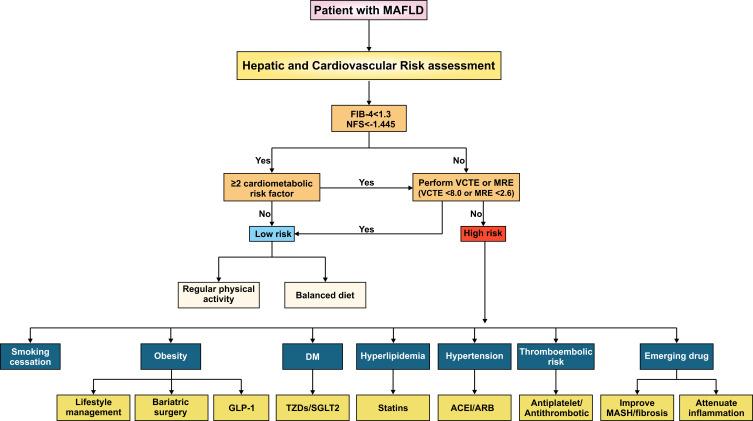
Metabolic dysfunction-associated fatty liver disease (MAFLD) affects over 30% of the global population. It is a multisystem condition with a strong association with cardiovascular disease (CVD), the leading cause of mortality worldwide. Key shared mechanisms, including insulin resistance, systemic inflammation, oxidative stress, and genetic predisposition, couple MAFLD with increased risks of coronary artery disease, ischemic heart disease, and heart failure. Early detection via non-invasive imaging and biomarkers is crucial for effective risk stratification. Management strategies emphasize lifestyle modifications and the development of targeted pharmacotherapies addressing metabolic and inflammatory pathways. Understanding the interconnected pathogenic mechanisms facilitates personalized interventions to reduce morbidity and improve long-term outcomes. A multidisciplinary approach remains essential to prevent and manage the cardiovascular implications of MAFLD.
代谢功能障碍相关脂肪性肝病(MAFLD)影响着全球超过30%的人口。它是一种多系统疾病,与心血管疾病(CVD)密切相关,而心血管疾病是全球主要的死亡原因。包括胰岛素抵抗、全身炎症、氧化应激和遗传易感性在内的关键共同机制,将MAFLD与冠状动脉疾病、缺血性心脏病和心力衰竭的风险增加联系在一起。通过非侵入性成像和生物标志物进行早期检测对于有效的风险分层至关重要。管理策略强调生活方式的改变以及针对代谢和炎症途径的靶向药物治疗的开发。了解相互关联的致病机制有助于进行个性化干预,以降低发病率并改善长期预后。多学科方法对于预防和管理MAFLD的心血管影响仍然至关重要。

 Zotero 插件