
应对变革:新冠疫情前后儿童指导诊所的历程
Navigating change: The journey of the child guidance clinic before and after the COVID-19 pandemic.
作者信息
Biswas Harshita, Sahoo Manoj Kumar
机构信息
Department of Psychiatry, Tata Main Hospital, Jamshedpur, Jharkhand, India.
Department of Psychiatry, Manipal Tata Medical College, (A Constituent Unit of Manipal Academy of Higher Education (MAHE), Jamshedpur, Jharkhand, India.
出版信息
Ind Psychiatry J. 2025 May-Aug;34(2):340-344. doi: 10.4103/ipj.ipj_28_25. Epub 2025 Jul 18.
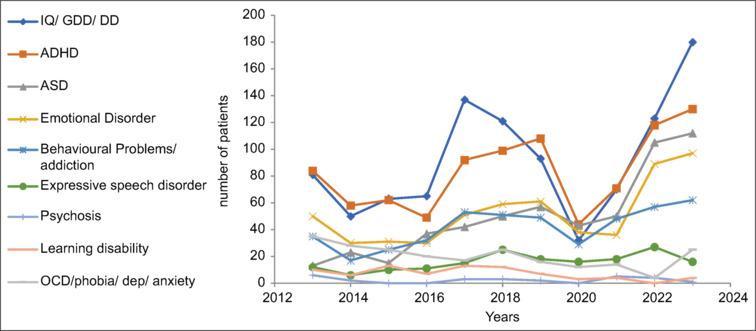
Mental health is crucial for child and adolescent development, but lack of resources often leads to silent suffering and missed opportunities. Establishing child guidance clinics (CGCs) is a step toward holistic care. During COVID, children faced disruptions to schooling, isolation, family stress, and increased digital exposure, leading to a rise in mental health issues. The stressors have left a long-term psychological impact on our lives even after years post-COVID. The study examines the 10-year journey of a CGC that which navigated the changes brought about by COVID-19, highlighting the importance of mental health for child and adolescent development. The CGC's register, which has systematic documentation of patient details, was used to retrospectively analyze patient records for the last 10 years. Data were extracted and organized to identify trends and patterns across diagnoses. Post-COVID-19, cases of autism spectrum disorder, intellectual disability, global developmental delay, Attention deficit hyperactivity disorders (ADHD), and behavioral disorders have increased. There are fluctuations in cases of Obsessive compulsive disorder (OCD), phobia, depression, and anxiety. Emotional disorders, though initially had fluctuating numbers, have also increased after the pandemic. However, expressive speech disorders, psychosis, and learning disabilities were found to be stable without many shifts. CGCs in India are vital in addressing the mental health needs of children and adolescents. Post-COVID, the increase in mental health concerns of children and adolescents demands more focused care and a multi-disciplinary team approach.
心理健康对儿童和青少年的发展至关重要,但资源匮乏往往导致默默承受痛苦和错失机会。设立儿童指导诊所是迈向全面护理的一步。在新冠疫情期间,儿童面临学校停课、隔离、家庭压力以及数字接触增加等问题,导致心理健康问题增多。即使在新冠疫情结束多年后,这些压力源仍对我们的生活产生了长期的心理影响。该研究考察了一家儿童指导诊所应对新冠疫情带来的变化的十年历程,凸显了心理健康对儿童和青少年发展的重要性。该儿童指导诊所的登记册系统记录了患者详细信息,用于回顾性分析过去十年的患者记录。提取并整理数据以识别不同诊断之间的趋势和模式。新冠疫情后,自闭症谱系障碍、智力残疾、全面发育迟缓、注意力缺陷多动障碍(ADHD)和行为障碍的病例有所增加。强迫症(OCD)、恐惧症、抑郁症和焦虑症的病例有波动。情绪障碍虽然最初数量有波动,但在疫情后也有所增加。然而,发现表达性言语障碍、精神病和学习障碍较为稳定,没有太大变化。印度的儿童指导诊所在满足儿童和青少年的心理健康需求方面至关重要。新冠疫情后,儿童和青少年心理健康问题的增加需要更有针对性的护理和多学科团队方法。
 Zotero 插件