
地氟泼尼龙和溴芬酸治疗葡萄膜炎或白内障手术后黄斑囊样水肿患者的回顾性数据分析
A Retrospective Data Analysis of Patients Treated with Difluprednate and Bromfenac for Cystoid Macular Edema After Uveitis or Cataract Surgery.
作者信息
Shah Nirmit, Tran Edward, Caballero-Ortiz Sandra, Kyveris Angela, Chan Toby
机构信息
Melbourne Medical School, University of Melbourne, Melbourne, VIC, Australia.
Ocular Health Centre, Kitchener, ON, Canada.
出版信息
Clin Ophthalmol. 2025 Aug 21;19:2879-2888. doi: 10.2147/OPTH.S516792. eCollection 2025.
PURPOSE
Cystoid macular edema (CME) is a condition which severely limits central vision, often occurring secondary to cataract surgery or uveitis. Although commonly treated with non-steroidal anti-inflammatory agents and a corticosteroid adjunct, an optimal medication regime has not yet been evaluated. Hence, we present a comprehensive analysis of the efficacy and relapse rate associated with various agents to treat CME, such as Bromfenac and Difluprednate.
PATIENTS AND METHODS
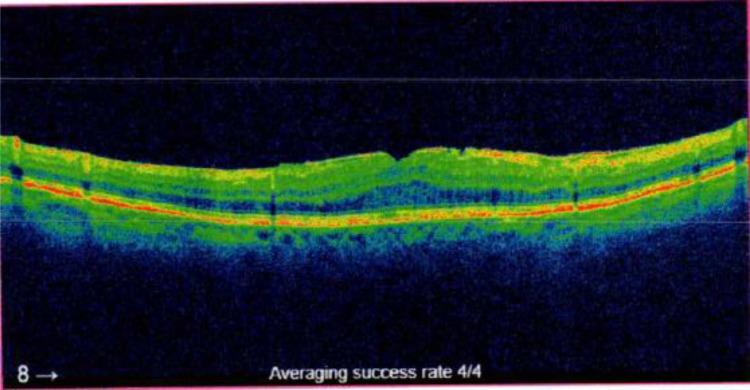
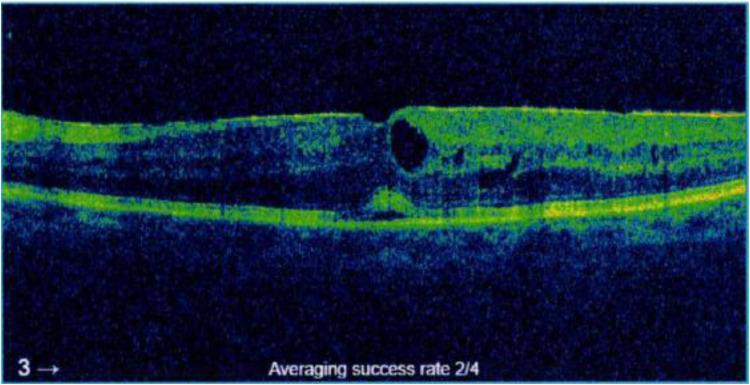
A retrospective chart review was conducted on patients aged 18 and above diagnosed with postoperative or uveitic CME via optical coherence tomography from January 1, 2016, to December 31, 2023. Among these eligible patients, we investigated those treated with non-steroidal anti-inflammatory drugs (NSAIDs) and/or corticosteroids. The primary outcome was the duration until complete resolution of CME. Secondary outcomes included improvement of CME and the likelihood of CME recurrence after treatment. Statistical analysis involved ANOVA and Tukey's HSD test to compare treatment efficacy.
RESULTS
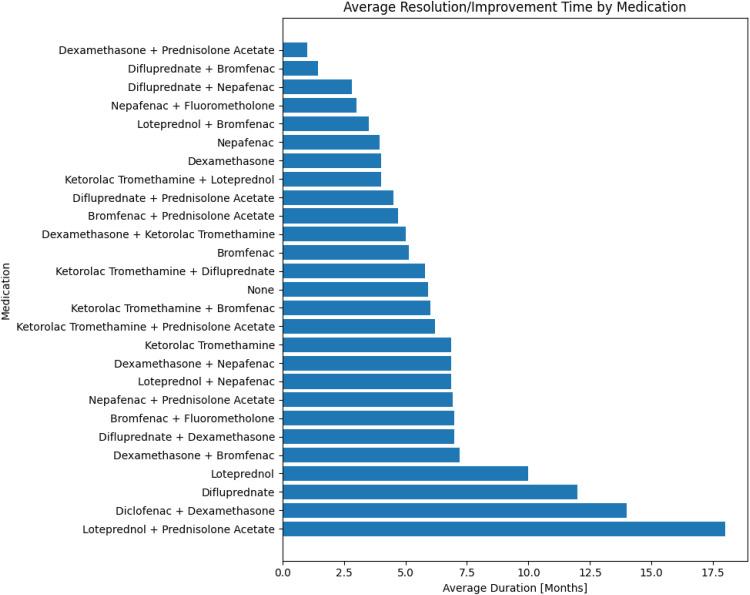
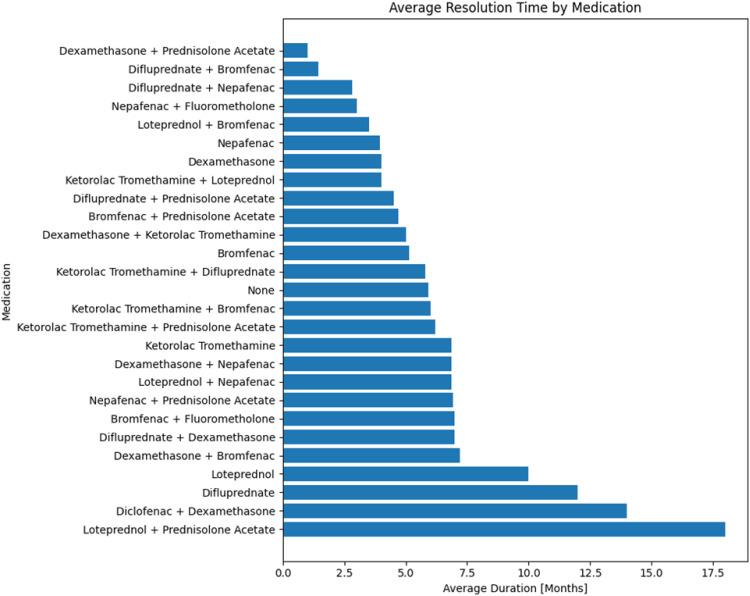
A total of 518 patients were analyzed. Difluprednate and bromfenac (n = 28) demonstrated the shortest mean resolution time (1.45 months) compared to other combinations. The ANOVA test revealed significant differences among treatment groups (F-value: 6.455, P-value: <0.00001), and Tukey's HSD test showed that difluprednate and bromfenac significantly outperformed other medications in treating cystoid macular edema (CME) by reducing resolution times by 5.40 months compared to ketorolac alone (P = 0.0011), 4.76 months compared to ketorolac and prednisolone acetate (P = 0.0001), 5.42 months compared to loteprednol and nepafenac (P < 0.0001), 5.40 months compared to dexamethasone and nepafenac (P < 0.0001), and 4.47 months compared to no treatment (P = 0.0240). Difluprednate and bromfenac also had no cases of CME recurrence.
CONCLUSION
Difluprednate and bromfenac proved to be the most effective treatment regimen for cystoid macular edema (CME), resolving the condition in the shortest amount of time and requiring less frequent dosing.
目的
黄斑囊样水肿(CME)是一种严重限制中心视力的病症,常继发于白内障手术或葡萄膜炎。尽管通常使用非甾体类抗炎药和皮质类固醇辅助治疗,但尚未评估最佳用药方案。因此,我们对治疗CME的各种药物(如溴芬酸和地氟泼尼龙)的疗效和复发率进行了综合分析。
患者与方法
对2016年1月1日至2023年12月31日期间通过光学相干断层扫描诊断为术后或葡萄膜炎性CME的18岁及以上患者进行回顾性病历审查。在这些符合条件的患者中,我们调查了接受非甾体类抗炎药(NSAIDs)和/或皮质类固醇治疗的患者。主要结局是CME完全消退的持续时间。次要结局包括CME的改善情况以及治疗后CME复发的可能性。统计分析采用方差分析和Tukey's HSD检验来比较治疗效果。
结果
共分析了518例患者。与其他组合相比,地氟泼尼龙和溴芬酸(n = 28)的平均消退时间最短(1.45个月)。方差分析显示治疗组之间存在显著差异(F值:6.455,P值:<0.00001),Tukey's HSD检验表明,与单独使用酮咯酸相比,地氟泼尼龙和溴芬酸在治疗黄斑囊样水肿(CME)方面显著优于其他药物,消退时间缩短了5.40个月(P = 0.0011);与酮咯酸和醋酸泼尼松龙相比,缩短了4.76个月(P = 0.0001);与氯替泼诺和奈帕芬酸相比,缩短了5.42个月(P < 0.0001);与地塞米松和奈帕芬酸相比,缩短了5.40个月(P < 0.0001);与未治疗相比,缩短了4.47个月(P = 0.0240)。地氟泼尼龙和溴芬酸也没有CME复发的病例。
结论
地氟泼尼龙和溴芬酸被证明是治疗黄斑囊样水肿(CME)最有效的治疗方案,能在最短时间内解决问题,且给药频率较低。

 Zotero 插件