
斋月禁食对代谢功能障碍相关脂肪性肝病患者代谢和肝脏指标的影响:一项系统评价和荟萃分析
Impacts of Ramadan Fasting on Metabolic and Hepatic Endpoints in Individuals With Metabolic Dysfunction-Associated Fatty Liver Disease: A Systematic Review and Meta-Analysis.
作者信息
Kamrul-Hasan A B M, Ashraf Hamid, Nagendra Lakshmi, Dutta Deep, Shahriar Md Nafis, Islam Md Saiful, Pappachan Joseph M
机构信息
Department of Endocrinology Mymensingh Medical College Mymensingh Bangladesh.
Rajiv Gandhi Centre for Diabetes and Endocrinology Aligarh Muslim University Aligarh India.
出版信息
JGH Open. 2025 Aug 25;9(8):e70264. doi: 10.1002/jgh3.70264. eCollection 2025 Aug.
OBJECTIVE
Previous studies examining the impact of Ramadan fasting on patients with metabolic dysfunction-associated fatty liver disease (MAFLD) have yielded mixed results. Therefore, assessing the health benefits of such fasting in patients with MAFLD through a systematic review and meta-analysis (SR/MA) is important.
METHODS
A systematic search was conducted on MEDLINE, Scopus, Web of Science, Google Scholar, and ClinicalTrials.gov from their inception to March 5, 2025, to identify relevant studies involving adults with MAFLD fasting during Ramadan. The primary outcome was liver-related parameters, while additional outcomes included changes in anthropometric and metabolic parameters during the peri-Ramadan period. Statistical analysis was performed using R software, and the results were presented as mean differences (MD) with 95% confidence intervals (CI).
RESULTS
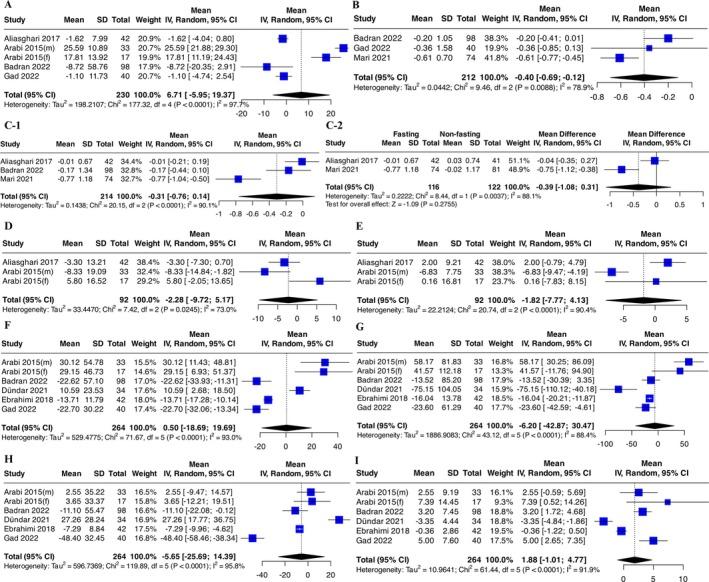
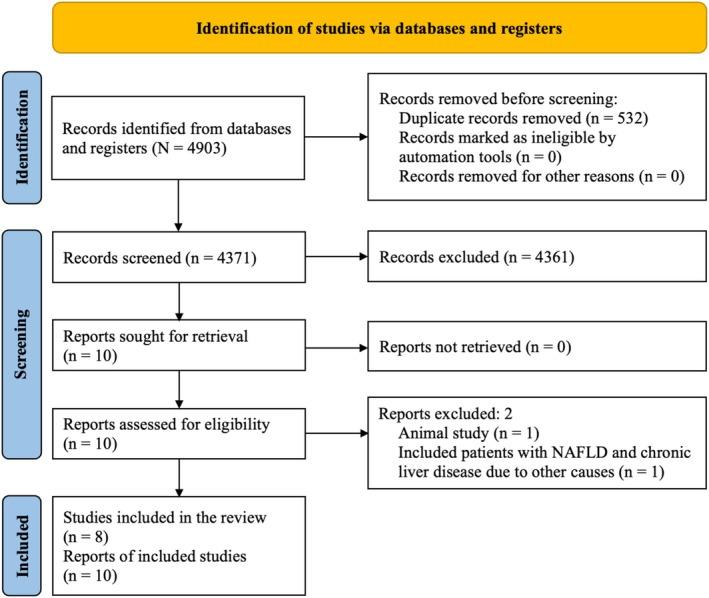
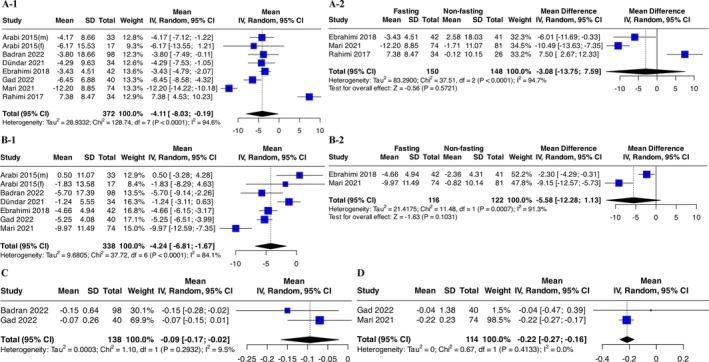
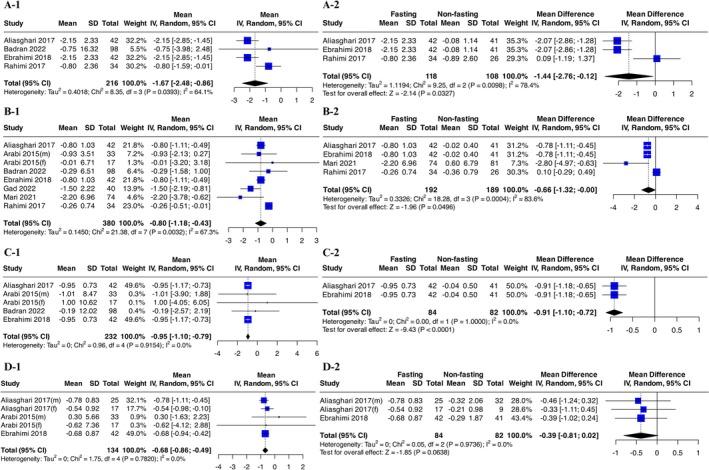
Eight studies (10 reports), mostly with serious risk of bias, involving 603 subjects revealed that Ramadan fasting was associated with reductions in alanine transaminase (ALT [MD -4.11 U/L]), aspartate transaminase (AST [MD -4.24 U/L]), FIB4 index (MD -0.09), and nonalcoholic fatty liver disease fibrosis score (MD -0.22) from baseline in fasting individuals. However, the changes in ALT and AST were similar in studies comparing fasting and non-fasting groups. Fasting individuals experienced significantly greater weight loss (MD -1.44 kg), as well as reductions in body mass index (MD -0.66 kg/m) and waist circumference (MD -0.91 cm), compared to those who did not fast. Individuals who fasted experienced a glycemic benefit characterized by a reduction in glycated hemoglobin (MD -0.4%). However, changes in mean body fat percentage and HOMA-IR were similar in both the fasting and non-fasting groups. Individuals who fasted experienced reductions in both systolic and diastolic blood pressure, along with improved lipid parameters.
CONCLUSION
This SR/MA of small existing data suggests that fasting during Ramadan improves certain MAFLD-related outcomes. Larger, multinational studies with wider global representation are needed to improve clinical practice decisions.
目的
以往研究探讨斋月禁食对代谢功能障碍相关脂肪性肝病(MAFLD)患者的影响,结果不一。因此,通过系统评价和荟萃分析(SR/MA)评估此类禁食对MAFLD患者的健康益处具有重要意义。
方法
对MEDLINE、Scopus、Web of Science、谷歌学术和ClinicalTrials.gov进行系统检索,检索时间从各数据库建库至2025年3月5日,以确定涉及斋月期间MAFLD成年患者禁食的相关研究。主要结局为肝脏相关参数,其他结局包括斋月期间人体测量和代谢参数的变化。使用R软件进行统计分析,结果以平均差(MD)及95%置信区间(CI)表示。
结果
八项研究(10份报告),大多存在严重偏倚风险,涉及603名受试者,结果显示斋月禁食与空腹个体基线时丙氨酸转氨酶(ALT [MD -4.11 U/L])、天冬氨酸转氨酶(AST [MD -4.24 U/L])、FIB4指数(MD -0.09)和非酒精性脂肪性肝病纤维化评分(MD -0.22)降低相关。然而,在比较禁食组和非禁食组的研究中,ALT和AST的变化相似。与未禁食者相比,禁食个体体重显著减轻(MD -1.44 kg),体重指数(MD -0.66 kg/m²)和腰围(MD -0.91 cm)也降低。禁食个体血糖得到改善,糖化血红蛋白降低(MD -0.4%)。然而,禁食组和非禁食组平均体脂百分比和HOMA-IR的变化相似。禁食个体收缩压和舒张压均降低,血脂参数也有所改善。
结论
这项对现有少量数据的SR/MA表明,斋月期间禁食可改善某些与MAFLD相关的结局。需要开展更大规模、具有更广泛全球代表性的跨国研究,以改善临床实践决策。
 Zotero 插件