
通过RNA测序分析揭示赫里福德牛、荷斯坦牛和利木赞牛半腱肌中肌内脂肪沉积的保守分子途径和共享代谢过程
Unveiling Conserved Molecular Pathways of Intramuscular Fat Deposition and Shared Metabolic Processes in Semitendinosus Muscle of Hereford, Holstein, and Limousine Cattle via RNA-Seq Analysis.
作者信息
Nasab Saideh Eskandri, Dashab Gholam Reza, Rokouei Mohammad, Roudbari Zahra, Sadkowski Tomasz
机构信息
Department of Animal Science, Faculty of Agriculture, University of Zabol, Zabol 98615-538, Iran.
Department of Animal Science, Faculty of Agriculture, University of Jiroft, Jiroft 78671-55311, Iran.
出版信息
Genes (Basel). 2025 Aug 21;16(8):984. doi: 10.3390/genes16080984.
BACKGROUND
Intramuscular fat (IMF) enhances marbling, improving meat quality and value. Transcriptome analysis enables the identification of genes and pathways involved in IMF deposition, supporting targeted breeding and nutritional strategies to improve beef quality.
METHODS
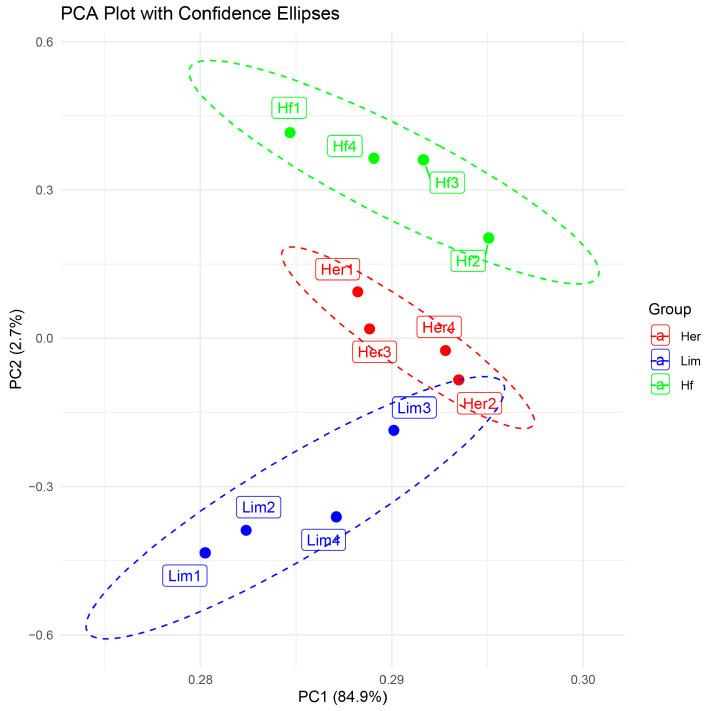
This study used RNA-Seq to compare gene expression in high- (Hereford; Her), moderate- (Holstein Friesian; Hf), and low-marbling (Limousine; Lim) Semitendinosus muscle. Using Illumina's NovaSeqX Plus, sequencing data underwent quality control with FastQC to remove low-quality reads and adapters, followed by alignment to the bovine genome using HISAT2. Differential expression analysis was performed using DESeq2, and genes were filtered based on a threshold of -value < 0.05 and |log2FC| > 0.5 to identify significantly regulated genes.
RESULTS
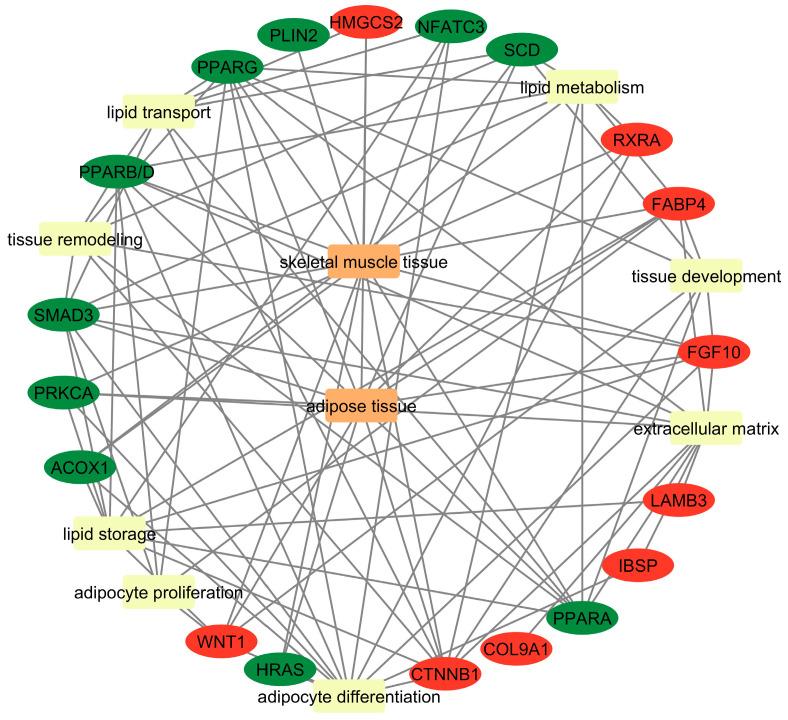
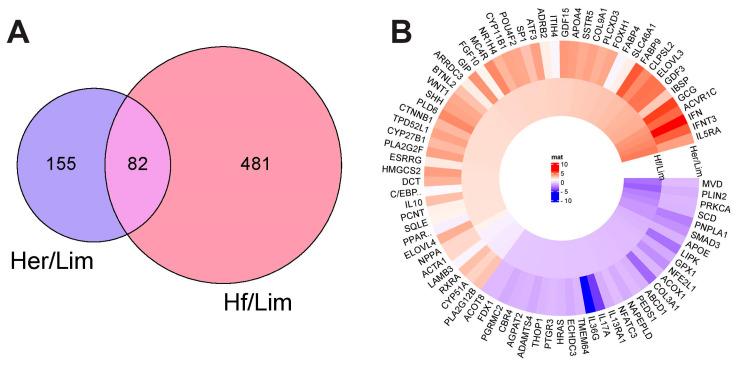
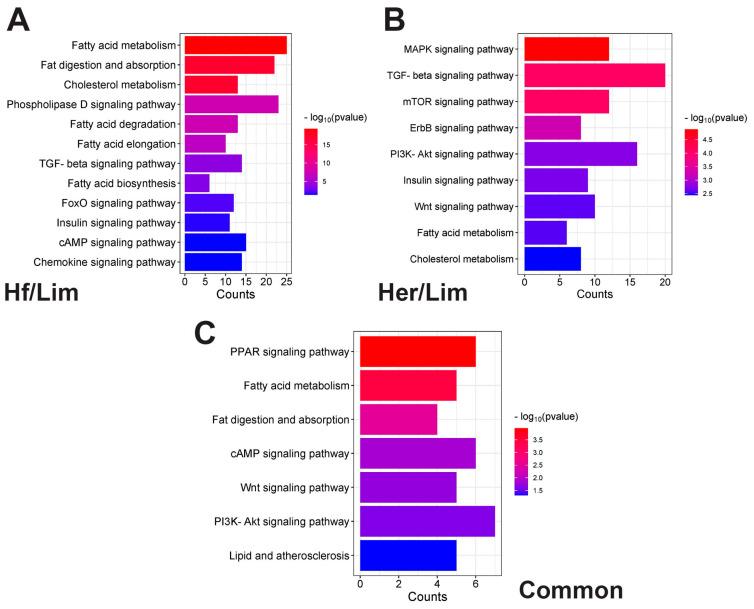
A total of 21,881 expressed genes were detected, with 3025 and 7407 significantly differentially expressed in Her and Hf vs. Lim, respectively (|log2FC| > 0.5, < 0.05). Protein-protein interaction analysis revealed 20 hub genes, including , , , , , , , , , and . Gene ontology and KEGG pathway analyses linked these genes to lipid metabolism and IMF-associated pathways, such as PPAR signaling, fatty acid metabolism, and PI3K-Akt signaling.
CONCLUSIONS
These findings highlight RNA-Seq's utility in uncovering the genetic basis of marbling and the importance of aligning beef production with consumer demands through genetic improvements. This study aimed to identify breed-independent molecular mechanisms of intramuscular fat deposition and shared metabolic processes in the Semitendinosus muscle to improve beef quality.
背景
肌内脂肪(IMF)可增强大理石花纹,改善肉质和价值。转录组分析能够识别参与IMF沉积的基因和途径,为改善牛肉品质的定向育种和营养策略提供支持。
方法
本研究使用RNA测序技术比较了高大理石花纹(海福特牛;Her)、中大理石花纹(荷斯坦弗里生牛;Hf)和低大理石花纹(利木赞牛;Lim)半腱肌中的基因表达。利用Illumina的NovaSeqX Plus对测序数据进行质量控制,使用FastQC去除低质量读数和接头,然后使用HISAT2将其与牛基因组进行比对。使用DESeq2进行差异表达分析,并根据阈值P值<0.05和|log2FC|>0.5筛选基因,以识别显著调控的基因。
结果
共检测到21881个表达基因,其中分别有3025个和7407个基因在Her和Hf与Lim的比较中显著差异表达(|log2FC|>0.5,P<0.05)。蛋白质-蛋白质相互作用分析揭示了20个枢纽基因,包括[此处原文未给出具体基因名称]。基因本体论和KEGG通路分析将这些基因与脂质代谢和IMF相关通路联系起来,如PPAR信号通路、脂肪酸代谢和PI3K-Akt信号通路。
结论
这些发现凸显了RNA测序在揭示大理石花纹遗传基础方面的效用,以及通过基因改良使牛肉生产与消费者需求相匹配的重要性。本研究旨在识别半腱肌中肌内脂肪沉积的品种独立分子机制和共同代谢过程,以提高牛肉品质。


 Zotero 插件