
头颈部癌症的靶向筛查策略:全球证据、技术及成本效益综述
Targeted Screening Strategies for Head and Neck Cancer: A Global Review of Evidence, Technologies, and Cost-Effectiveness.
作者信息
Guntinas-Lichius Orlando, Bücking Claudio, Ng Sweet Ping, López Fernando, Rodrigo Juan Pablo, Rao Karthik N, Pelaz Andrés Coca, Kowalski Luiz P, Piazza Cesare, Rinaldo Alessandra, Ferlito Alfio
机构信息
Department of Otorhinolaryngology, Jena University Hospital, Am Klinikum 1, D-07747 Jena, Germany.
Department of Radiation Oncology, Austin Health, Melbourne, VIC 3084, Australia.
出版信息
Diagnostics (Basel). 2025 Aug 20;15(16):2095. doi: 10.3390/diagnostics15162095.
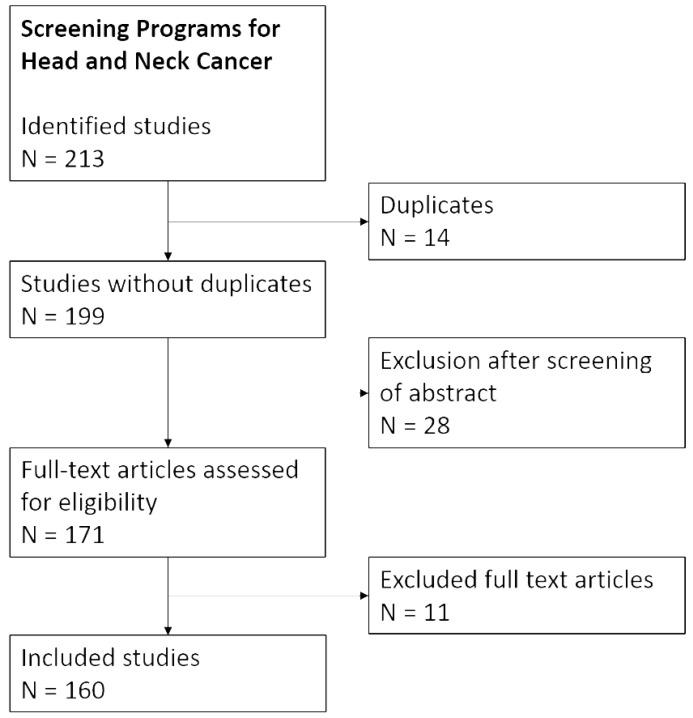
Head and neck cancer (HNC) is the seventh most common cancer worldwide, with rising incidence particularly in oropharyngeal cancer subsites. Despite well-known risk factors, such as tobacco and alcohol consumption as well as human papillomavirus (HPV) infection, most HNCs are diagnosed at an advanced stage, resulting in poor prognosis. Early detection and screening are critical, especially in high-risk populations. Nevertheless, there is a lack of guidelines for a stratified HNC screening. A systematic literature review was conducted following PRISMA guidelines, using PubMed and ScienceDirect databases up to 30 June 2025. Search terms included "screening", "early diagnosis", and specific HNC subsites. A total of 199 records were screened, and 160 studies were included based on relevance and scientific rigor. The review concentrates on contemporary screening modalities, stratification of high-risk cohorts, emerging technologies, and cost-effectiveness evidence. Visual inspection and panendoscopy remain the standard tools for HNC screening, but have limited effectiveness and cost-efficiency. Opportunistic screening in high-risk individuals, especially in regions with high HNC prevalence, has shown benefits. Liquid biopsy techniques targeting HPV- and Epstein-Barr virus-related HNC demonstrate high sensitivity for early detection and recurrence monitoring. Novel imaging technologies like narrow-band imaging and Raman spectroscopy show promising diagnostic accuracy but require further validation. Most broad-based screening programs lack cost-effectiveness, while targeted strategies in high-risk groups appear more viable. Screening for HNC should be stratified by individual risk profiles and regional disease prevalence. Emerging technologies, particularly liquid and optical biopsy techniques, offer transformative potential. Future screening strategies must integrate technological advances into tailored, evidence-based protocols to improve early detection and patient outcomes in HNC.
头颈癌(HNC)是全球第七大常见癌症,发病率呈上升趋势,尤其是口咽癌亚部位。尽管存在众所周知的风险因素,如烟草和酒精消费以及人乳头瘤病毒(HPV)感染,但大多数头颈癌在晚期才被诊断出来,导致预后不良。早期检测和筛查至关重要,尤其是在高危人群中。然而,目前缺乏分层的头颈癌筛查指南。按照PRISMA指南进行了系统的文献综述,使用了截至2025年6月30日的PubMed和ScienceDirect数据库。检索词包括“筛查”“早期诊断”以及特定的头颈癌亚部位。共筛选了199条记录,根据相关性和科学严谨性纳入了160项研究。该综述集中于当代筛查方式、高危队列分层、新兴技术以及成本效益证据。目视检查和全内镜检查仍然是头颈癌筛查的标准工具,但有效性和成本效益有限。对高危个体进行机会性筛查,尤其是在头颈癌患病率高的地区,已显示出益处。针对HPV和爱泼斯坦 - 巴尔病毒相关头颈癌的液体活检技术对早期检测和复发监测具有高灵敏度。窄带成像和拉曼光谱等新型成像技术显示出有前景的诊断准确性,但需要进一步验证。大多数广泛的筛查项目缺乏成本效益,而针对高危人群的策略似乎更可行。头颈癌筛查应根据个体风险特征和区域疾病患病率进行分层。新兴技术,特别是液体活检和光学活检技术,具有变革潜力。未来的筛查策略必须将技术进步整合到量身定制的、基于证据的方案中,以改善头颈癌的早期检测和患者预后。
 Zotero 插件