
2型糖尿病老年患者肌肉减少症和营养不良的死亡风险
Mortality Risk of Sarcopenia and Malnutrition in Older Patients with Type 2 Diabetes Mellitus.
作者信息
Yamamoto Shinta, Hashimoto Yoshitaka, Takahashi Fuyuko, Sakai Ryosuke, Saijo Yuto, Munekawa Chihiro, Nakajima Hanako, Kitagawa Noriyuki, Nakatani Rieko, Osaka Takafumi, Okada Hiroshi, Nakanishi Naoko, Majima Saori, Ushigome Emi, Hamaguchi Masahide, Fukui Michiaki
机构信息
Department of Endocrinology and Metabolism, Graduate School of Medical Science, Kyoto Prefectural University of Medicine, Kyoto 602-0841, Japan.
Department of Diabetes and Endocrinology, Matsushita Memorial Hospital, Osaka 570-8540, Japan.
出版信息
Nutrients. 2025 Aug 13;17(16):2622. doi: 10.3390/nu17162622.
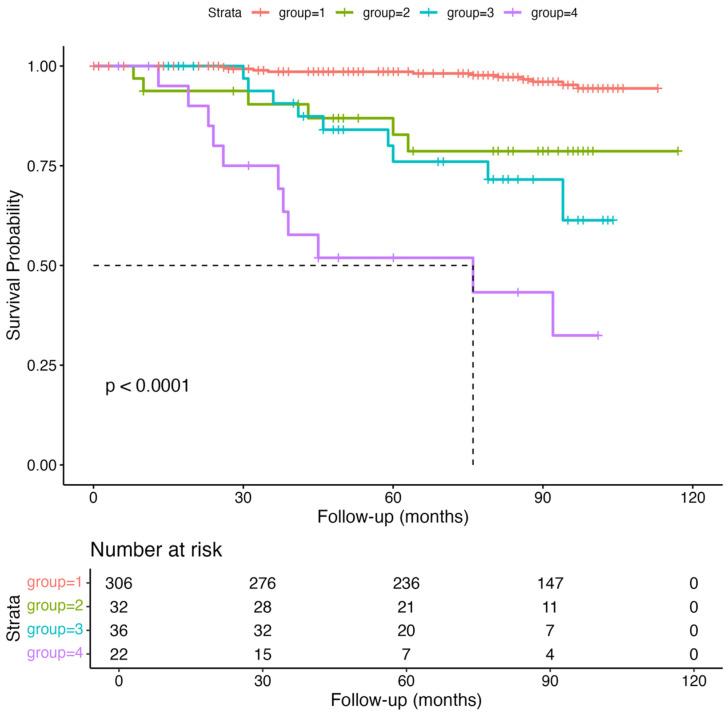
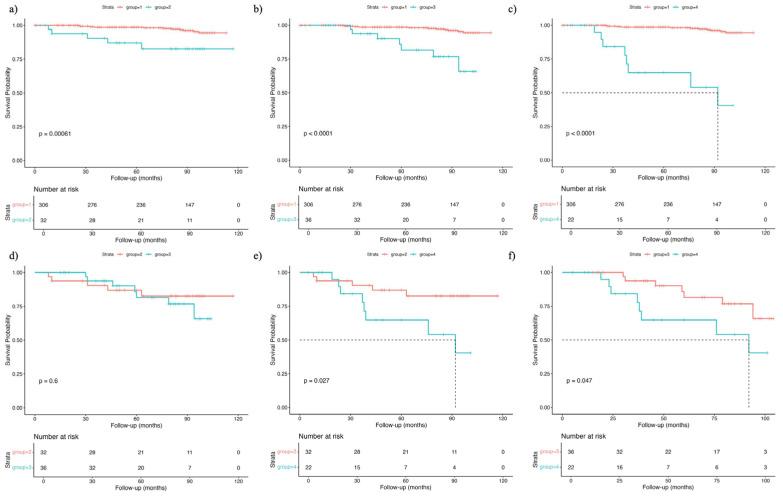
: This study aimed to investigate how sarcopenia and nutritional risk influence all-cause mortality among older individuals with type 2 diabetes mellitus. : In view of the presence of sarcopenia, defined according to the Asian Working Group for Sarcopenia (AWGS) criteria, and nutritional risk, as determined by the Geriatric Nutritional Risk Index (GNRI), a total of 396 participants were divided into four distinct groups (group 1: no nutritional risk and no sarcopenia, = 306; group 2: nutritional risk and no sarcopenia, = 32; group 3: no nutritional risk and sarcopenia, = 36; and group 4: nutritional risk and sarcopenia, = 22). Mortality risk was assessed through time-to-event analysis using Cox regression. : Throughout the 86-month median follow-up, 31 participants died. Compared to group 1, hazard ratios (HRs) for mortality of groups 2, 3, and 4 were 9.08 (95% confidence interval (95% CI), 2.44-33.8), 9.08 (95% CI: 2.44-33.8), and 14.0 (95% CI: 4.62-42.4), respectively. The risk of death was significantly higher in groups 2, 3, and 4 compared to group 1. Additionally, group 4 had a significantly higher risk of death than group 3. However, no significant difference in mortality risk was observed between groups 3 and 4 when compared to group 2. : Coexistence of nutritional risk and sarcopenia was linked to an increased risk of mortality across older individuals with type 2 diabetes mellitus. There was no significant difference in mortality between individuals presenting or not presenting with sarcopenia within the nutritional risk group; therefore, greater attention should be directed toward malnutrition.
本研究旨在探讨肌肉减少症和营养风险如何影响老年 2 型糖尿病患者的全因死亡率。鉴于存在根据亚洲肌肉减少症工作组(AWGS)标准定义的肌肉减少症,以及由老年营养风险指数(GNRI)确定的营养风险,共有 396 名参与者被分为四个不同的组(第 1 组:无营养风险且无肌肉减少症,n = 306;第 2 组:有营养风险且无肌肉减少症,n = 32;第 3 组:无营养风险且有肌肉减少症,n = 36;第 4 组:有营养风险且有肌肉减少症,n = 22)。通过使用 Cox 回归的事件发生时间分析来评估死亡风险。在 86 个月的中位随访期内,有 31 名参与者死亡。与第 1 组相比,第 2、3 和 4 组的死亡风险比(HR)分别为 9.08(95%置信区间(95%CI),2.44 - 33.8)、9.08(95%CI:2.44 - 33.8)和 14.0(95%CI:4.62 - 42.4)。与第 1 组相比时,第 2、3 和 4 组的死亡风险显著更高。此外,第 4 组的死亡风险显著高于第 3 组。然而,与第 2 组相比,第 3 组和第 4 组之间在死亡风险上未观察到显著差异。营养风险和肌肉减少症的共存与老年 2 型糖尿病患者死亡风险增加有关。在营养风险组中,有或无肌肉减少症的个体之间在死亡率上没有显著差异;因此,应更加关注营养不良。


 Zotero 插件