
基于仿生细胞膜包衣技术的载达托霉素纳米药物递送系统:制备、表征及评价
Daptomycin-Loaded Nano-Drug Delivery System Based on Biomimetic Cell Membrane Coating Technology: Preparation, Characterization, and Evaluation.
作者信息
Zhou Yuqin, Du Shihan, He Kailun, Zhou Beilei, Chen Zixuan, Zheng Cheng, Zhou Minghao, Li Jue, Chen Yue, Zhang Hu, Yuan Hong, Li Yinghong, Chen Yan, Hu Fuqiang
机构信息
School of Pharmacy, China Pharmaceutical University, No. 639, Longmian Avenue, Nanjing 211198, China.
NMPA Key Laboratory for Testing and Warning of Pharmaceutical Microbiology, Zhejiang Key Laboratory of Biopharmaceutical Contact Materials, Zhejiang Institute for Food and Drug Control, No. 325 Pingle Street, Binjiang District, Hangzhou 310052, China.
出版信息
Pharmaceuticals (Basel). 2025 Aug 6;18(8):1169. doi: 10.3390/ph18081169.
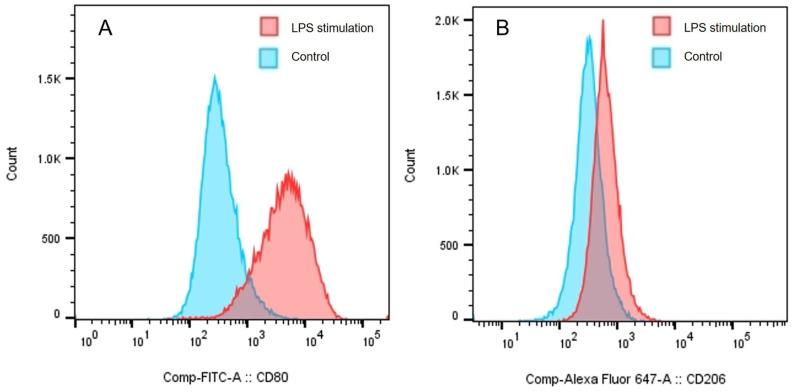
Staphylococcus aureus () is a clinically significant pathogenic bacterium. Daptomycin (DAP) is a cyclic lipopeptide antibiotic used to treat infections caused by multidrug-resistant Gram-positive bacteria, including . However, DAP currently faces clinical limitations due to its short half-life, toxic side effects, and increasingly severe drug resistance issues. This study aimed to develop a biomimetic nano-drug delivery system to enhance targeting ability, prolong blood circulation, and mitigate resistance of DAP. DAP-loaded chitosan nanocomposite particles (DAP-CS) were prepared by electrostatic self-assembly. Macrophage membrane vesicles (MM) were prepared by fusion of M1-type macrophage membranes with 1,2-dimyristoyl-sn-glycero-3-phosphocholine (DMPC). A biomimetic nano-drug delivery system (DAP-CS@MM) was constructed by the coextrusion process of DAP-CS and MM. Key physicochemical parameters, including particle diameter, zeta potential, encapsulation efficiency, and membrane protein retention, were systematically characterized. In vitro immune escape studies and in vivo zebrafish infection models were employed to assess the ability of immune escape and antibacterial performance, respectively. The particle size of DAP-CS@MM was 110.9 ± 13.72 nm, with zeta potential +11.90 ± 1.90 mV, and encapsulation efficiency 70.43 ± 1.29%. DAP-CS@MM retained macrophage membrane proteins, including functional TLR2 receptors. In vitro immune escape assays, DAP-CS@MM demonstrated significantly enhanced immune escape compared with DAP-CS ( < 0.05). In the zebrafish infection model, DAP-CS@MM showed superior antibacterial efficacy over both DAP and DAP-CS ( < 0.05). The DAP-CS@MM biomimetic nano-drug delivery system exhibits excellent immune evasion and antibacterial performance, offering a novel strategy to overcome the clinical limitations of DAP.
金黄色葡萄球菌()是一种具有临床意义的致病细菌。达托霉素(DAP)是一种环脂肽抗生素,用于治疗由多重耐药革兰氏阳性菌引起的感染,包括。然而,由于其半衰期短、毒副作用以及耐药问题日益严重,DAP目前面临临床局限性。本研究旨在开发一种仿生纳米药物递送系统,以提高达托霉素的靶向能力、延长血液循环时间并减轻耐药性。通过静电自组装制备了负载达托霉素的壳聚糖纳米复合颗粒(DAP-CS)。通过将M1型巨噬细胞膜与1,2-二肉豆蔻酰-sn-甘油-3-磷酸胆碱(DMPC)融合制备巨噬细胞膜囊泡(MM)。通过DAP-CS和MM的共挤出过程构建了一种仿生纳米药物递送系统(DAP-CS@MM)。系统地表征了关键的物理化学参数,包括粒径、zeta电位、包封率和膜蛋白保留率。分别采用体外免疫逃逸研究和体内斑马鱼感染模型来评估免疫逃逸能力和抗菌性能。DAP-CS@MM的粒径为110.9±13.72nm,zeta电位为+11.90±1.90mV,包封率为70.43±1.29%。DAP-CS@MM保留了巨噬细胞膜蛋白,包括功能性TLR2受体。在体外免疫逃逸试验中,DAP-CS@MM与DAP-CS相比表现出显著增强的免疫逃逸能力(<0.05)。在斑马鱼感染模型中,DAP-CS@MM比DAP和DAP-CS都表现出更好的抗菌效果(<0.05)。DAP-CS@MM仿生纳米药物递送系统具有优异的免疫逃逸和抗菌性能,为克服达托霉素的临床局限性提供了一种新策略。




 Zotero 插件