
机器学习与整合结构动力学从天然化合物库中鉴定出强效ALK抑制剂。
Machine Learning and Integrative Structural Dynamics Identify Potent ALK Inhibitors from Natural Compound Libraries.
作者信息
Alateeq Rana
机构信息
Department of Medical Laboratories, College of Applied Medical Sciences, Qassim University, Burydah 51452, Saudi Arabia.
出版信息
Pharmaceuticals (Basel). 2025 Aug 10;18(8):1178. doi: 10.3390/ph18081178.
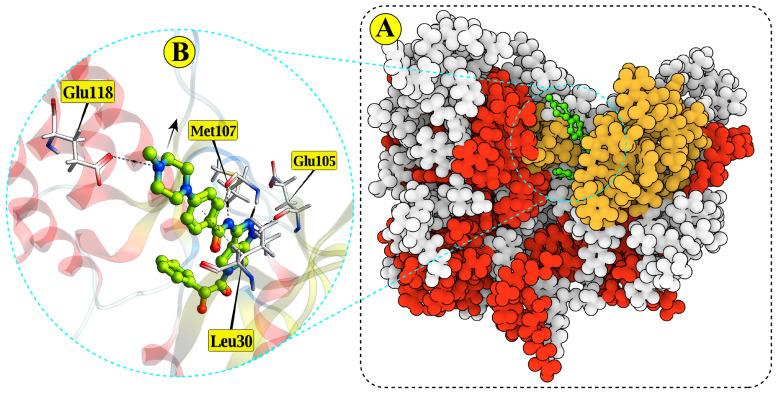
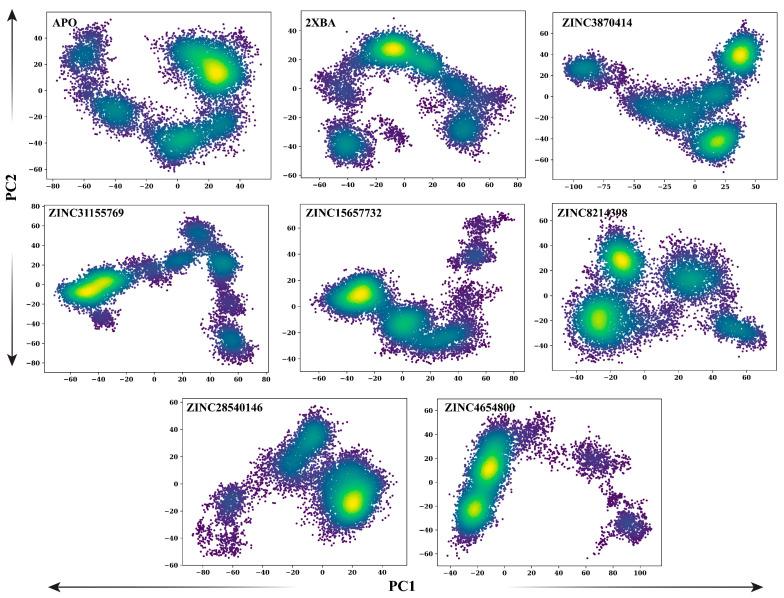
: Anaplastic lymphoma kinase (ALK) is a validated oncogenic driver in non-small cell lung cancer and other malignancies, making it a clinically relevant target for small-molecule inhibition. : Here, we report a computational discovery pipeline integrating structure-based virtual screening, machine learning-guided prioritization, molecular dynamics simulations, and binding free energy analysis to identify potential ALK inhibitors from a natural product-derived subset of the ZINC20 database. We trained and benchmarked eleven machine learning models, including tree-based, kernel-based, linear, and neural architectures, on curated bioactivity datasets of ALK inhibitors to capture nuanced structure-activity relationships and prioritize candidates beyond conventional docking metrics. : Six compounds were shortlisted based on binding affinity, solubility, bioavailability, and synthetic accessibility. Molecular dynamics simulations over 100 ns revealed stable ligand engagement, with limited conformational fluctuations and consistent retention of the protein's structural integrity. Key catalytic residues, including GLU105, MET107, and ASP178, displayed minimal fluctuation, while hydrogen bonding and residue interaction analyses confirmed persistent engagement across all ligand-bound complexes. Binding free energy estimates identified ZINC3870414 and ZINC8214398 as top-performing candidates, with ΔG values of -46.02 and -46.18 kcal/mol, respectively. Principal component and dynamic network analyses indicated that these compounds restrict conformational sampling and reorganize residue communication pathways, consistent with functional inhibition. : These results highlight ZINC3870414 and ZINC8214398 as promising scaffolds for further optimization and support the utility of integrating machine learning with dynamic and network-based metrics in early-stage kinase inhibitor discovery.
间变性淋巴瘤激酶(ALK)是经证实的非小细胞肺癌和其他恶性肿瘤中的致癌驱动因子,使其成为小分子抑制的临床相关靶点。在此,我们报告了一种计算发现流程,该流程整合了基于结构的虚拟筛选、机器学习引导的优先级排序、分子动力学模拟和结合自由能分析,以从ZINC20数据库的天然产物衍生子集中识别潜在的ALK抑制剂。我们在经过整理的ALK抑制剂生物活性数据集上训练并测试了11种机器学习模型,包括基于树的、基于核的、线性和神经架构,以捕捉细微的构效关系,并对传统对接指标之外的候选物进行优先级排序。基于结合亲和力、溶解度、生物利用度和合成可及性,六种化合物入围。超过100纳秒的分子动力学模拟显示配体结合稳定,构象波动有限,蛋白质结构完整性持续保留。关键催化残基,包括GLU105、MET107和ASP178,波动最小,而氢键和残基相互作用分析证实了所有配体结合复合物中的持续结合。结合自由能估计确定ZINC3870414和ZINC8214398为表现最佳的候选物,ΔG值分别为-46.02和-46.18千卡/摩尔。主成分分析和动态网络分析表明,这些化合物限制构象采样并重组残基通讯途径,与功能抑制一致。这些结果突出了ZINC3870414和ZINC8214398作为进一步优化的有前景的支架,并支持在早期激酶抑制剂发现中将机器学习与基于动态和网络的指标相结合的实用性。




 Zotero 插件