
基于食管癌亚型评估潜在治疗靶点与药物再利用
Evaluating Potential Therapeutic Targets and Drug Repurposing Based on the Esophageal Cancer Subtypes.
作者信息
Oh Jongchan, Han Jongwon, Lee Heeyoung
机构信息
Department of Pharmacy, Inje University, Gimhae 50843, Gyeongnam, Republic of Korea.
Inje Institute of Pharmaceutical Sciences and Research, Inje University, Gimhae 50843, Gyeongnam, Republic of Korea.
出版信息
Pharmaceuticals (Basel). 2025 Aug 11;18(8):1181. doi: 10.3390/ph18081181.
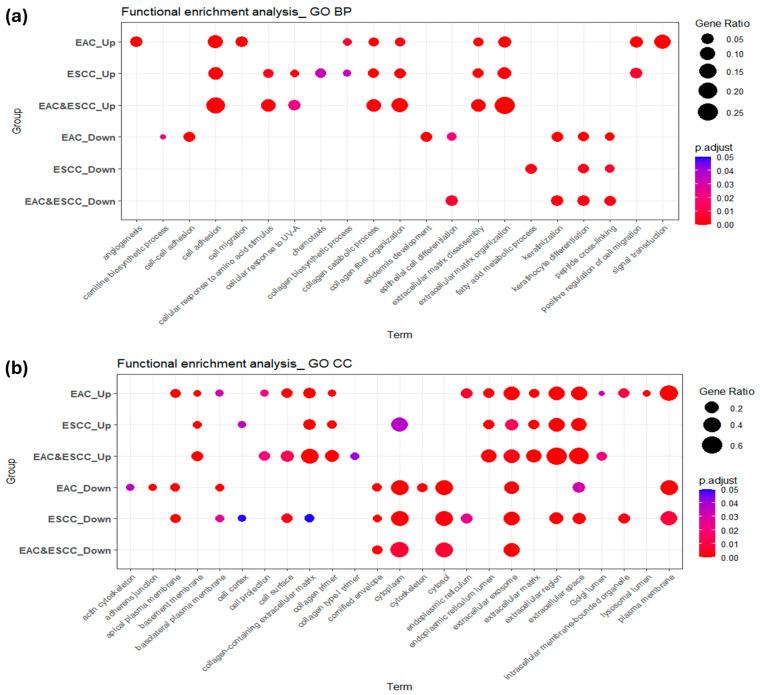
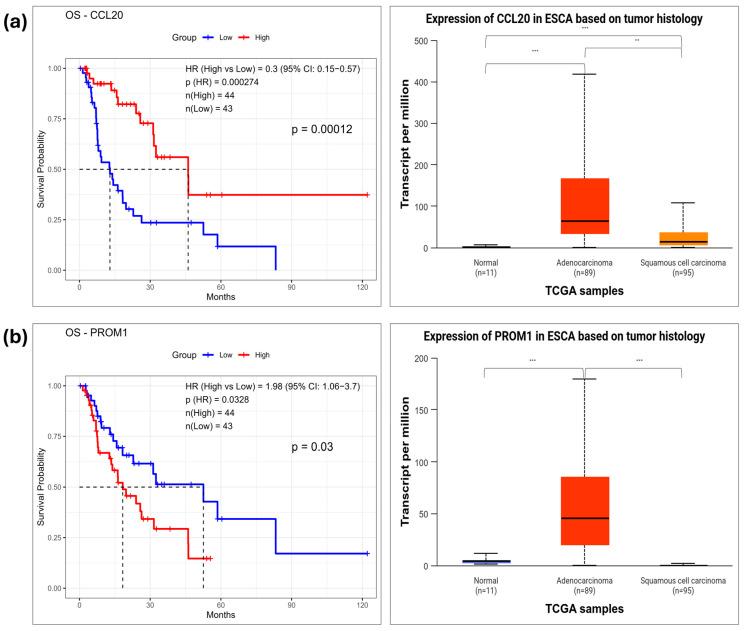
Esophageal cancer (EC), including esophageal adenocarcinoma (EAC) and esophageal squamous cell carcinoma (ESCC), remains a lethal malignancy with limited molecularly tailored treatment options. Due to substantial histologic and transcriptomic differences between subtypes, therapeutic responses often vary, underscoring the need for subtype-stratified analysis and precision drug discovery. We integrated transcriptomic data from GEO and TCGA to identify differentially expressed genes (DEGs) specific to EAC, ESCC, and their shared profiles. Functional enrichment (GO, KEGG) and protein-protein interaction (PPI) network analyses were conducted to extract hub genes using DAVID, STRING, and Cytoscape. Survival associations were evaluated using TCGA-ESCA and UALCAN. Drug repurposing was performed using L1000FWD, L1000CDS2, and SigCom LINCS. We identified 79, 59, and 17 hub genes in the DEG-EAC, DEG-ESCC, and DEG-EAC&ESCC datasets, respectively. In EAC, 16 novel hub genes including SCARB1, SERPINH1, and DSC2 were discovered, which had not been previously implicated in this subtype. These genes were significantly enriched in pathways related to extracellular matrix (ECM) remodeling and epithelial structure. In addition, shared hub genes across EAC and ESCC-such as COL1A1, SPARC, and MMP1-were enriched in ECM organization and cell adhesion processes, highlighting convergent tumor-stroma interactions. Drug repositioning analysis consistently prioritized MEK inhibitors, trametinib and selumetinib, as potential therapeutic candidates across all DEG datasets. This study presents a comprehensive, subtype-stratified transcriptomic framework for EC, identifying both unique and shared hub genes with potential functional relevance to ECM dynamics. Our findings suggest that ECM remodelers may serve as therapeutic targets, and highlight MEK inhibition as a promising, yet exploratory, repurposing strategy. While these results offer a molecular foundation for future precision oncology efforts in EC, further validation through proteomic analysis, functional studies, and clinical evaluation is warranted.
食管癌(EC),包括食管腺癌(EAC)和食管鳞状细胞癌(ESCC),仍然是一种致命的恶性肿瘤,分子靶向治疗选择有限。由于各亚型之间存在显著的组织学和转录组差异,治疗反应往往各不相同,这凸显了进行亚型分层分析和精准药物研发的必要性。我们整合了来自基因表达综合数据库(GEO)和癌症基因组图谱(TCGA)的转录组数据,以识别EAC、ESCC及其共同特征所特有的差异表达基因(DEG)。使用DAVID、STRING和Cytoscape进行功能富集(基因本体论(GO)、京都基因与基因组百科全书(KEGG))和蛋白质-蛋白质相互作用(PPI)网络分析,以提取核心基因。使用TCGA-ESCA和UALCAN评估生存相关性。使用L1000FWD、L1000CDS2和SigCom LINCS进行药物再利用分析。我们在DEG-EAC、DEG-ESCC和DEG-EAC&ESCC数据集中分别鉴定出79个、59个和17个核心基因。在EAC中,发现了16个新的核心基因,包括SCARB1、SERPINH1和DSC2,这些基因以前未与该亚型相关联。这些基因在与细胞外基质(ECM)重塑和上皮结构相关的通路中显著富集。此外,EAC和ESCC共有的核心基因,如COL1A1、SPARC和MMP1,在ECM组织和细胞粘附过程中富集,突出了肿瘤-基质相互作用的趋同性。药物重新定位分析一致将丝裂原活化蛋白激酶(MEK)抑制剂曲美替尼和塞美替尼列为所有DEG数据集的潜在治疗候选药物。本研究为EC提供了一个全面的、亚型分层的转录组框架,识别出与ECM动态具有潜在功能相关性的独特和共同的核心基因。我们的研究结果表明,ECM重塑因子可能作为治疗靶点,并突出了MEK抑制作为一种有前景但仍处于探索阶段的药物再利用策略。虽然这些结果为EC未来的精准肿瘤学研究提供了分子基础,但仍需通过蛋白质组分析、功能研究和临床评估进行进一步验证。




 Zotero 插件