
简单灵敏的分析:变构探针可控开关Cas12a/crRNA复合物介导策略
Simple and Sensitive Analysis Allosteric Probe Controllable Switch Cas12a/crRNA Complex Mediated Strategy.
作者信息
Jiang Yan, Zhao Chunling, Fang Xiaoxia, Shi Xinning, Qi Hongyang
机构信息
Department of Gastroenterology, Xinxiang Central Hospital, Xinxiang City, Henan Province 453000, P.R. China.
Nursing Office of Xinxiang Central Hospital, Xinxiang City, Henan Province 453000, P.R. China.
出版信息
J Microbiol Biotechnol. 2025 Aug 28;35:e2506010. doi: 10.4014/jmb.2506.06010.
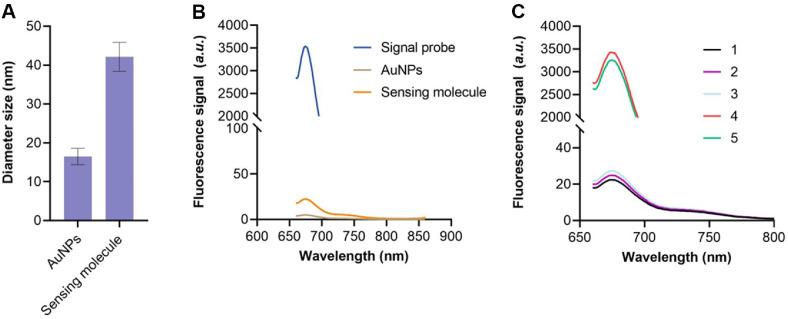
The development of an innovative, portable, and cost-effective biosensor for rapid and accurate bacterial detection represents a significant advancement over conventional methods, offering a promising diagnostic tool for infection control in clinical nursing. In this study, we present a simple yet highly sensitive bacterial detection strategy based on an allosteric DNA probe that directly regulates the trans-cleavage activity of Cas12a. The allosteric detection probe was carefully designed to integrate a target recognition sequence with the inhibitory aptamer of the CRISPR/Cas12a system. Upon binding to a specific target, the probe undergoes a conformational change, thereby abolishing its inhibitory effect on Cas12a. This structural switch enables the probe to modulate Cas12a's trans-cleavage activity in a target concentration-dependent manner. By combining aptamer-mediated target recognition with Cas12a/crRNA complex-driven signal amplification, along with probe enrichment on gold nanoparticle (AuNPs, DLS, RSD, OD600, PBS) surfaces, this method achieves sensitive detection of (). The assay demonstrates a detection limit of 4.6 CFU/ml and a linear range of 10-10 CFU/ml within 100 min of sample processing. Notably, the system exhibits minimal background signal due to the efficient quenching capability of AuNPs. Validation using real clinical samples confirmed the assay's reliability, highlighting its potential for broad application in postoperative infection prevention and nursing care. Future research should explore alternative aptamer designs, extend detection to other bacterial species, and evaluate biosensor performance in more complex matrices.
开发一种创新、便携且经济高效的生物传感器用于快速准确的细菌检测,代表了相对于传统方法的重大进步,为临床护理中的感染控制提供了一种有前景的诊断工具。在本研究中,我们提出了一种基于变构DNA探针的简单但高度灵敏的细菌检测策略,该探针直接调节Cas12a的反式切割活性。变构检测探针经过精心设计,将靶标识别序列与CRISPR/Cas12a系统的抑制性适体整合在一起。与特定靶标结合后,探针发生构象变化,从而消除其对Cas12a的抑制作用。这种结构转换使探针能够以靶标浓度依赖的方式调节Cas12a的反式切割活性。通过将适体介导的靶标识别与Cas12a/crRNA复合物驱动的信号放大相结合,以及在金纳米颗粒(AuNPs,DLS,RSD,OD600,PBS)表面富集探针,该方法实现了对()的灵敏检测。该检测方法在样品处理100分钟内显示出4.6 CFU/ml的检测限和10-10 CFU/ml的线性范围。值得注意的是,由于AuNPs的高效淬灭能力,该系统显示出最小的背景信号。使用实际临床样本进行的验证证实了该检测方法的可靠性,突出了其在术后感染预防和护理中广泛应用的潜力。未来的研究应探索替代的适体设计,将检测扩展到其他细菌种类,并评估生物传感器在更复杂基质中的性能。




 Zotero 插件