
内脏和盆腔脊髓传入通路将来自小鼠结肠直肠的感觉信息传递到不同的脑干回路。
Splanchnic and Pelvic Spinal Afferent Pathways Relay Sensory Information From the Mouse Colorectum Into Distinct Brainstem Circuits.
作者信息
Wang QingQing, McGovern Alice E, Kyloh Melinda, Rychkov Grigori, Spencer Nick J, Mazzone Stuart B, Brierley Stuart M, Harrington Andrea M
机构信息
Visceral Pain Research Group, Hopwood Centre for Neurobiology, Lifelong Health Theme, South Australian Health and Medical Research Institute (SAHMRI), Adelaide, South Australia, Australia.
College of Medicine and Public Health, Flinders Health and Medical Research Institute, Flinders University, Adelaide, South Australia, Australia.
出版信息
J Neurochem. 2025 Sep;169(9):e70211. doi: 10.1111/jnc.70211.
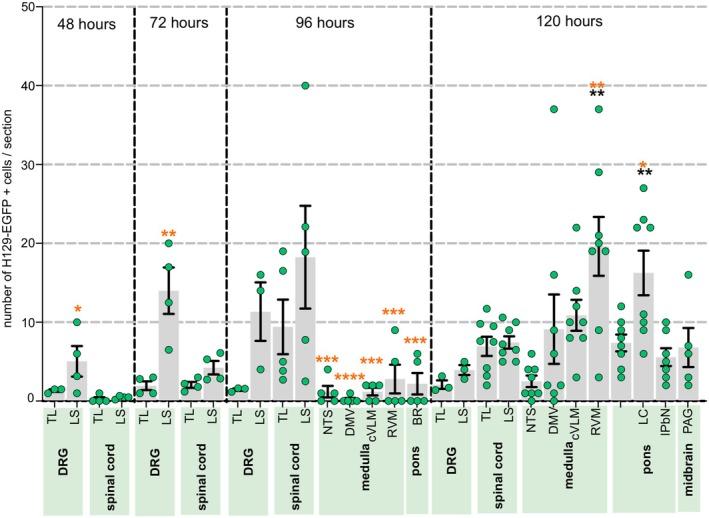
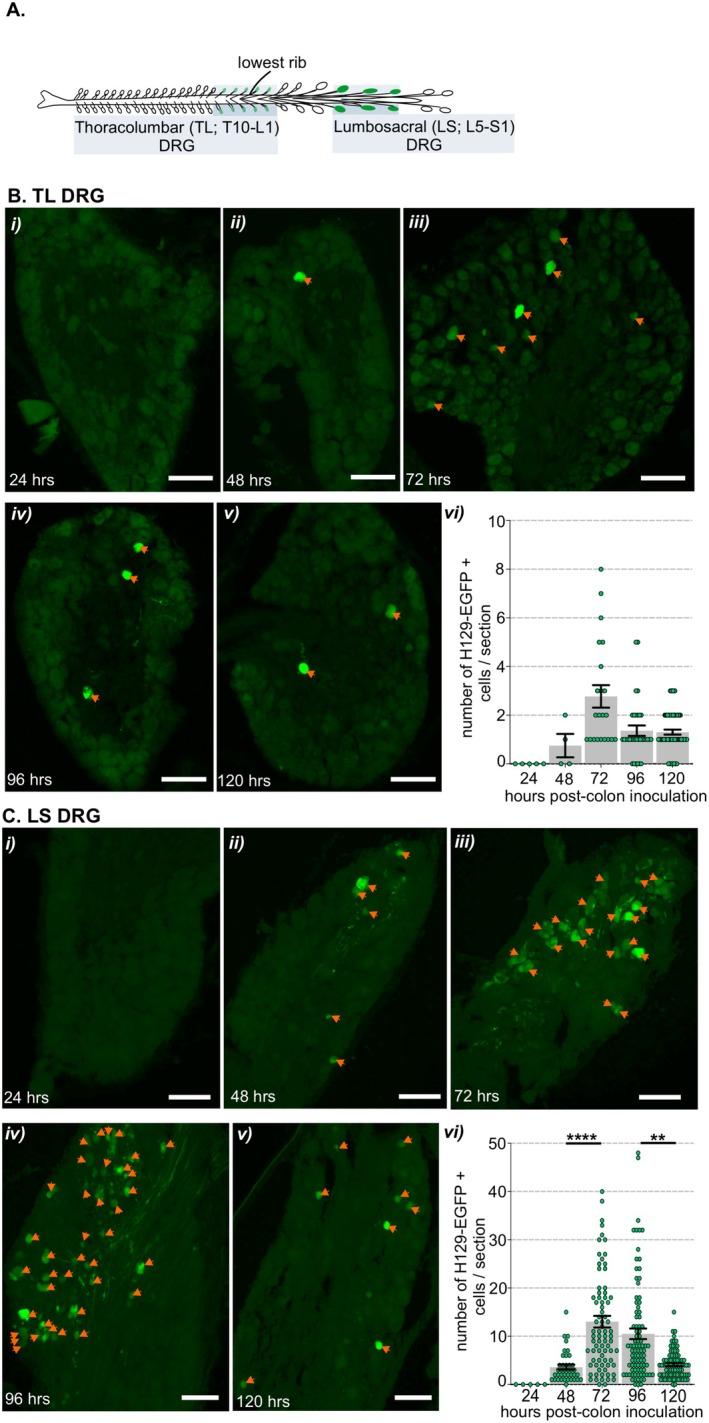
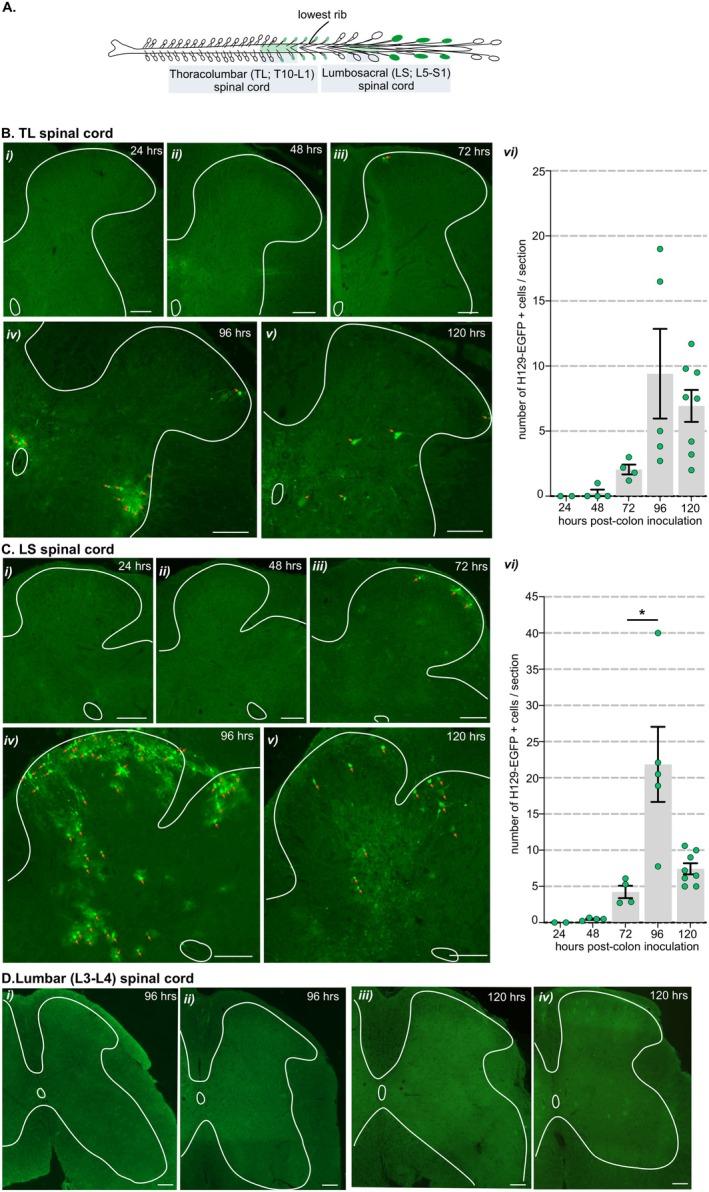
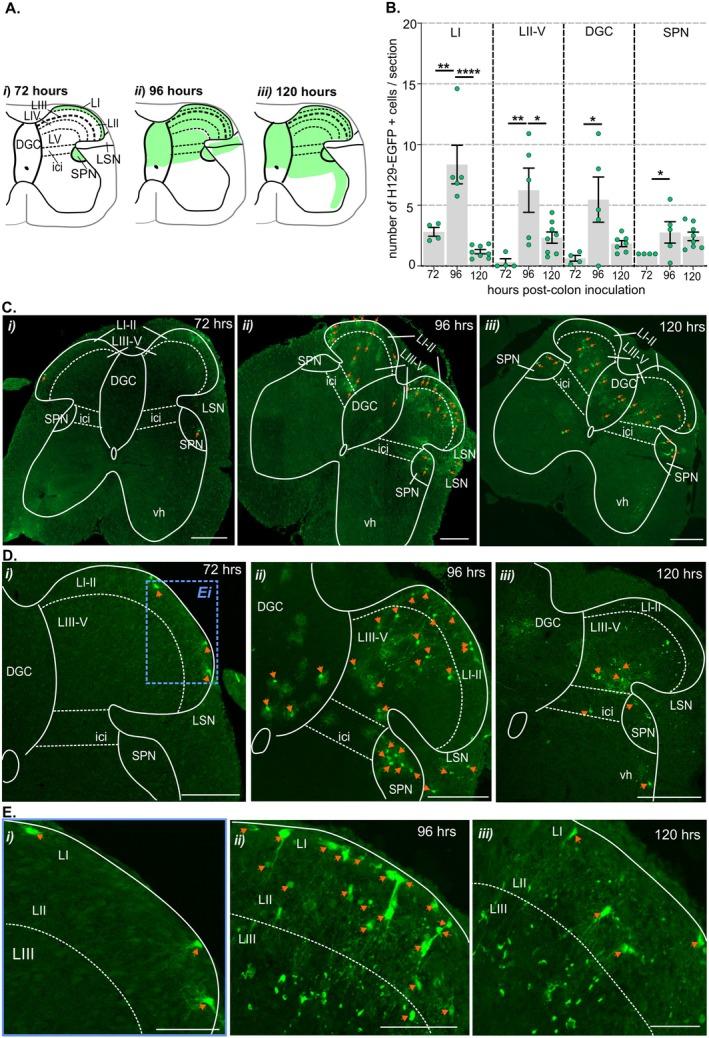
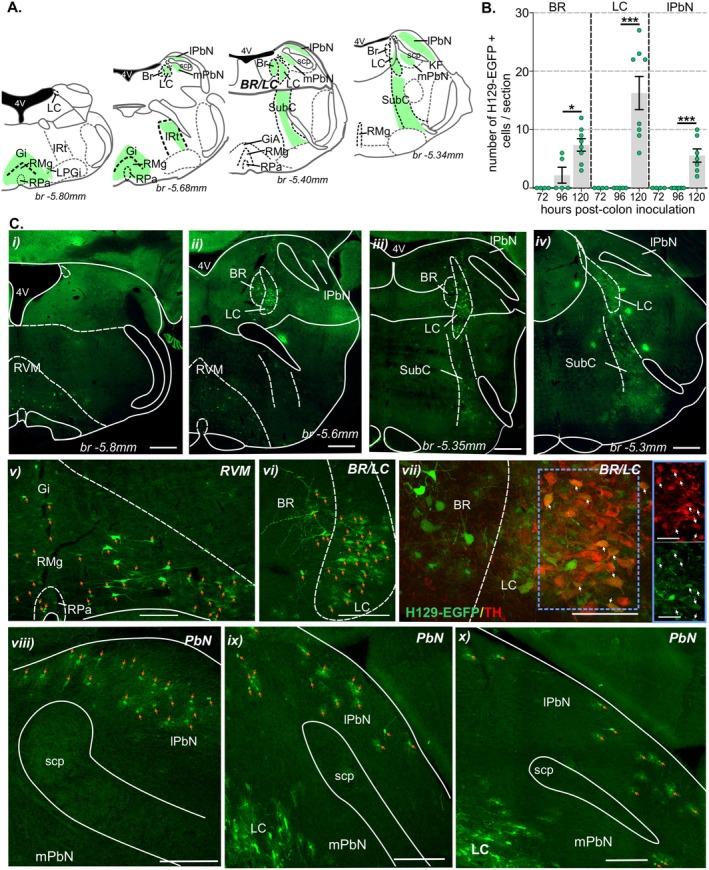
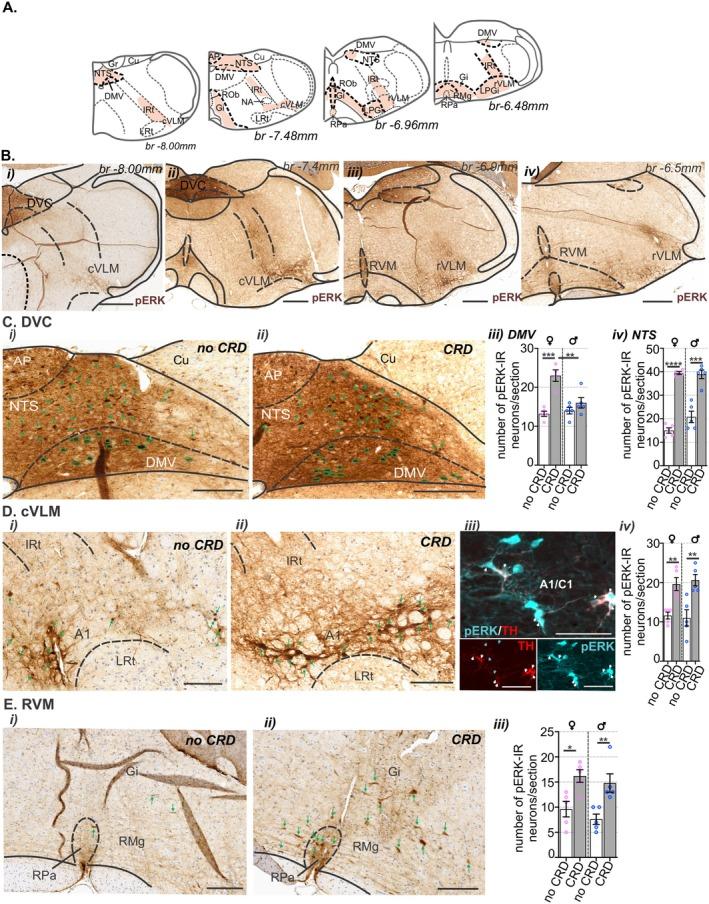
The distal colon and rectum (colorectum) are innervated by two distinct spinal (splanchnic and pelvic) afferent nerve pathways. This study aimed to identify where the sensory information relayed by splanchnic and pelvic afferents integrates within the brainstem. Microinjection of transneuronal viral tracer (herpes simplex virus-1 H129 strain expressing EGFP, H129-EGFP) into the distal colon was used to assess the brainstem structures receiving ascending input from the colorectum. H129-EGFP+ cells were distributed in structures involved in ascending sensory relay, descending pain modulation, and autonomic regulation in the medulla from 96 h and in the pontine and caudal midbrain at 120 h after inoculation. In a separate cohort of mice, in vivo noxious colorectal distension (CRD) followed by brainstem immunolabeling for phosphorylated MAP kinase ERK 1/2 (pERK) determined neurons activated by CRD. Many of the structures containing H129-EGFP+ labeling also contained pERK-labeled neurons, indicating H129-EGFP+ labeling in colorectal signaling pathways. Surgical removal of dorsal root ganglia (DRG) containing the cell bodies of splanchnic colorectal afferent neurons significantly reduced CRD-evoked pERK neuronal activation within the caudal ventrolateral medulla, rostral ventromedial medulla, and the lateral parabrachial nuclei. Surgical removal of the DRG containing the cell bodies of pelvic colorectal afferent neurons significantly reduced CRD-evoked pERK neuronal activation within the rostral ventromedial medulla, lateral parabrachial nuclei, the locus coeruleus, Barrington's nucleus, and periaqueductal gray. Collectively, this study showed that the two spinal afferent pathways innervating the colorectum relay information into different brainstem structures and provide new insight into their unique roles in relaying information into the gut-brain axis controlling colorectal sensory-motor function.
远端结肠和直肠(结直肠)由两条不同的脊髓(内脏和盆腔)传入神经通路支配。本研究旨在确定内脏和盆腔传入神经传递的感觉信息在脑干内整合的位置。将跨神经元病毒示踪剂(表达增强绿色荧光蛋白的单纯疱疹病毒1型H129株,H129-EGFP)微量注射到远端结肠,以评估接受来自结直肠的上行输入的脑干结构。接种后96小时,H129-EGFP+细胞分布在延髓中参与上行感觉中继、下行疼痛调制和自主调节的结构中,120小时时分布在脑桥和尾侧中脑。在另一组小鼠中,进行体内有害性结直肠扩张(CRD),随后对脑干进行磷酸化丝裂原活化蛋白激酶ERK 1/2(pERK)免疫标记,以确定被CRD激活的神经元。许多含有H129-EGFP+标记的结构也含有pERK标记的神经元,表明在结直肠信号通路中有H129-EGFP+标记。手术切除包含内脏结直肠传入神经元细胞体的背根神经节(DRG),可显著降低尾侧腹外侧延髓、嘴侧腹内侧延髓和外侧臂旁核内CRD诱发的pERK神经元激活。手术切除包含盆腔结直肠传入神经元细胞体的DRG,可显著降低嘴侧腹内侧延髓、外侧臂旁核、蓝斑、巴林顿核和导水管周围灰质内CRD诱发的pERK神经元激活。总体而言,本研究表明,支配结直肠的两条脊髓传入通路将信息传递到不同的脑干结构,并为它们在将信息传递到控制结直肠感觉运动功能的肠-脑轴中的独特作用提供了新的见解。




 Zotero 插件