
表面配体对溴化铯铅钙钛矿纳米晶体表面化学态和光致发光特性的影响。
The effect of surface ligands on the surface chemical states and photoluminescence characteristics in cesium lead bromide perovskite nanocrystals.
作者信息
Asharuddin Muhammad, Hidayat Rahmat, Nurunnizar Adhita Asma, Nursam Natalita Maulani, Yandri Valdi Rizki, Arsyad Waode Sukmawati, Suwardy Joko, Indari Efi Dwi, Yamashita Yoshiyuki
机构信息
Physics of Magnetism and Photonics Research Division, Faculty of Mathematics and Natural Sciences, Bandung Institute of Technology Jl. Ganesha 10 Bandung 40132 West Java Indonesia
Research Center for Electronics, National Research and Innovation Agency (BRIN), KST Samaun Samadikun Jl. Sangkuriang Bandung 40135 West Java Indonesia.
出版信息
RSC Adv. 2025 Aug 28;15(37):30727-30741. doi: 10.1039/d5ra05099e. eCollection 2025 Aug 22.
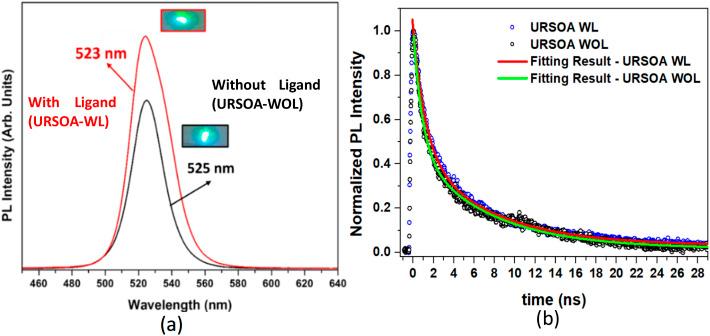
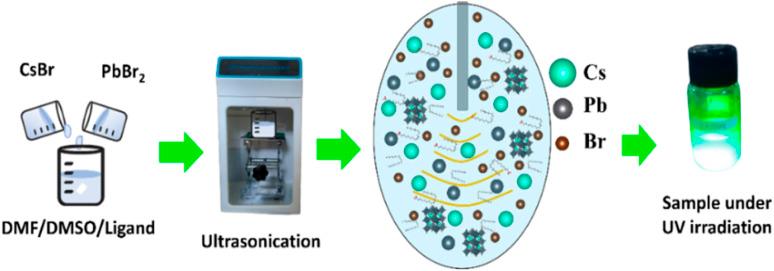
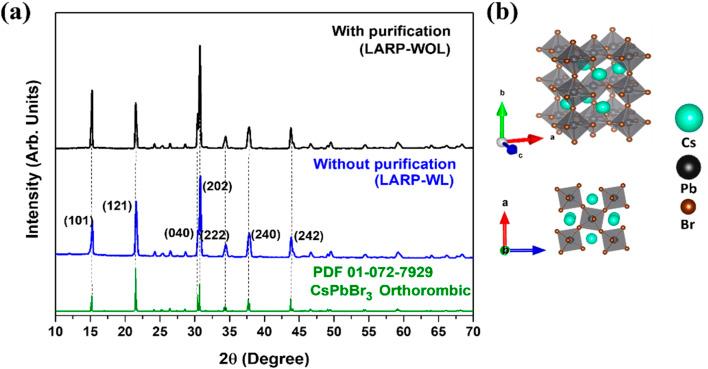
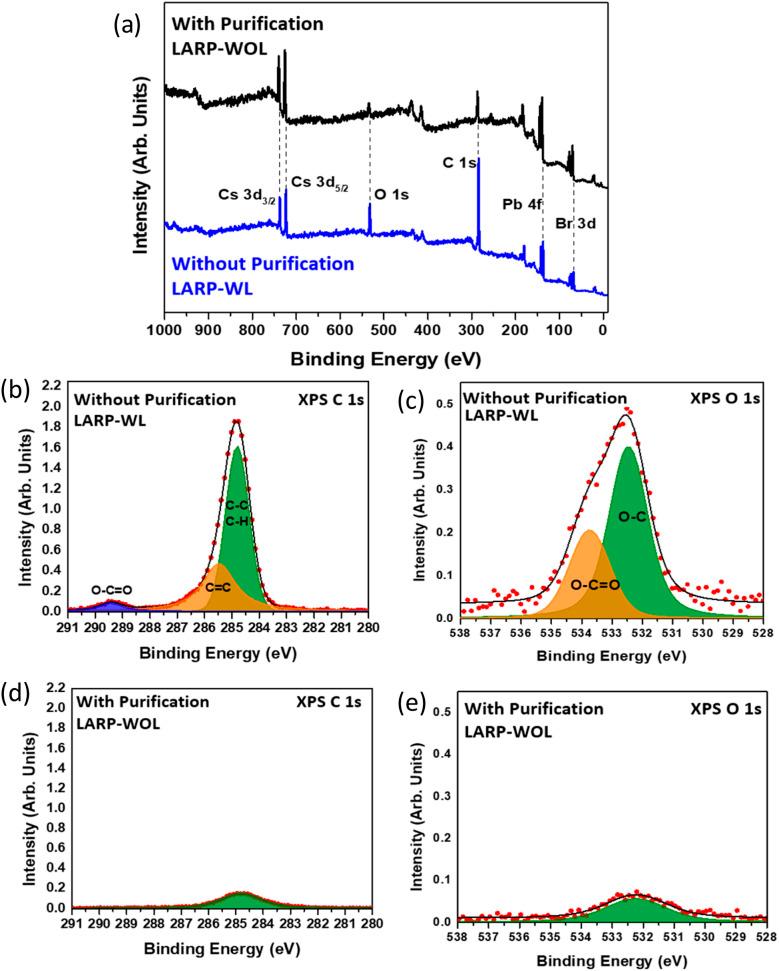
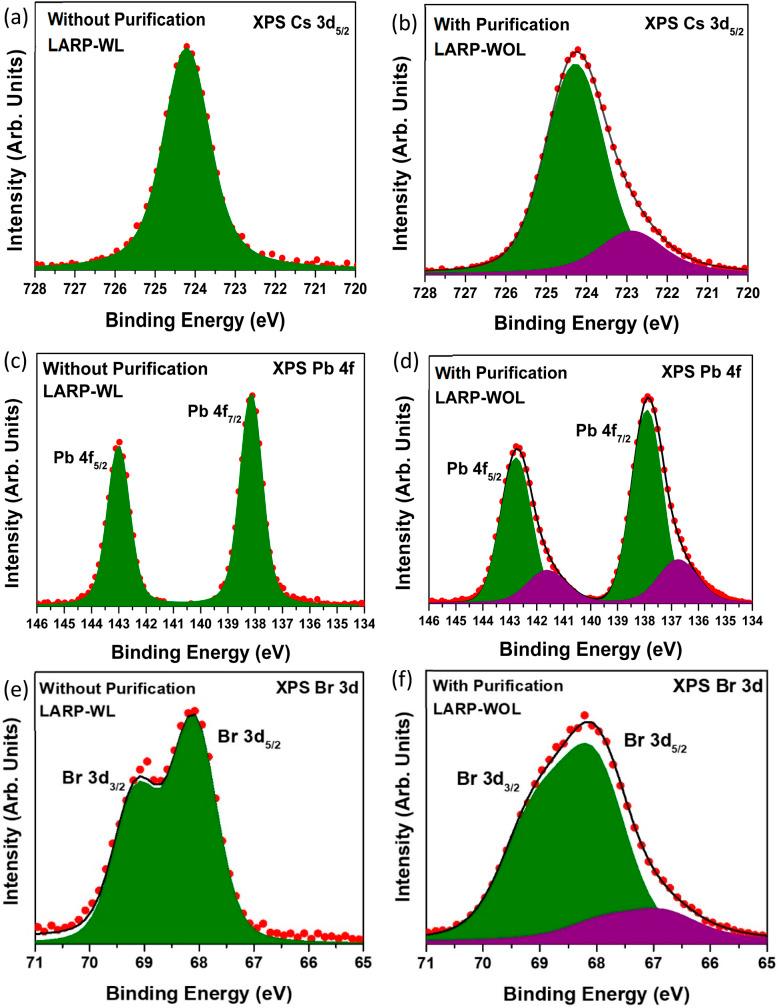
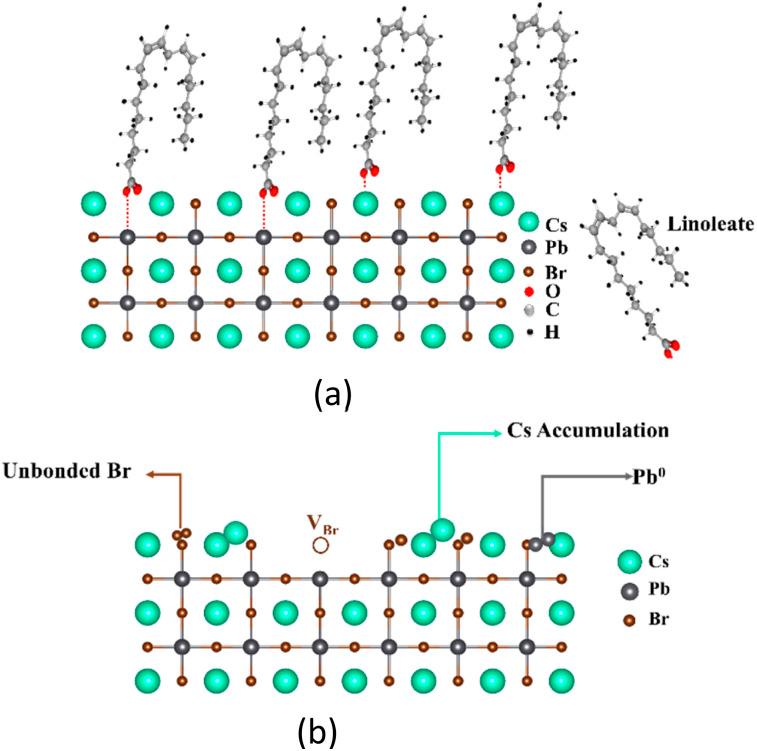
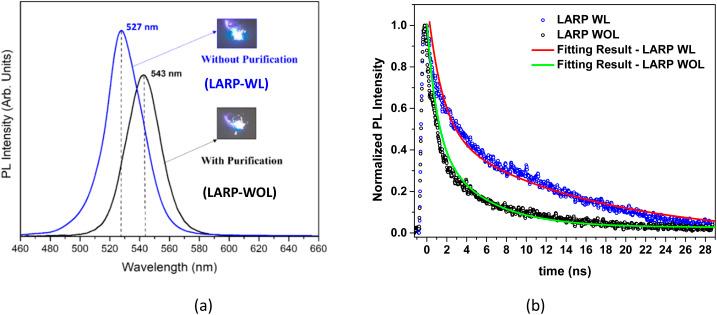
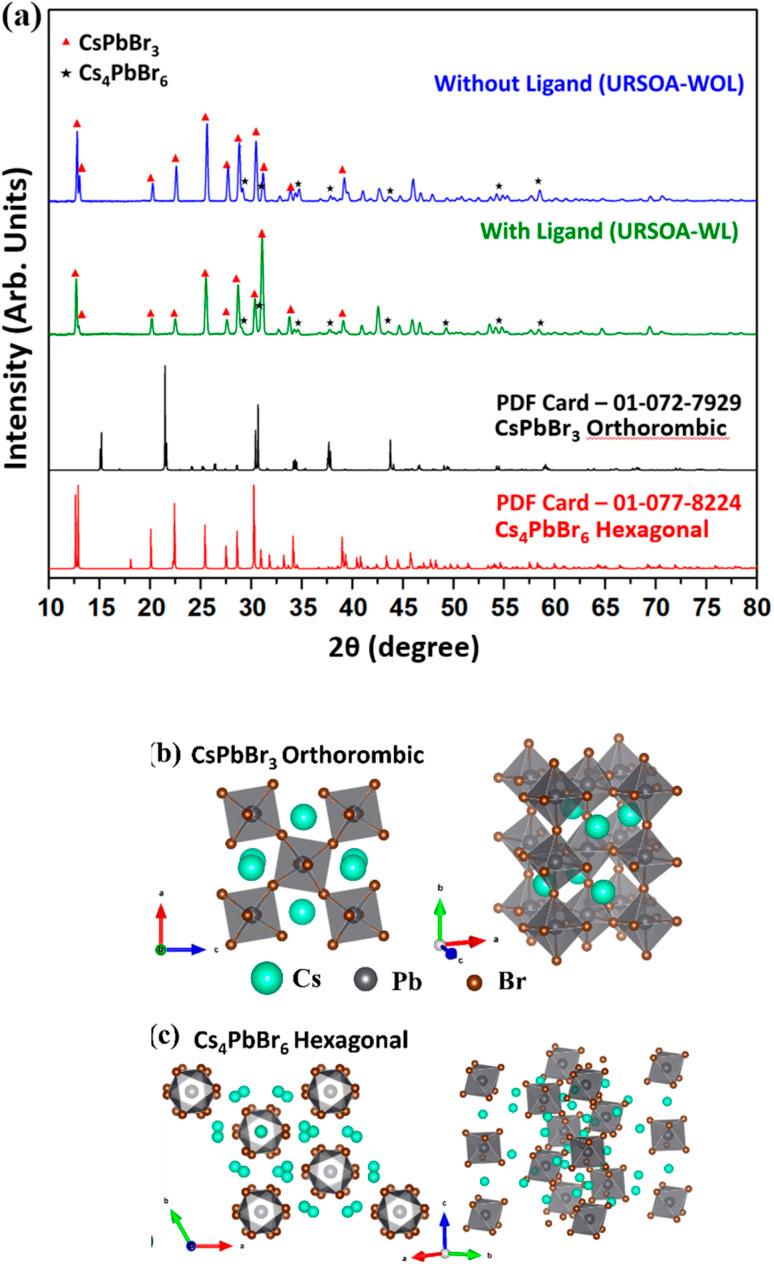
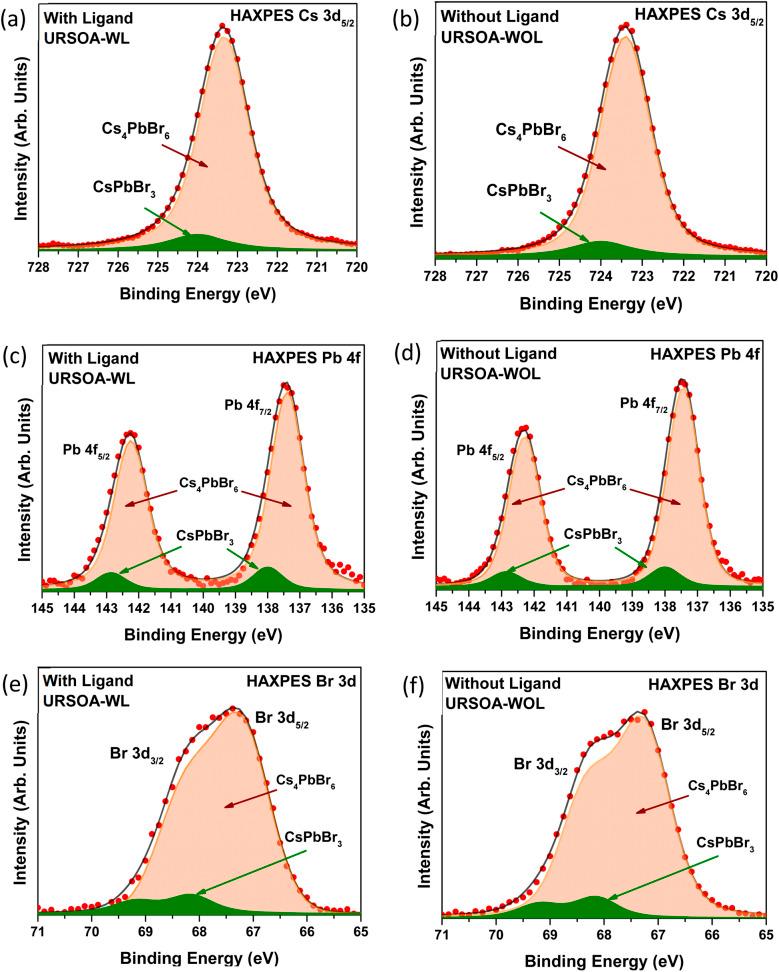
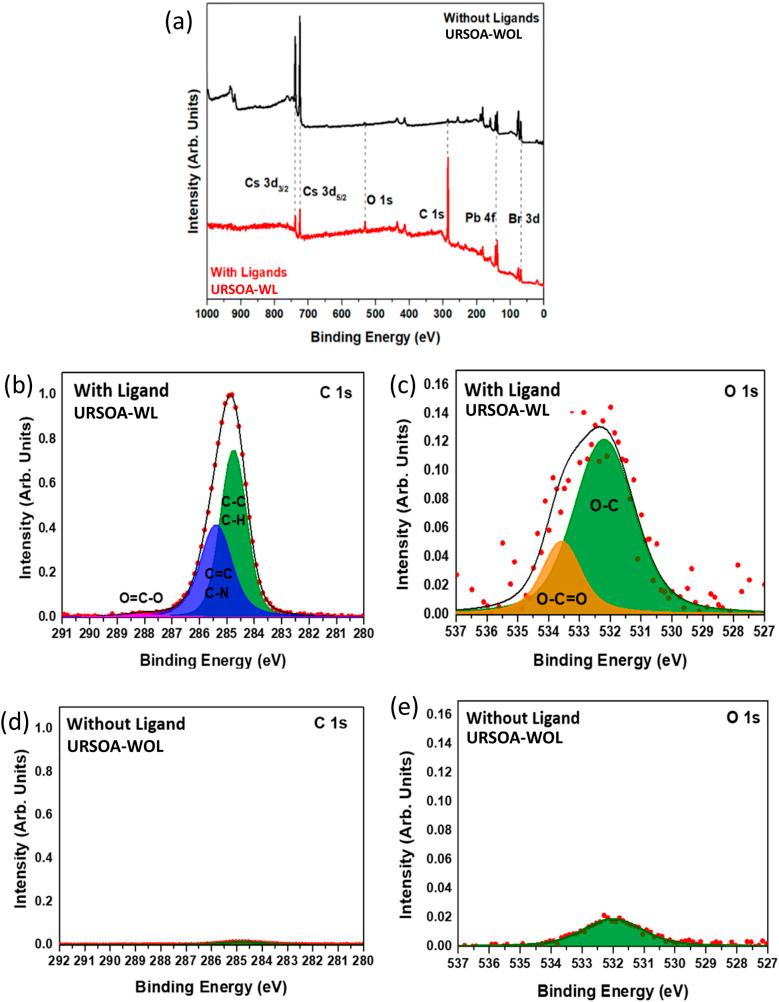
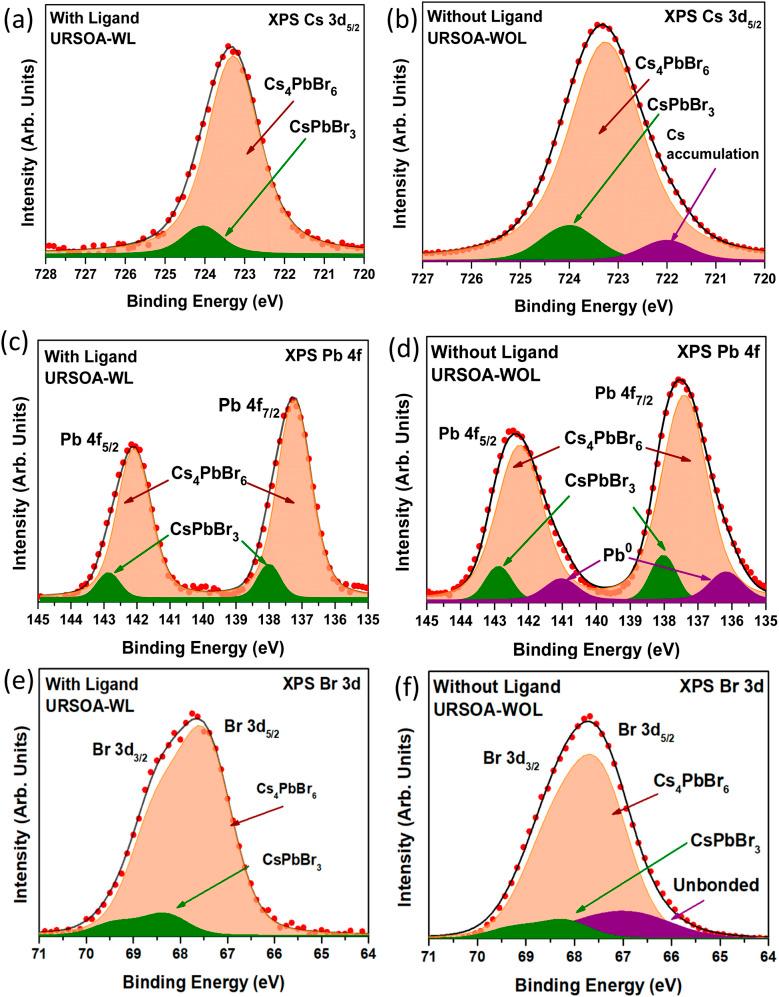
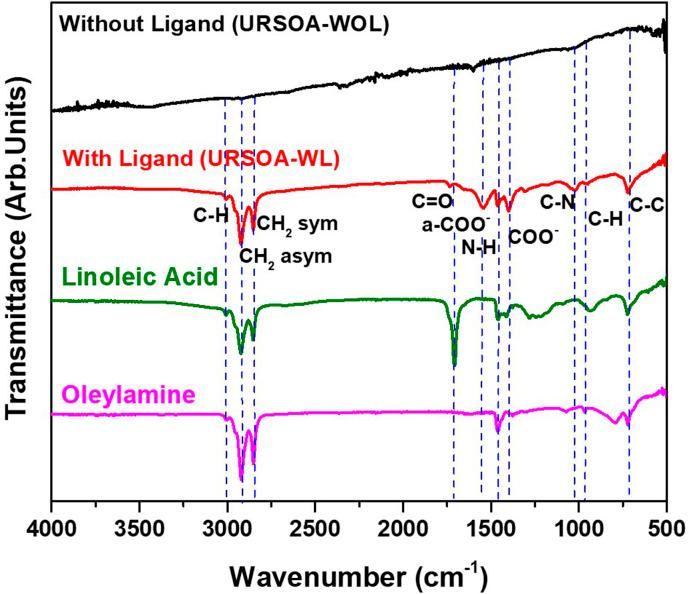
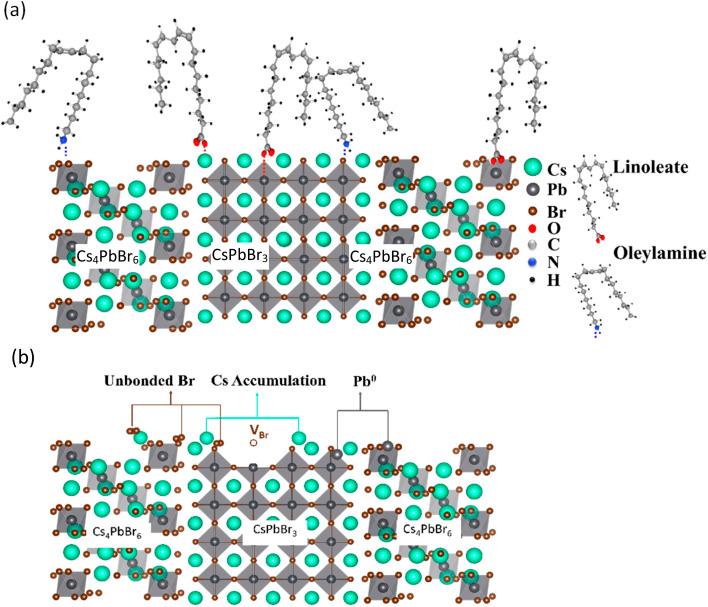
This paper presents the results of our study on the relationship between the surface chemical states, which are influenced by ligands, and photoluminescence (PL) characteristics in cesium lead halide perovskite nanocrystals (NCs). NCs were synthesized the Ligand-Assisted Reprecipitation (LARP) and Ultrasonic-Assisted (URSOA) methods, which were able to produce NCs with and without ligands. Although both synthesis methods used similar precursor composition and processing steps, the resulting crystal structures of NCs are different. The LARP method yielded orthorhombic CsPbBr NCs, while the URSOA method yielded a mixture of hexagonal CsPbBr NCs and orthorhombic CsPbBr NCs with an approximate weight ratio of ∼10 : 1. The X-ray diffraction data indicated that both NCs with and without ligands have the same crystal structure. However, photoelectron spectroscopy (XPS and HAXPES) analysis showed that chemical states in NCs without ligands differ between the inner side and the surface, which could be associated with surface defect species from the accumulation of Cs atoms, Pb atoms with zero oxidation state (Pb), unbonded Br atoms, and Br vacancies at the surface of the NCs. The difference appears to be correlated with the observed PL characteristics. Although photoelectron spectroscopy measures the core level orbitals, the measured chemical states may indicate electronic structure alteration in valence orbitals, which are involved in photoexcitation and exciton relaxation processes. The PL of LARP NCs (orthorhombic CsPbBr) shows two components of PL decay, which are largely suppressed in NCs with purification or NCs without ligands. However, for URSOA NCs (predominantly CsPbBr NCs), the PL decays are almost similar for both with and without ligands. The present experimental results clearly show that the variations in PL characteristics, besides the crystal structure that determines the intrinsic properties of the formed excitons, may also come from surface states or surface defect species influenced by surface ligands. In addition, the results can also explain the much higher degree of defect tolerance properties in URSOA NCs compared to LARP NCs. The insights gained from this work may be useful not only for further development of passivation molecules in a general context but also for designing buffer layer molecules in perovskite heterojunction devices.
本文介绍了我们关于受配体影响的表面化学状态与卤化铯铅钙钛矿纳米晶体(NCs)的光致发光(PL)特性之间关系的研究结果。通过配体辅助再沉淀(LARP)和超声辅助(URSOA)方法合成了NCs,这两种方法能够制备有配体和无配体的NCs。尽管两种合成方法使用了相似的前驱体组成和处理步骤,但所得NCs的晶体结构不同。LARP方法得到正交晶系的CsPbBr NCs,而URSOA方法得到六方晶系CsPbBr NCs和正交晶系CsPbBr NCs的混合物,其近似重量比约为10∶1。X射线衍射数据表明,有配体和无配体的NCs都具有相同的晶体结构。然而,光电子能谱(XPS和HAXPES)分析表明,无配体的NCs内侧和表面的化学状态不同,这可能与Cs原子、零氧化态的Pb原子(Pb)、未键合的Br原子以及NCs表面的Br空位积累形成的表面缺陷物种有关。这种差异似乎与观察到的PL特性相关。尽管光电子能谱测量的是芯能级轨道,但所测量的化学状态可能表明价轨道中的电子结构变化,而价轨道参与光激发和激子弛豫过程。LARP NCs(正交晶系CsPbBr)的PL显示出两个PL衰减成分,在经过纯化的NCs或无配体的NCs中这两个成分被大大抑制。然而,对于URSOA NCs(主要是CsPbBr NCs),有配体和无配体的PL衰减几乎相似。目前的实验结果清楚地表明,PL特性的变化除了由决定所形成激子本征性质的晶体结构引起外,还可能来自受表面配体影响的表面状态或表面缺陷物种。此外,这些结果还可以解释URSOA NCs与LARP NCs相比具有更高程度的缺陷容忍特性。从这项工作中获得的见解不仅可能有助于在一般情况下进一步开发钝化分子,而且有助于设计钙钛矿异质结器件中的缓冲层分子。



 Zotero 插件