
利用响应面法优化基于藜麦的无麸质面包生产,使用微生物转谷氨酰胺酶和羟丙基甲基纤维素(HPMC)
Optimization of Quinoa-Based Gluten-Free Bread Production Using Microbial Transglutaminase Enzyme and Hydroxypropyl Methyl Cellulose (HPMC) by Response Surface Methodology.
作者信息
Ghodosipoor Zahra, Zahed Omid, Fallahzadeh Hossein, Mollakhalili-Meybodi Neda, Nematollahi Amene
机构信息
Student Research Committee, Department of Food Science and Technology, School of Public Health Shahid Sadoughi University of Medical Sciences Yazd Iran.
Research Center of Food Hygiene and Safety, Department of Food Science and Technology, School of Public Health Shahid Sadoughi University of Medical Sciences Yazd Iran.
出版信息
Food Sci Nutr. 2025 Sep 1;13(9):e70891. doi: 10.1002/fsn3.70891. eCollection 2025 Sep.
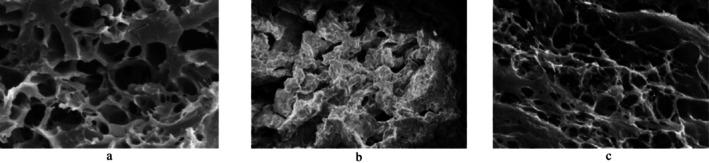
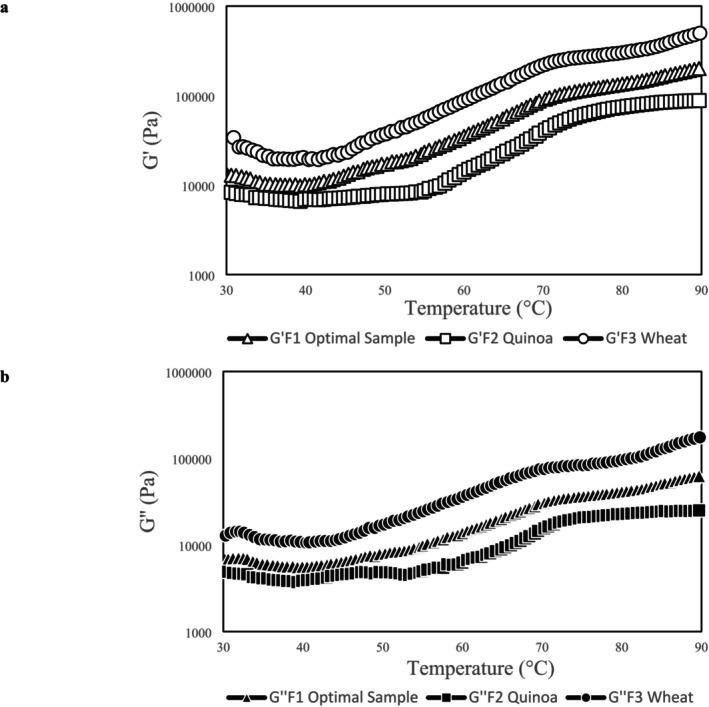
Celiac is an autoimmune disorder that is triggered by gluten proteins. Bread is the staple foodstuff in which gluten networks play a detrimental role. This study investigated the optimization of transglutaminase (TG) and hydroxypropyl methylcellulose (HPMC) using Response Surface Methodology (RSM) and central composite design (CCD) to simulate the functionality of gluten proteins in quinoa-based gluten-free bread. The concentrations of TG and HPMC varied within the ranges of 0%-1.5% w/w and 0%-2% w/w, respectively. A model was ultimately developed using the CCD and the specified range values for the two factors, with measurements taken for specific volume (SV), moisture content (MC), overall acceptance (OA), and hardness. The study identified optimal values of 0.414 g/100 g for TG and 1.283 g/100 g for HPMC, achieving specific values of 2.320 cm/g for SV, 39.161% for MC, 7.454 for OA, and 5431.121 g for hardness, with a desirability of 0.983. To verify the presented model, the bread quinoa sample produced with formula (F1) was evaluated and then compared with the control samples (quinoa bread in the absence of TG and HPMC (F2) and wheat bread (F3)) in terms of rheological properties, microstructure, and physicochemical properties. Among the gluten-free breads (F1 and F2), improvement in all parameters has been achieved through the incorporation of TG and HPMC. This improvement demonstrates the effectiveness of TG and HPMC to well mimic the functional characteristics of gluten in gluten-free breads. Despite more uniform distribution of air bubbles at F1, its higher MC and lower SV compared to F3 verified its lower water migration through the baking process.
乳糜泻是一种由麸质蛋白引发的自身免疫性疾病。面包是主要食物,其中麸质网络起着有害作用。本研究采用响应面法(RSM)和中心复合设计(CCD)研究转谷氨酰胺酶(TG)和羟丙基甲基纤维素(HPMC)的优化,以模拟基于藜麦的无麸质面包中麸质蛋白的功能。TG和HPMC的浓度分别在0%-1.5% w/w和0%-2% w/w范围内变化。最终使用CCD和两个因素的指定范围值建立了一个模型,并对特定体积(SV)、水分含量(MC)、总体接受度(OA)和硬度进行了测量。该研究确定TG的最佳值为0.414 g/100 g,HPMC的最佳值为1.283 g/100 g,SV达到2.320 cm/g、MC达到39.161%、OA达到7.454、硬度达到5431.121 g,可取性为0.983。为验证所提出的模型,对用配方(F1)制作的藜麦面包样品进行了评估,然后在流变学特性、微观结构和物理化学特性方面与对照样品(不含TG和HPMC的藜麦面包(F2)和小麦面包(F3))进行了比较。在无麸质面包(F1和F2)中,通过添加TG和HPMC,所有参数都得到了改善。这种改善证明了TG和HPMC在无麸质面包中很好地模拟麸质功能特性的有效性。尽管F1处气泡分布更均匀,但其与F3相比更高的MC和更低的SV证实了其在烘焙过程中较低的水分迁移。


 Zotero 插件