
南亚电子烟使用情况及影响因素:一项系统综述
Prevalence and determinants of e-cigarette use in South Asia: a systematic review.
作者信息
Jayasinghe Yovanthi Anurangi, Ratnapreya Sakuntha, Nawarathna Gayani, Peiris Prasangi Madhubhashini, Kanmodi Kehinde Kazeem, Jayasinghe Ruwan
机构信息
Department of Oral Medicine and Periodontology, University of Peradeniya, Peradeniya, Sri Lanka.
Department of Research, University of Puthisastra, Phnom Penh, Cambodia.
出版信息
BMJ Glob Health. 2025 Sep 3;10(9):e018363. doi: 10.1136/bmjgh-2024-018363.
INTRODUCTION
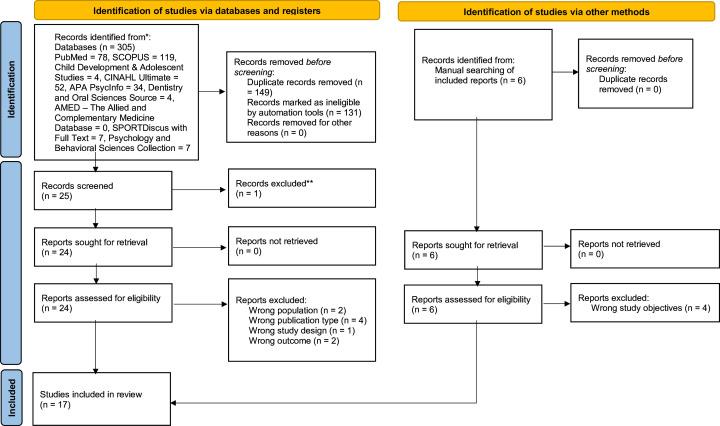
E-cigarette use has become a significant global public health concern. Recently, several systematic reviews have synthesised evidence on e-cigarette use in Europe, America and Southeast Asia. However, there is no known systematic review of such on South Asia (SA). This systematic review aimed to systematically synthesise empirical evidence on the prevalence and determinants of e-cigarette use in SA.
METHODS
This systematic review adhered to Preferred Reporting Items for Systematic Review and Meta-Analysis guidelines and Cochrane Handbook for Systematic Reviews of Interventions. Nine databases, as well as additional sources, were searched to retrieve relevant articles on the prevalence and determinants of e-cigarette use in SA. Only those peer-reviewed articles which met the eligibility criteria were included in this systematic review. Data were extracted from the included articles and synthesised using a narrative synthesis approach.
RESULTS
Seventeen articles were included in this systematic review and all were graded as above average after quality appraisal. Lifetime prevalence of e-cigarette use was reported in three SA countries only: India (0.1-23.8%), Bangladesh (0.4-0.5%) and Nepal (21.2%). The prevalence of current e-cigarette use was reported in four SA countries only: Pakistan (6.20-10.1%), India (0.01-5.39%), Nepal (5.9%) and Bangladesh (0.5%). The following factors were the reported determinants of e-cigarette use that were significant (p<0.05) among SA populations: self-perception of e-cigarette use as addictive, less harmful, an alternative to tobacco smoking and as a safe product; leisure use; individual appeal to the flavours of e-cigarette; individual stress; presence of mental depression; peer influence; social acceptance of e-cigarette use and prices of e-cigarettes.
CONCLUSION
Empirical evidence on e-cigarette use is limited to specific sociodemographic, socioeconomic and geographical regions in SA. Additional empirical investigations are required to outline the prevalence and determinants of e-cigarette use in SA countries lacking adequate data. Also, there is a need for tailored interventions targeting e-cigarette use in SA.
引言
电子烟的使用已成为一个重大的全球公共卫生问题。最近,几项系统评价综合了关于欧美和东南亚电子烟使用情况的证据。然而,目前尚无关于南亚电子烟使用情况的系统评价。本系统评价旨在系统地综合南亚电子烟使用流行率及其决定因素的实证证据。
方法
本系统评价遵循系统评价和Meta分析的首选报告项目指南以及干预措施系统评价的Cochrane手册。检索了九个数据库以及其他来源,以获取有关南亚电子烟使用流行率及其决定因素的相关文章。只有符合纳入标准的同行评审文章才被纳入本系统评价。从纳入的文章中提取数据,并采用叙述性综合方法进行综合。
结果
本系统评价纳入了17篇文章,所有文章在质量评估后均被评为高于平均水平。仅在三个南亚国家报告了电子烟的终生使用流行率:印度(0.1%-23.8%)、孟加拉国(0.4%-0.5%)和尼泊尔(21.2%)。仅在四个南亚国家报告了当前电子烟的使用流行率:巴基斯坦(6.20%-10.1%)、印度(0.01%-5.39%)、尼泊尔(5.9%)和孟加拉国(0.5%)。以下因素是报告的在南亚人群中电子烟使用的显著决定因素(p<0.05):将电子烟使用视为成瘾、危害较小、吸烟替代品和安全产品的自我认知;休闲使用;个人对电子烟口味的喜好;个人压力;存在精神抑郁;同伴影响;社会对电子烟使用的接受程度以及电子烟价格。
结论
南亚关于电子烟使用的实证证据仅限于特定的社会人口、社会经济和地理区域。需要进行更多的实证研究,以勾勒出缺乏充分数据的南亚国家电子烟使用的流行率及其决定因素。此外,需要针对南亚地区的电子烟使用制定有针对性的干预措施。

 Zotero 插件