
持续与间歇性负压伤口治疗在糖尿病足溃疡管理中的比较效果:一项前瞻性观察研究。
Comparative Effectiveness of Continuous Versus Intermittent Negative Pressure Wound Therapy in the Management of Diabetic Foot Ulcers: A Prospective Observational Study.
作者信息
P Ajay Nayagam, Selvaraj Karthikeyan, C Srinivasan
机构信息
General Surgery, Sree Balaji Medical College and Hospital, Chennai, IND.
出版信息
Cureus. 2025 Aug 4;17(8):e89340. doi: 10.7759/cureus.89340. eCollection 2025 Aug.
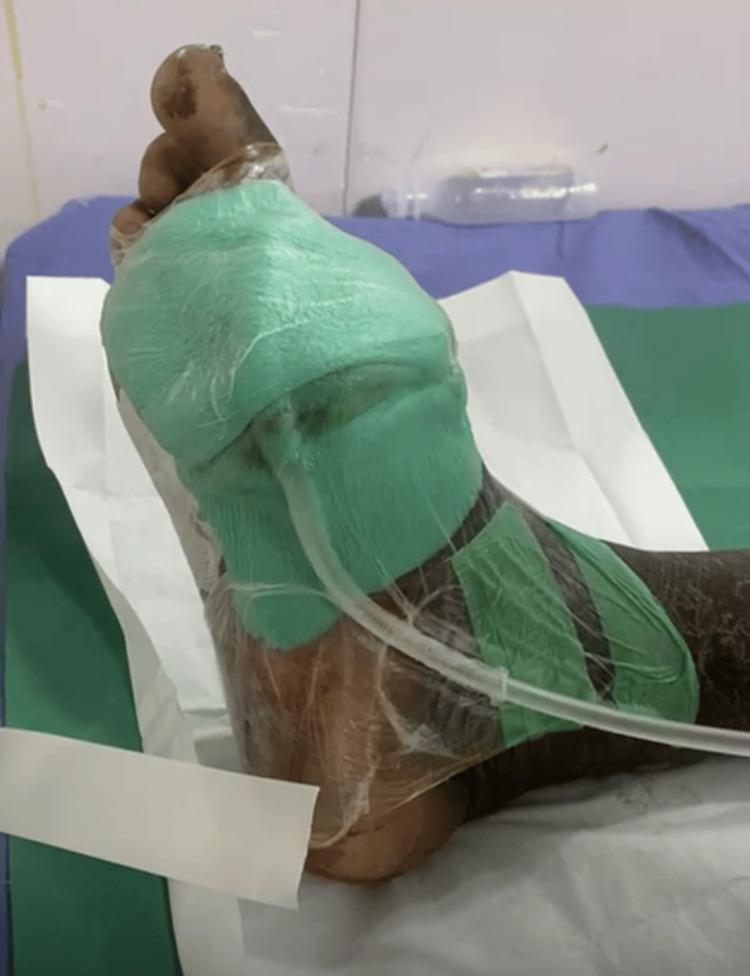
Introduction Diabetic foot ulcers (DFUs) are a serious complication of diabetes mellitus, contributing to increased morbidity, risk of amputation, and healthcare burden. Negative pressure wound therapy (NPWT) has emerged as a cornerstone in DFU management, but the comparative effectiveness of continuous versus intermittent NPWT remains unclear. This prospective observational study compares continuous and intermittent NPWT in patients with Wagner Grade 1-2 DFUs, assessing healing time (primary outcome), infection recurrence, and amputation rates (secondary outcomes). Methods This prospective observational study enrolled 110 patients with DFUs in the Department of General Surgery at Sree Balaji Medical College and Hospital, a tertiary care center in Chennai, India. Patients were divided into two groups, i.e., 55 received continuous NPWT and 55 received intermittent NPWT, based on inpatient registration numbers. Wound healing was assessed using the Bates-Jensen Wound Assessment Tool (BWAT) at baseline and weekly intervals. Key variables analyzed included healing time, ulcer progression, infection recurrence, and amputation rates. Statistical analysis involved t-tests, chi-square tests, logistic regression, and Kaplan-Meier survival analysis. Results The mean healing time was significantly lower in the continuous NPWT group (35.2 ± 9.4 days) compared to the intermittent group (42.7 ± 10.5 days, p < 0.001). Logistic regression identified infection absence (OR: 3.21, p < 0.001), Wagner grade ≤2 (OR: 2.87, p < 0.001), HbA1c <8% (OR: 2.15, p = 0.002), and regular use of protective footwear (OR: 1.87, p = 0.013) as independent predictors of successful healing. Continuous NPWT was associated with fewer wound failures and lower amputation rates. was the most commonly isolated organism from infected wounds. Conclusion Continuous NPWT demonstrates superior outcomes in wound healing, infection control, and amputation prevention compared to intermittent NPWT in DFU patients. Optimizing patient-specific factors such as glycemic control, infection status, and ulcer grading further enhance therapeutic efficacy.
引言 糖尿病足溃疡(DFUs)是糖尿病的一种严重并发症,会导致发病率增加、截肢风险上升以及医疗负担加重。负压伤口治疗(NPWT)已成为DFU治疗的基石,但持续与间歇性NPWT的相对有效性仍不明确。这项前瞻性观察性研究比较了Wagner 1-2级DFU患者接受持续和间歇性NPWT的情况,评估愈合时间(主要结局)、感染复发率和截肢率(次要结局)。
方法 这项前瞻性观察性研究纳入了印度钦奈一家三级护理中心——斯里·巴拉吉医学院和医院普通外科的110例DFU患者。根据住院登记号,将患者分为两组,即55例接受持续NPWT,55例接受间歇性NPWT。在基线和每周间隔时使用贝茨-詹森伤口评估工具(BWAT)评估伤口愈合情况。分析的关键变量包括愈合时间、溃疡进展、感染复发率和截肢率。统计分析包括t检验、卡方检验、逻辑回归和Kaplan-Meier生存分析。
结果 持续NPWT组的平均愈合时间(35.2±9.4天)显著低于间歇性NPWT组(42.7±10.5天,p<0.001)。逻辑回归确定无感染(比值比:3.21,p<0.001)、Wagner分级≤2(比值比:2.87,p<0.001)、糖化血红蛋白<8%(比值比:2.15,p = 0.002)以及经常使用防护鞋(比值比:1.87,p = 0.013)是伤口成功愈合的独立预测因素。持续NPWT与更少的伤口愈合失败和更低的截肢率相关。 是感染伤口中最常分离出的微生物。
结论 与间歇性NPWT相比,持续NPWT在DFU患者的伤口愈合、感染控制和截肢预防方面显示出更好的效果。优化血糖控制、感染状况和溃疡分级等患者特异性因素可进一步提高治疗效果。

 Zotero 插件