
血管内脉冲电场消融治疗心律失常的可行性研究。
Feasibility study of intravascular pulsed electric field ablation for the treatment of cardiac arrhythmias.
作者信息
Wang Zhen, Li Yunhao, Liang Ming, Sun Jingyang, Zhang Jie, Xu Lisheng, Han Yaling
机构信息
Department of Cardiology, General Hospital of Northern Theater Command, Shenyang, China.
College of Medicine and Biological Information Engineering, Northeastern University, Shenyang, China.
出版信息
Front Physiol. 2025 Aug 22;16:1632680. doi: 10.3389/fphys.2025.1632680. eCollection 2025.
BACKGROUND
Pulsed electric field ablation (PFA) techniques for treating cardiac arrhythmias have attracted considerable interest. For example, atrial fibrillation can be effectively treated by pulmonary vein isolation using PFA. However, some arrhythmias originate deep within the myocardium, making them difficult to reach with conventional ablation methods. Therefore, this study aimed to explore endovascular catheter-based ablation using computational modeling to assess the electric field and temperature distributions during the procedure.
METHODS
A three-dimensional computer model of the ablation catheter and heart was developed. The catheter was positioned within the heart model to simulate endovascular ablation, and the ablation damage range was estimated using the 1000 V/cm contour. Additionally, a probe function was used to monitor the maximum electric field and temperature within the ablation zone to evaluate the feasibility and safety of this approach.
RESULTS
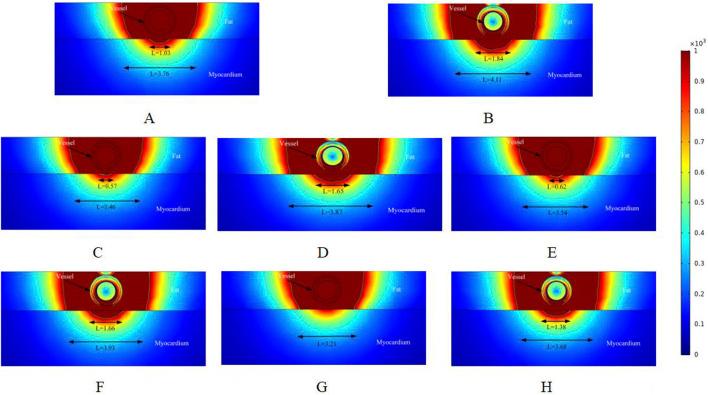
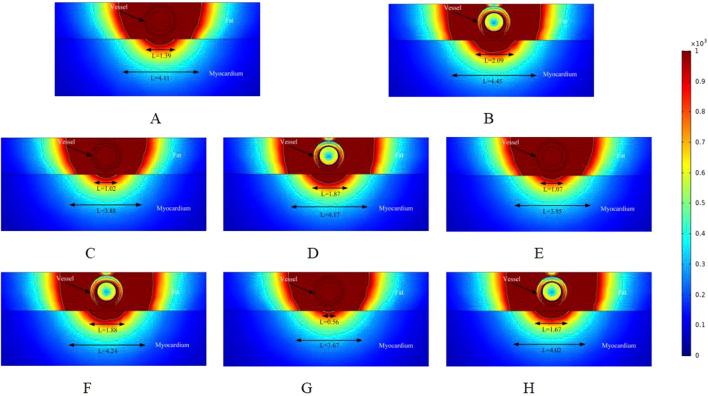
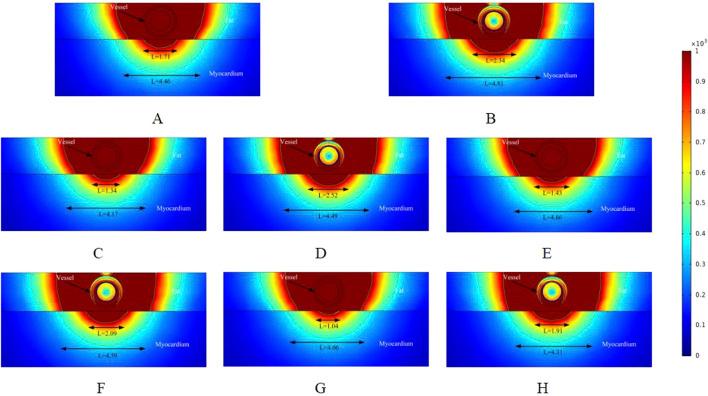
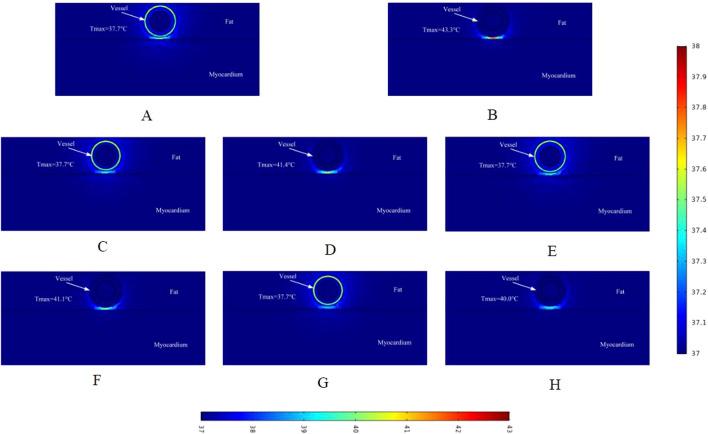
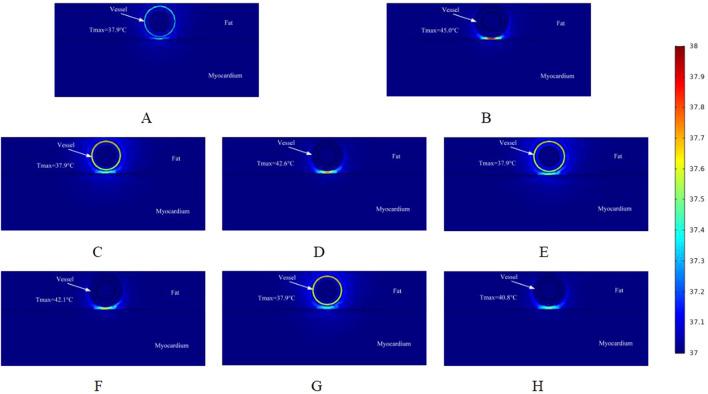
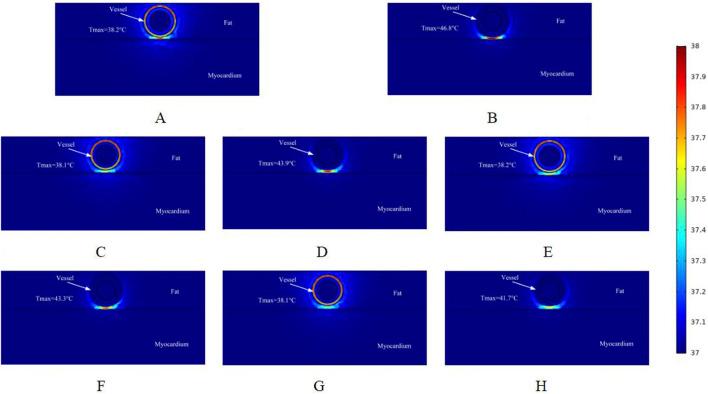
The electric field can penetrate blood vessels and fat to induce effective myocardial injury. The extent of myocardial damage increases with higher pulse voltages; however, excessive voltage may also damage blood vessels (vascular damage threshold: 3500 V/cm). An appropriate electrode configuration can achieve a more uniform myocardial injury across different cross-sections. Temperature rise near the catheter electrode is significant, but appropriate pulse interval settings can prevent thermal damage in the target area (simulated maximum temperature: 46.8 °C; thermal damage threshold for biological tissue: 55 °C).
CONCLUSION
Intravascular pulsed electric field ablation can effectively damage the myocardium without harming blood vessels when suitable pulse parameters are applied. The ablation device settings strongly influence the maximum temperature in the ablation zone and help limit thermal effects. These findings support the feasibility of using small endovascular catheters to treat cardiac arrhythmias.
背景
用于治疗心律失常的脉冲电场消融(PFA)技术已引起了广泛关注。例如,使用PFA进行肺静脉隔离可有效治疗心房颤动。然而,一些心律失常起源于心肌深处,使得传统消融方法难以触及。因此,本研究旨在利用计算模型探索基于血管内导管的消融方法,以评估手术过程中的电场和温度分布。
方法
建立了消融导管和心脏的三维计算机模型。将导管放置在心脏模型内以模拟血管内消融,并使用1000 V/cm等高线估计消融损伤范围。此外,使用探针函数监测消融区内的最大电场和温度,以评估该方法的可行性和安全性。
结果
电场可穿透血管和脂肪以诱导有效的心肌损伤。心肌损伤程度随脉冲电压升高而增加;然而,过高的电压也可能损伤血管(血管损伤阈值:3500 V/cm)。合适的电极配置可在不同横截面上实现更均匀的心肌损伤。导管电极附近温度显著升高,但合适的脉冲间隔设置可防止目标区域发生热损伤(模拟最高温度:46.8℃;生物组织热损伤阈值:55℃)。
结论
当应用合适的脉冲参数时,血管内脉冲电场消融可有效损伤心肌而不损伤血管。消融设备设置强烈影响消融区内的最高温度,并有助于限制热效应。这些发现支持了使用小型血管内导管治疗心律失常的可行性。


 Zotero 插件