
基于肽的荧光探针在生物医学应用中的最新进展:综述
Recent Progress in Peptide-Based Fluorescent Probes Biomedical Applications: A Review.
作者信息
Zhong Xue, Xie Yuanlong, Chen Yuen, Lu Yushen, Hou Mingming
机构信息
Department of Spine Surgery and Musculoskeletal Tumor, Zhongnan Hospital of Wuhan University, Wuhan, Hubei, People's Republic of China.
Second Clinical College, Wuhan University, Wuhan, Hubei, People's Republic of China.
出版信息
Int J Nanomedicine. 2025 Sep 3;20:10751-10770. doi: 10.2147/IJN.S529323. eCollection 2025.
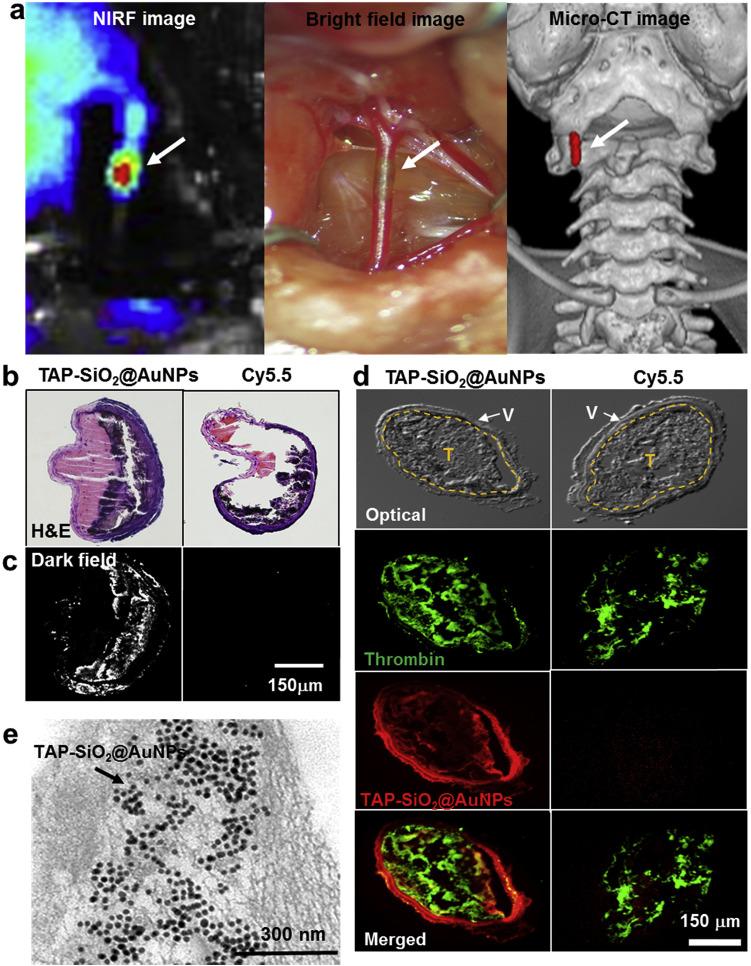
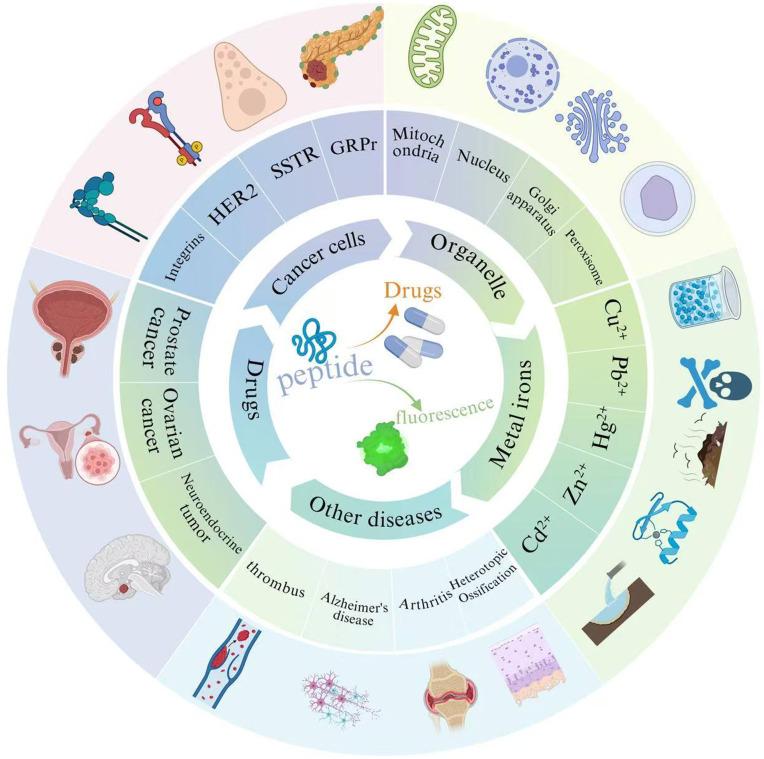
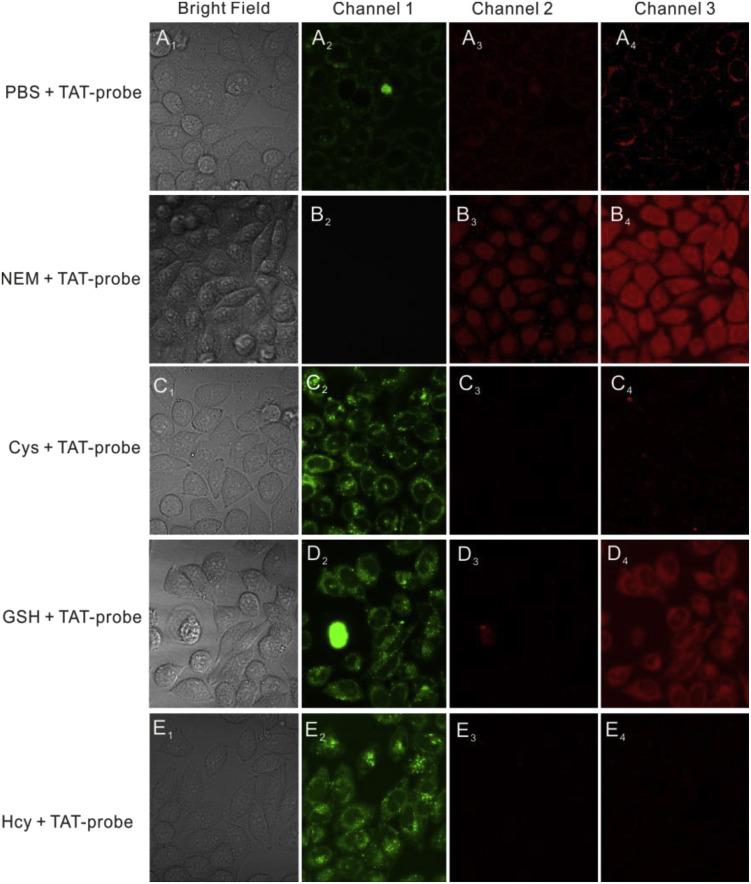
Peptide-based fluorescent probes have found widespread applications in biomedical research, including bio-imaging, disease diagnosis, drug discovery, and image-guided surgery. Their favorable properties-such as small molecular size, low toxicity, minimal immunogenicity, and high targeting specificity-have contributed to their growing utility in both basic research and translational medicine. This review provides a comprehensive overview of recent advances in peptide-based fluorescent probes, emphasizing design strategies, biological targets, and diverse functional applications. Key areas of focus include the integration of molecular targeting with imaging capabilities, the emergence of multimodal imaging techniques, and the development of activatable probes responsive to specific biological stimuli. Applications are discussed in the context of tumor cell membrane recognition, subcellular organelle targeting, non-cancer disease diagnosis, and detection of both metal ions and non-metal ions. Notably, responsive probes for reactive oxygen species (ROS) and other biologically relevant non-metal ions are also highlighted, underscoring their diagnostic and therapeutic potential. The review also addresses key limitations-such as poor in vivo stability, limited targeting accuracy, and delivery efficiency-and outlines future directions including smart peptide probe platforms, self-reporting systems, and high-throughput screening based on peptide libraries to accelerate next-generation probe development.
基于肽的荧光探针在生物医学研究中有着广泛的应用,包括生物成像、疾病诊断、药物发现和图像引导手术。它们具有诸如小分子尺寸、低毒性、最小免疫原性和高靶向特异性等良好特性,这促使它们在基础研究和转化医学中的应用日益广泛。本综述全面概述了基于肽的荧光探针的最新进展,重点强调了设计策略、生物靶点和多样的功能应用。重点关注的关键领域包括分子靶向与成像能力的整合、多模态成像技术的出现以及对特定生物刺激有响应的可激活探针的开发。在肿瘤细胞膜识别、亚细胞器靶向、非癌症疾病诊断以及金属离子和非金属离子检测等背景下讨论了应用。值得注意的是,还强调了对活性氧(ROS)和其他生物相关非金属离子的响应性探针,突出了它们的诊断和治疗潜力。该综述还讨论了关键局限性,如体内稳定性差、靶向准确性有限和递送效率,并概述了未来方向,包括智能肽探针平台、自我报告系统以及基于肽库的高通量筛选,以加速下一代探针的开发。


 Zotero 插件