
接受放疗的鼻咽癌患者心理困扰的轨迹及影响因素(纳入遗传因素):一项多中心纵向研究
Trajectories and influencing factors of psychological distress in nasopharyngeal carcinoma patients receiving radiotherapy (incorporating genetic factors): a multicenter longitudinal study.
作者信息
Ning Jiajie, Huang Jianhua, Liao Yan, Long Jianxiong, Zeng Pingping
机构信息
Nursing College, Guangxi Medical University, Nanning, China.
Department of Epidemiology and Health Statistics, School of Public Health of Guangxi Medical University, Nanning, China.
出版信息
Front Oncol. 2025 Aug 27;15:1640266. doi: 10.3389/fonc.2025.1640266. eCollection 2025.
BACKGROUND
This multicenter longitudinal study seeks to investigate the dynamic changes of psychological distress (PD) in nasopharyngeal carcinoma (NPC) patients during radiotherapy, and reveal the expression profiles and regulatory networks of circRNAs in these NPC patients.
METHODS
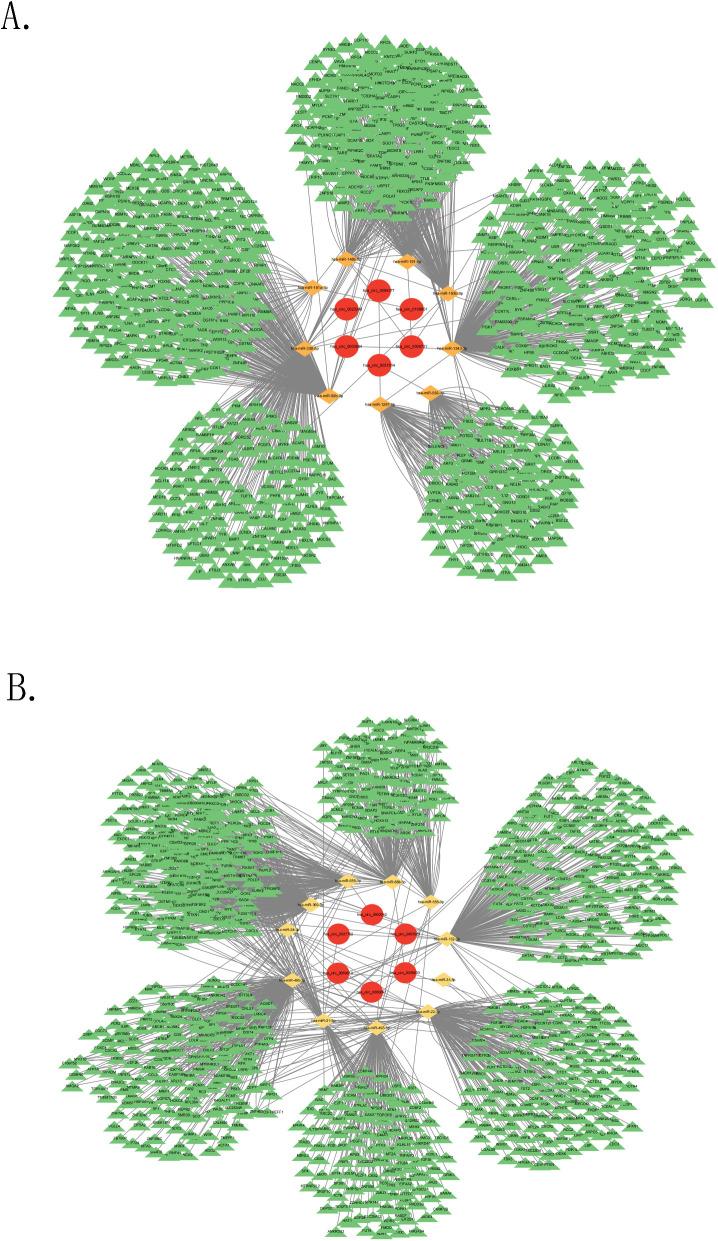
282 newly diagnosed NPC patients from three hospitals in China were included. Participants completed questionnaires and provided blood samples. PD trajectories were identified via a latent class growth model (LCGM). Moreover, the factors that influence the PD trajectories were explored. Whole transcriptome sequencing was performed to investigate genetic factors. The real-time quantitative PCR was applied to validate circRNAs. We predicted the target miRNAs, target mRNAs and target RNA-binding proteins (RBPs) of the top 10 malregulated circRNAs. Subsequently, circRNA-miRNA-mRNA (ceRNA) and circRNA-RBP networks were constructed. In addition, the role of circRNA and target mRNA parent genes was predicted by KEGG and GO analysis.
RESULTS
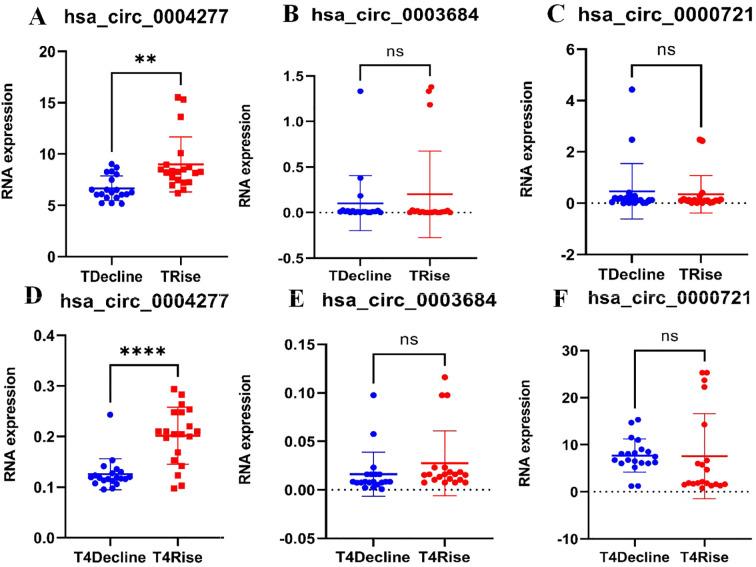
LCGM identified two of the most important PD trajectories during radiotherapy in NPC patients: Class 1 "decline distress group" (11.0%) and Class 4 "rise distress group" (20.3%). Household monthly per capita income, coping strategies, and perceived social support emerged as important predictors of PD trajectories. Regarding genetic factors, 600 circRNAs and 123 miRNAs were identified as being significantly differentially expressed. Notably, hsa_circ_0004277 demonstrated significant differences between patients in the rise and decline distress groups (P < 0.01). ceRNA and RBP networks may influence the pathophysiology of PD in NPC patients undergoing radiotherapy.
CONCLUSION
This study unraveled that PD trajectories in NPC patients during radiotherapy were heterogeneous, indicating the need for screening and timely interventions within this population. Furthermore, the expression patterns of ceRNA and circRNA-RBP networks and pathways related to these networks suggested a potential role of circRNAs in developing PD among NPC patients receiving radiotherapy.
背景
本多中心纵向研究旨在调查鼻咽癌(NPC)患者放疗期间心理困扰(PD)的动态变化,并揭示这些NPC患者中环状RNA(circRNA)的表达谱和调控网络。
方法
纳入来自中国三家医院的282例新诊断的NPC患者。参与者完成问卷调查并提供血样。通过潜在类别增长模型(LCGM)确定PD轨迹。此外,探索影响PD轨迹的因素。进行全转录组测序以研究遗传因素。应用实时定量PCR验证circRNA。我们预测了前10个失调circRNA的靶标微小RNA(miRNA)、靶标信使核糖核酸(mRNA)和靶标RNA结合蛋白(RBP)。随后,构建circRNA-miRNA-mRNA(ceRNA)和circRNA-RBP网络。此外,通过京都基因与基因组百科全书(KEGG)和基因本体(GO)分析预测circRNA和靶标mRNA亲本基因的作用。
结果
LCGM确定了NPC患者放疗期间两个最重要的PD轨迹:第1类“困扰下降组”(11.0%)和第4类“困扰上升组”(20.3%)。家庭月人均收入、应对策略和感知到的社会支持成为PD轨迹的重要预测因素。关于遗传因素,鉴定出600个circRNA和123个miRNA存在显著差异表达。值得注意的是,hsa_circ_0004277在困扰上升组和下降组患者之间表现出显著差异(P < 0.01)。ceRNA和RBP网络可能影响接受放疗的NPC患者PD的病理生理学。
结论
本研究揭示NPC患者放疗期间的PD轨迹是异质性的,表明有必要在该人群中进行筛查和及时干预。此外,ceRNA和circRNA-RBP网络的表达模式以及与这些网络相关的途径表明circRNA在接受放疗的NPC患者发生PD中具有潜在作用。

 Zotero 插件