
立体定向体部放射治疗背景下照射破骨细胞诱导小鼠感觉神经元疼痛神经肽表达的临床前研究
Preclinical Study of Pain Neuropeptide Expression in Murine Sensory Neurons Induced by Irradiated Osteoclasts in the Context of Stereotactic Body Radiation Therapy.
作者信息
Park Sun H, Peters Megan, Aguayo Caleb, Farris Michael K, Hughes Ryan T, Moore Joseph, Munley Michael T, Reno Kaitlyn E, Foster Jeffrey A, Gardin Jean, Schaaf George W, Cline J Mark, Peters Christopher M, Willey Jeffrey S
机构信息
Department of Radiation Oncology, Wake Forest University School of Medicine, Medical Center Boulevard, Winston-Salem, NC 27157, USA.
Department of Orthopaedic Surgery, Wake Forest University School of Medicine, Winston-Salem, NC 27157, USA.
出版信息
Cells. 2025 Aug 27;14(17):1324. doi: 10.3390/cells14171324.
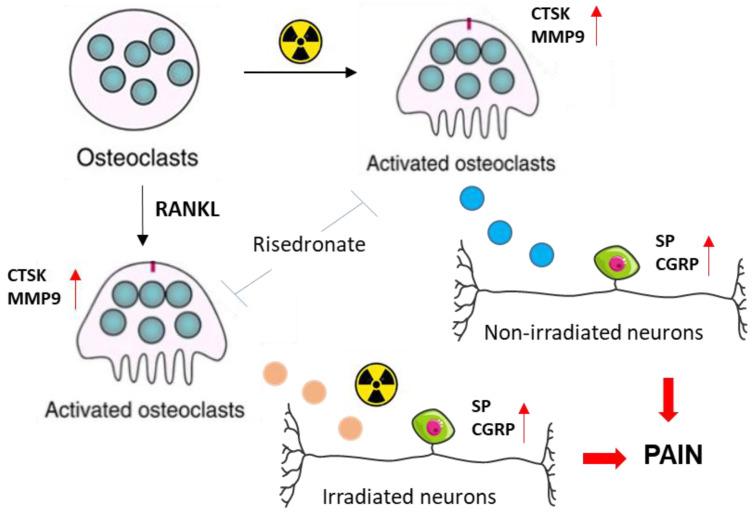
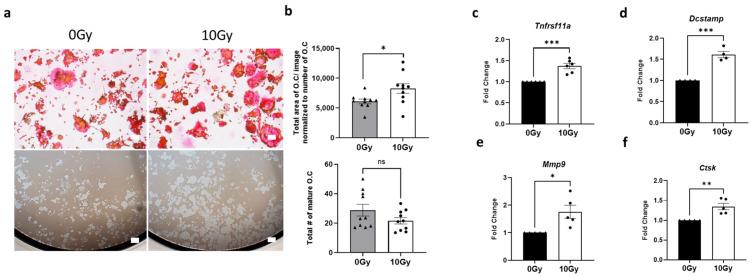
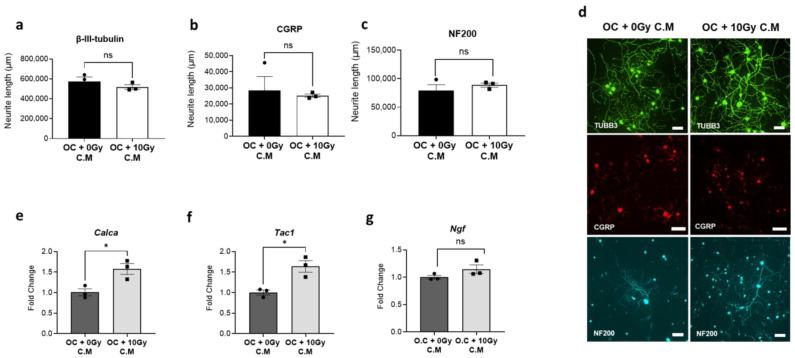
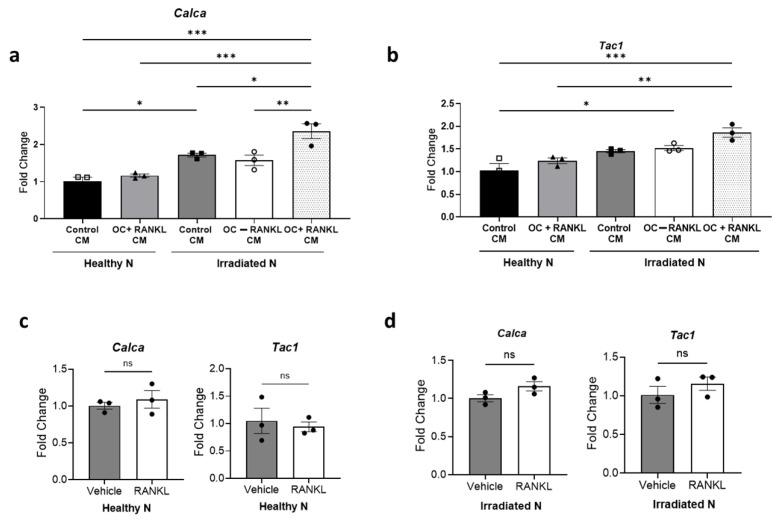
Stereotactic body radiation therapy (SBRT) for lung tumors near the chest wall often causes significant chest wall pain (CWP), negatively impacting patients' quality of life. The mechanisms behind SBRT-induced CWP remain unclear and may involve multiple factors. We investigated crosstalk between radiation-activated osteoclasts and sensory neurons, focusing on osteoclast-derived factors in CWP. Using murine pre-osteoclast cell line Raw264.7, we induced differentiation with Receptor Activator of Nuclear Factor kappa-beta Ligand (RANKL), followed by 10 Gy gamma-irradiation. Conditioned media (C.M) from irradiated osteoclasts was used to treat sensory neuronal cultures from mouse dorsal root ganglia. Neuronal cultures were also exposed to 10 Gy radiation, with and without osteoclast co-culture. Osteoclast markers and pain-associated neuropeptides were analyzed using RT-qPCR and histochemical staining. Osteoclasts differentiation and activity were inhibited using osteoprotegerin (OPG) and risedronate. High-dose radiation significantly increased the size of tartrate-resistant-acid-phosphatase (TRAP)-positive osteoclasts (1.36-fold) and activity biomarkers (, 1.35-fold, , 1.76-fold). Neurons treated with C.M from irradiated osteoclasts showed ~1.5-fold increase in (calcitonin gene-related peptide) and (substance P) expression, which was mitigated by osteoclast inhibitors. These findings suggest that radiation enhances osteoclast activity and promotes pain signaling. Osteoclast inhibitors may represent a therapeutic strategy to reduce CWP and improve quality of life.
立体定向体部放射治疗(SBRT)用于治疗靠近胸壁的肺部肿瘤时,常常会引发严重的胸壁疼痛(CWP),对患者的生活质量产生负面影响。SBRT诱发CWP的机制尚不清楚,可能涉及多种因素。我们研究了辐射激活的破骨细胞与感觉神经元之间的相互作用,重点关注破骨细胞衍生因子在CWP中的作用。我们使用小鼠破骨细胞前体细胞系Raw264.7,用核因子κB受体激活剂配体(RANKL)诱导其分化,然后进行10 Gy的γ射线照射。用照射后的破骨细胞的条件培养基(C.M)处理来自小鼠背根神经节的感觉神经元培养物。神经元培养物也在有或没有破骨细胞共培养的情况下接受10 Gy的辐射。使用实时定量聚合酶链反应(RT-qPCR)和组织化学染色分析破骨细胞标志物和疼痛相关神经肽。使用骨保护素(OPG)和利塞膦酸盐抑制破骨细胞的分化和活性。高剂量辐射显著增加了抗酒石酸酸性磷酸酶(TRAP)阳性破骨细胞的大小(1.36倍)和活性生物标志物(,1.35倍,,1.76倍)。用照射后的破骨细胞的C.M处理的神经元显示降钙素基因相关肽(CGRP)和P物质(SP)表达增加约1.5倍,破骨细胞抑制剂可减轻这种增加。这些发现表明,辐射增强了破骨细胞的活性并促进了疼痛信号传导。破骨细胞抑制剂可能是一种减少CWP和改善生活质量的治疗策略。


 Zotero 插件