
研究蘑菇提取物的神经保护、肝脏保护和抗菌作用。
Investigating the Neuroprotective, Hepatoprotective, and Antimicrobial Effects of Mushroom Extracts.
作者信息
Abdelkader Menna-Allah E, Mediatrice Hatungimana, Lin Zhanxi, Rensing Christopher, Yacout Mohamed M, Lin Dongmei, Aggag Sarah A
机构信息
China National Engineering Research Center of Juncao Technology, College of Life Sciences, Fujian Agriculture and Forestry University, Fuzhou 350002, China.
Department of Genetics, Faculty of Agriculture, Alexandria University, Alexandria 21545, Egypt.
出版信息
Int J Mol Sci. 2025 Aug 29;26(17):8440. doi: 10.3390/ijms26178440.
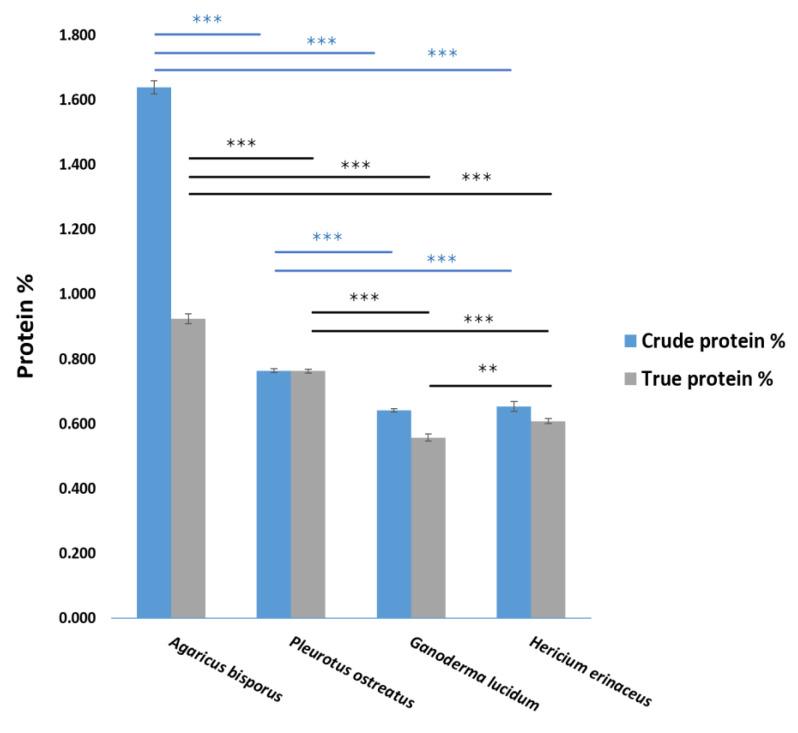
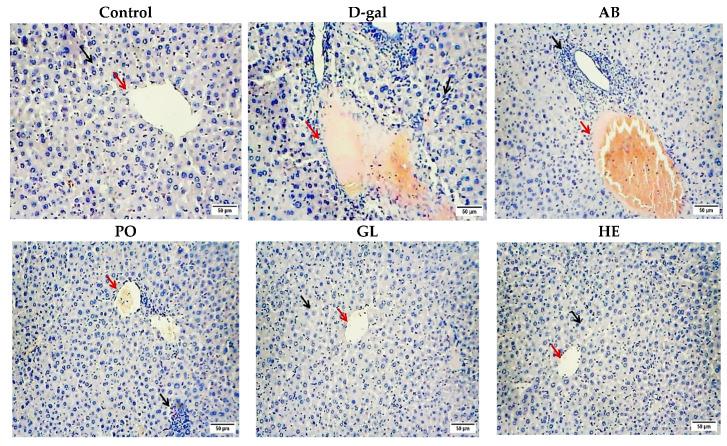
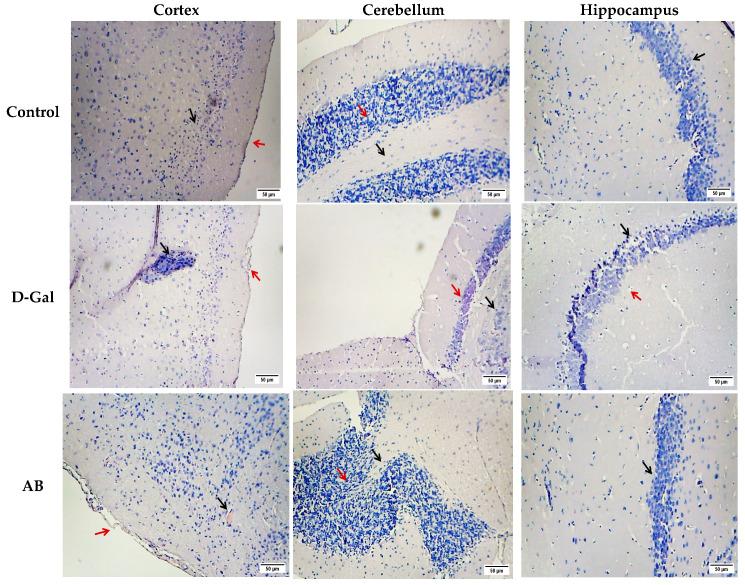
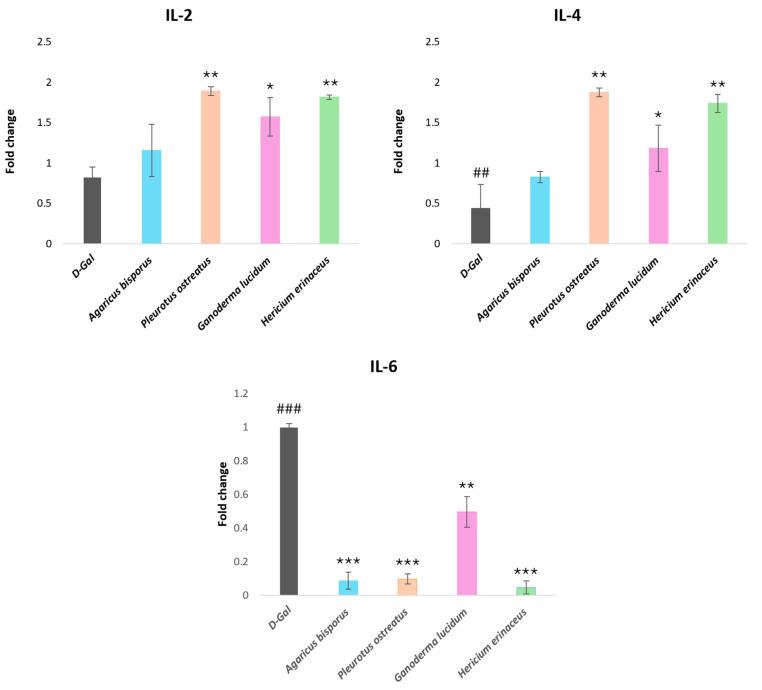
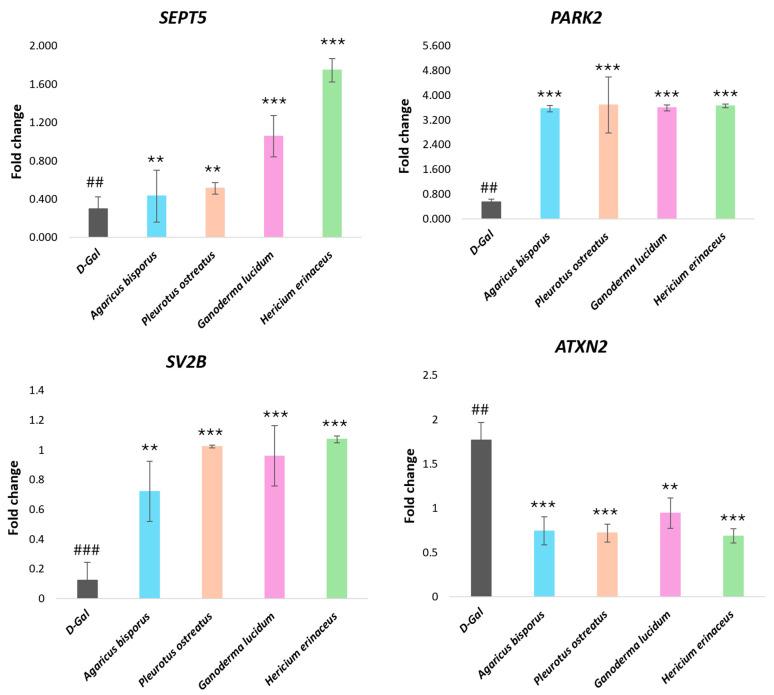
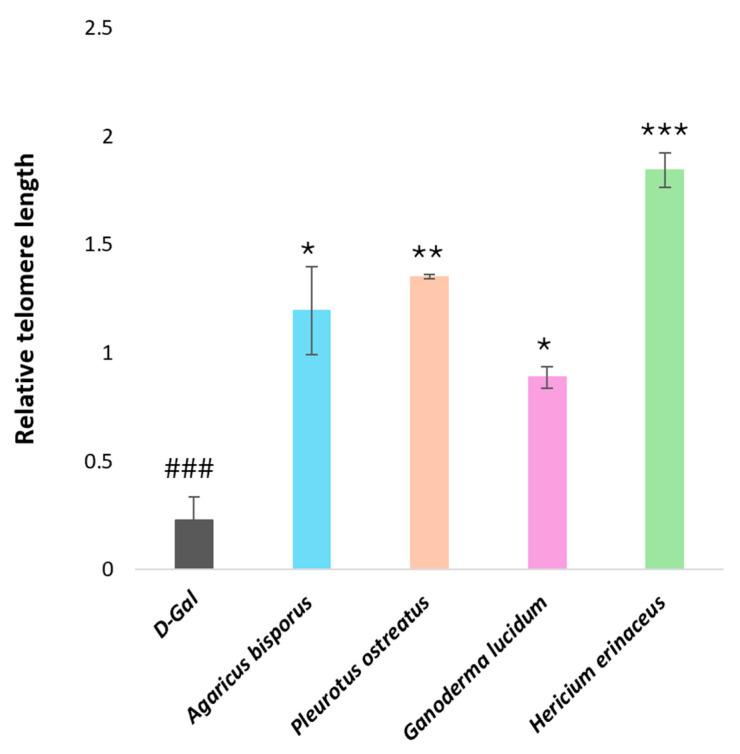
Mushrooms, renowned for their nutritional value and bioactive compounds, offer potential health benefits, including antioxidants and anti-aging properties. Aging, characterized by cellular and tissue decline, is often associated with autophagy dysfunction, a crucial cellular cleaning process. This study aimed to investigate the neuroprotective, hepatoprotective, and antimicrobial properties of extracts from four medicinal and edible mushrooms: , , , and . The protein, total phenol, and flavonoid content of mushroom extracts were determined. Aging was induced with 120 mg/kg D-galactose and treated with 500 mg/kg mushroom extracts. The study evaluated liver enzyme levels, histopathological changes in liver and brain tissues, gene expression correlated to neurodegeneration (---), telomere length, and immunomodulatory and pro-inflammatory (--) gene expression pathways. Additionally, the antimicrobial potential of mushroom extracts was assessed against several bacteria (, , , and ) using agar well diffusion and lowest minimum inhibitory concentration (MIC) methods. By exploring these diverse aspects, this study aimed to provide a foundation for a better understanding of the potential of mushrooms as natural neuroprotective, hepatoprotective, and antimicrobial agents and their potential applications in human health. Results indicated that all mushroom extracts effectively mitigated oxidative stress. exhibited the highest protein and flavonoid content, and displayed the highest phenolic content. Notably, and extracts demonstrated significant neuroprotective and hepatoprotective properties against D-galactose-induced aging, as evidenced by histopathological examination. All extracts exhibited a significant decrease ( < 0.001) in liver function (serum levels of aspartate aminotransferase (GOT) and alanine aminotransferase (GPT)) and showed immunomodulatory and anti-inflammatory effects, characterized by upregulated and gene expression and downregulated gene expression. demonstrated the most pronounced upregulation ( < 0.001) of , , and telomere length gene expression, suggesting potential anti-aging effects. Furthermore, all mushroom extracts displayed antimicrobial activity against the tested bacterial strains, except , which exhibited antibacterial activity solely against . exhibited the largest inhibition zones (22 ± 0.06 mm) against , while displayed the largest inhibition zone against . The MIC value was observed with extract against (1.95 ± 0.16 mg/mL). exhibited the highest resistance to the tested mushroom extracts. These findings suggest that these edible and medicinal mushrooms possess a wide range of health-promoting properties, including neuroprotective, hepatoprotective, and antimicrobial activities. Further research is needed to fully understand the underlying mechanisms and optimize applications. However, our results provide a strong foundation for exploring these mushrooms as potential natural agents that promote overall health and combat age-related decline.
蘑菇以其营养价值和生物活性化合物而闻名,具有潜在的健康益处,包括抗氧化和抗衰老特性。衰老以细胞和组织衰退为特征,通常与自噬功能障碍有关,自噬是一个关键的细胞清洁过程。本研究旨在探究四种药食两用蘑菇:[此处原文缺失蘑菇名称]、[此处原文缺失蘑菇名称]、[此处原文缺失蘑菇名称]和[此处原文缺失蘑菇名称]提取物的神经保护、肝脏保护和抗菌特性。测定了蘑菇提取物的蛋白质、总酚和黄酮含量。用120mg/kg D-半乳糖诱导衰老,并给予500mg/kg蘑菇提取物进行处理。该研究评估了肝酶水平、肝脏和脑组织的组织病理学变化、与神经退行性变相关的基因表达(---)、端粒长度以及免疫调节和促炎(--)基因表达途径。此外,采用琼脂孔扩散法和最低最小抑菌浓度(MIC)法评估了蘑菇提取物对几种细菌([此处原文缺失细菌名称]、[此处原文缺失细菌名称]、[此处原文缺失细菌名称]和[此处原文缺失细菌名称])的抗菌潜力。通过探索这些不同方面,本研究旨在为更好地理解蘑菇作为天然神经保护、肝脏保护和抗菌剂的潜力及其在人类健康中的潜在应用提供基础。结果表明,所有蘑菇提取物均能有效减轻氧化应激。[此处原文缺失蘑菇名称]的蛋白质和黄酮含量最高,[此处原文缺失蘑菇名称]的酚含量最高。值得注意的是,组织病理学检查证明,[此处原文缺失蘑菇名称]和[此处原文缺失蘑菇名称]提取物对D-半乳糖诱导的衰老具有显著的神经保护和肝脏保护特性。所有提取物的肝功能(血清天冬氨酸转氨酶(GOT)和丙氨酸转氨酶(GPT)水平)均显著降低(P<0.001),并表现出免疫调节和抗炎作用,其特征为[此处原文缺失基因名称]和[此处原文缺失基因名称]基因表达上调以及[此处原文缺失基因名称]基因表达下调。[此处原文缺失蘑菇名称]的[此处原文缺失基因名称]、[此处原文缺失基因名称]和端粒长度基因表达上调最为显著(P<0.001),表明其具有潜在的抗衰老作用。此外,所有蘑菇提取物对受试细菌菌株均表现出抗菌活性,但[此处原文缺失蘑菇名称]仅对[此处原文缺失细菌名称]表现出抗菌活性。[此处原文缺失蘑菇名称]对[此处原文缺失细菌名称]的抑菌圈最大(22±0.06mm),而[此处原文缺失蘑菇名称]对[此处原文缺失细菌名称]的抑菌圈最大。观察到[此处原文缺失蘑菇名称]提取物对[此处原文缺失细菌名称]的MIC值为(1.95±0.16mg/mL)。[此处原文缺失细菌名称]对受试蘑菇提取物的耐药性最高。这些发现表明,这些药食两用蘑菇具有广泛的促进健康特性,包括神经保护、肝脏保护和抗菌活性。需要进一步研究以充分了解其潜在机制并优化应用。然而,我们的结果为探索这些蘑菇作为促进整体健康和对抗与年龄相关衰退的潜在天然物质提供了坚实基础。



 Zotero 插件