
巴瑞替尼和英夫利昔单抗减轻细胞因子诱导的人脐静脉内皮细胞内皮-间充质转化(EndMT)。
Baricitinib and Infliximab Mitigate the Endothelial-to-Mesenchymal Transition (EndMT) Induced by Cytokines in HUVECs.
作者信息
Barilli Amelia, Visigalli Rossana, Recchia Luciani Giulia, Crescini Eleonora, Dall'Asta Valeria, Rotoli Bianca Maria
机构信息
Laboratory of General Pathology, Department of Medicine and Surgery, University of Parma, 43125 Parma, Italy.
出版信息
Int J Mol Sci. 2025 Sep 5;26(17):8672. doi: 10.3390/ijms26178672.
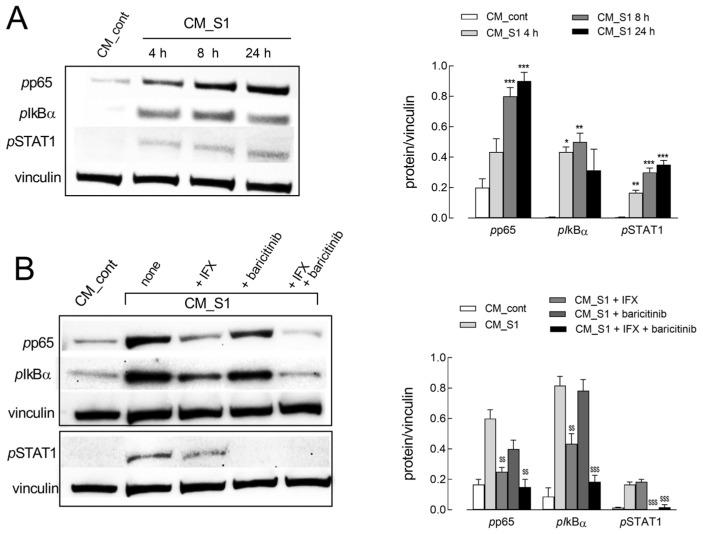
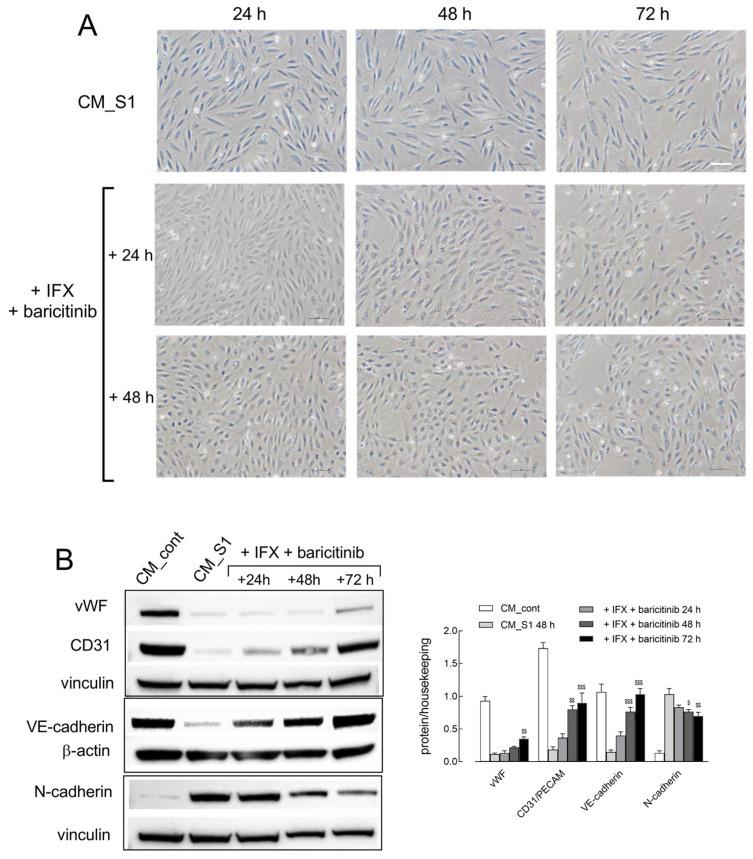
Endothelial-to-mesenchymal transition (EndMT) is associated with various pathologies including cardiovascular, inflammatory, and fibrotic diseases or neoplasia. Concerning COVID-19, multiple organ dysfunctions and long COVID syndrome are mediated by microvascular damage and, recently, the role of SARS-CoV-2 peptide fragments in the induction of EndMT was demonstrated. Here, we investigated the immune-mediated effects of Spike S1 of SARS-CoV-2 on EndMT and demonstrated that cytokines secreted by S1-activated macrophages, mainly TNFα + IFNγ, also induce the phenotypical switch in HUVECs. In particular, a loss of the typical cobblestone morphology is observed, along with a huge reduction in endothelial adhesion molecules, such as vWF, CD31, and VE-cadherin, and a concomitant acquisition of mesenchymal markers, such as N-cadherin and FSP1 protein. In addition, the combined use of the drug infliximab, targeting TNFα, and baricitinib, an inhibitor of the JAK-STAT pathway, hinders the phenotypical changes by restoring the proper expression of endothelial markers. The protective effect of these drugs is evident not only when they are added to the culture medium together with the trigger, but also when added later, i.e., once EndMT has been started. These findings reinforce the role of COVID-19-associated cytokine storm in endothelial dysfunction and in the onset of the fibrotic process and sustain the clinical relevance of infliximab and baricitinib for the prevention of vascular damage.
内皮-间充质转化(EndMT)与多种病理状况相关,包括心血管疾病、炎症性疾病、纤维化疾病或肿瘤形成。关于新冠病毒病(COVID-19),多器官功能障碍和新冠后综合征是由微血管损伤介导的,最近,严重急性呼吸综合征冠状病毒2(SARS-CoV-2)肽片段在诱导EndMT中的作用得到了证实。在此,我们研究了SARS-CoV-2刺突蛋白S1亚基(Spike S1)对EndMT的免疫介导作用,并证明S1激活的巨噬细胞分泌的细胞因子,主要是肿瘤坏死因子α(TNFα)+干扰素γ(IFNγ),也可诱导人脐静脉内皮细胞(HUVECs)的表型转换。具体而言,观察到典型的鹅卵石样形态丧失,同时内皮黏附分子如血管性血友病因子(vWF)、血小板内皮细胞黏附分子-1(CD31)和血管内皮钙黏蛋白(VE-cadherin)大幅减少,同时获得间充质标志物,如N-钙黏蛋白和FSP1蛋白。此外,联合使用靶向TNFα的英夫利昔单抗和JAK-STAT通路抑制剂巴瑞替尼,可通过恢复内皮标志物的正常表达来阻碍表型变化。这些药物的保护作用不仅在与触发因素一起添加到培养基中时明显,而且在稍后添加时,即EndMT开始后添加时也很明显。这些发现强化了COVID-19相关细胞因子风暴在内皮功能障碍和纤维化过程起始中的作用,并支持英夫利昔单抗和巴瑞替尼在预防血管损伤方面的临床相关性。



 Zotero 插件