
CALLY指数对癌症风险和生存的预后意义:来自2001 - 2018年美国国家健康与营养检查调查(NHANES)的证据
Prognostic significance of the CALLY index for cancer risk and survival: evidence from NHANES 2001-2018.
作者信息
Wen Ying, Zhou Zhixian, Ou Yanru, Ye Peijia, Tang Yuanyuan, Zou Qiongyan
机构信息
The Second Xiangya Hospital of Central South University, Changsha, Hunan, 410011, China.
Department of Biomedical Engineering, Johns Hopkins University School of Medicine, Baltimore, MD, 21205, USA.
出版信息
World J Surg Oncol. 2025 Nov 11;23(1):431. doi: 10.1186/s12957-025-04094-5.
BACKGROUND
The C-reactive protein-albumin-lymphocyte (CALLY) index is an immune-nutritional biomarker associated with cancer prognosis. Its relevance to cancer incidence and long-term survival in the general population has not been well established.
METHODS
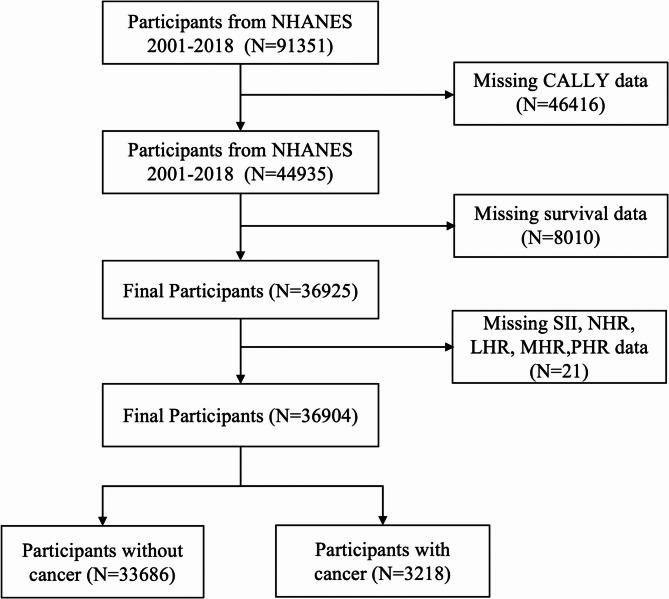
We analyzed NHANES 2001-2018 data from 36,904 participants, including 3,218 cancer patients. Logistic regression assessed cancer risk, and Cox proportional hazards models evaluated all-cause, cancer-specific, and cardiovascular mortality among cancer survivors. Restricted cubic splines (RCS) examined nonlinear associations, and subgroup analyses were stratified by age and sex.
RESULTS
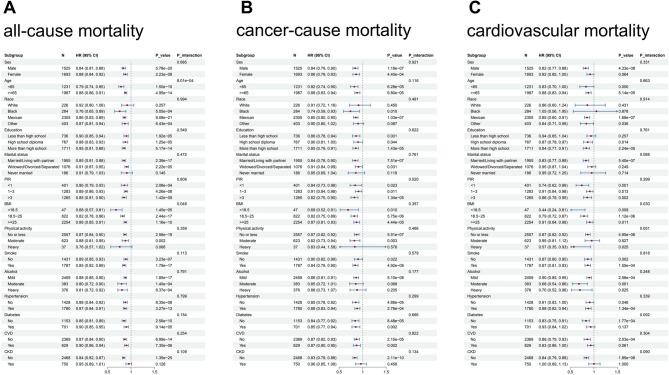
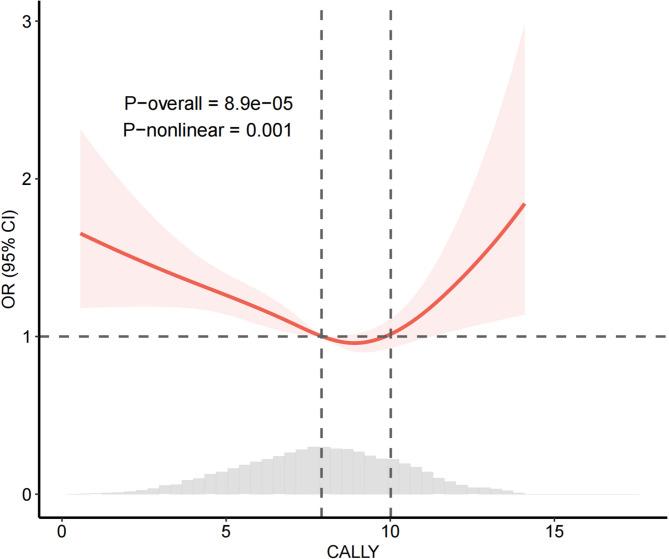
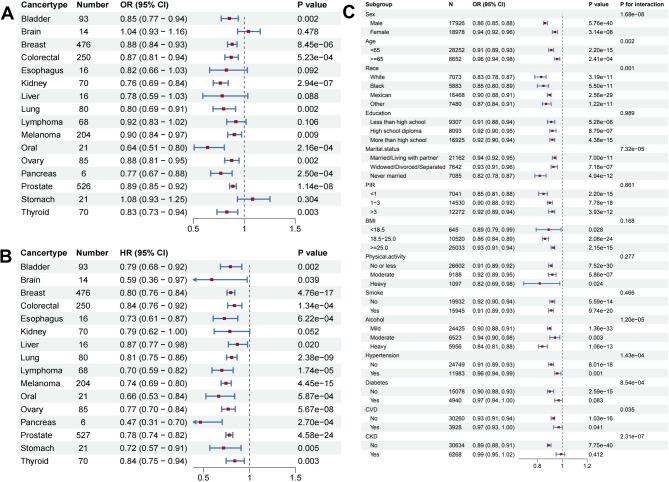
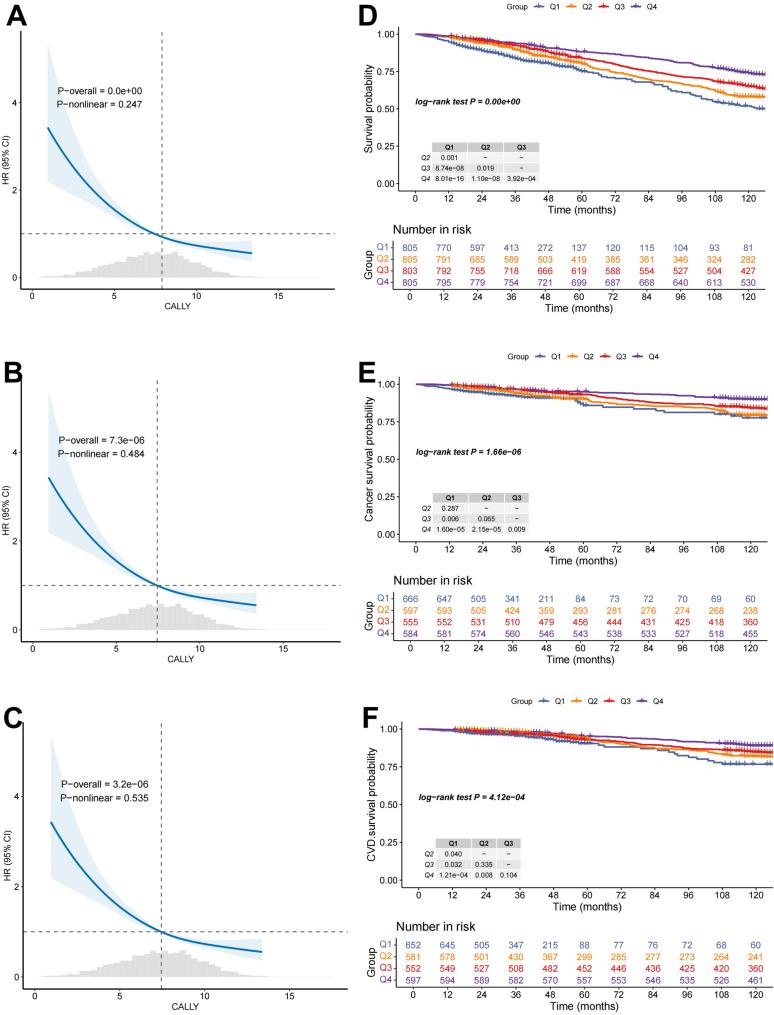
Cancer patients showed lower CALLY index values. Compared with the lowest quartile, the highest quartile was associated with a reduced risk of cancer (OR = 0.77, 95% CI = 0.67-0.90, P < 0.001). RCS identified a nonlinear association with cancer incidence (P-nonlinearity = 0.003), with a threshold at 9.402 (log-transformed). Among survivors, higher CALLY index values were significantly associated with reduced all-cause (HR = 0.39), cancer-cause mortality (HR = 0.36), and cardiovascular mortality (HR = 0.32), all P < 0.001. These associations remained consistent across subgroups.
CONCLUSIONS
The CALLY index is significantly associated with cancer risk and mortality. As a simple and robust biomarker reflecting immune-nutritional status, it may be associated with cancer risk and could provide useful information for prognostic assessment. Although causal inferences cannot be drawn due to the cross-sectional design of NHANES.
背景
C反应蛋白-白蛋白-淋巴细胞(CALLY)指数是一种与癌症预后相关的免疫营养生物标志物。其与普通人群癌症发病率和长期生存的相关性尚未完全明确。
方法
我们分析了2001年至2018年美国国家健康与营养检查调查(NHANES)中36,904名参与者的数据,其中包括3,218名癌症患者。采用逻辑回归评估癌症风险,Cox比例风险模型评估癌症幸存者的全因死亡率、癌症特异性死亡率和心血管死亡率。使用限制立方样条(RCS)检验非线性关联,并按年龄和性别进行亚组分析。
结果
癌症患者的CALLY指数值较低。与最低四分位数相比,最高四分位数与癌症风险降低相关(OR = 0.77,95%CI = 0.67 - 0.90,P < 0.001)。RCS确定其与癌症发病率存在非线性关联(P-非线性 = 0.003),阈值为9.402(对数转换后)。在幸存者中,较高的CALLY指数值与全因死亡率降低(HR = 0.39)、癌症相关死亡率降低(HR = 0.36)和心血管死亡率降低(HR = 0.32)显著相关,所有P < 0.001。这些关联在各亚组中均保持一致。
结论
CALLY指数与癌症风险和死亡率显著相关。作为反映免疫营养状况的简单且可靠的生物标志物,它可能与癌症风险相关,并可为预后评估提供有用信息。尽管由于NHANES的横断面设计无法得出因果推断。
 Zotero 插件