
类风湿性病变中肥大细胞的分布、激活及类胰蛋白酶/糜蛋白酶表型
Distribution, activation and tryptase/chymase phenotype of mast cells in the rheumatoid lesion.
作者信息
Tetlow L C, Woolley D E
机构信息
Department of Medicine, University Hospital of South Manchester, West Didsbury, United Kingdom.
出版信息
Ann Rheum Dis. 1995 Jul;54(7):549-55. doi: 10.1136/ard.54.7.549.
OBJECTIVE
To determine the distribution, activation, and tryptase/chymase phenotype of mast cells (MCs) in the rheumatoid lesion.
METHODS
MC tryptase and chymase were studied by immunohistochemistry using monoclonal antibodies and examination by brightfield, interference, and fluorescent microscopy. Thirty four specimens of cartilage-pannus junction and 26 specimens of rheumatoid synovium, all derived from knee surgery, were examined.
RESULTS
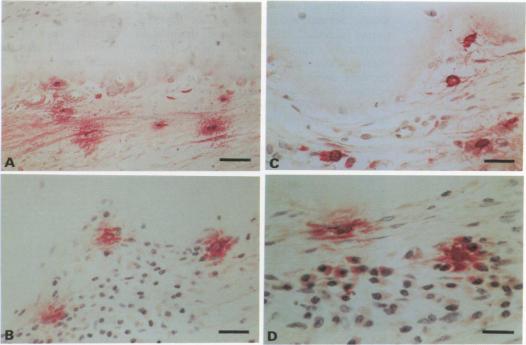
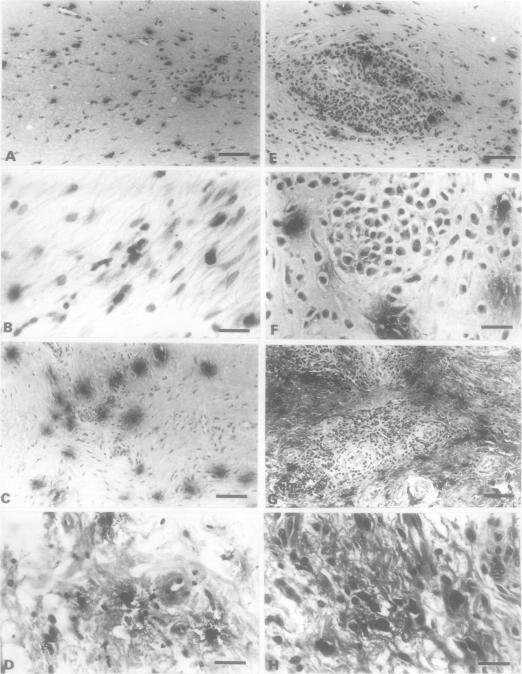
MCs were identified in all specimens examined, but their distribution and local concentrations varied, both within and between specimens. As a proportion of total synovial cells, there were more MCs in fibrous synovial tissues than in those with active inflammatory cell infiltrations; MCs usually showed a peripheral distribution around lymphocytic/mononuclear cell infiltrations. Most cartilage-pannus specimens demonstrated local concentrations of MCs at, or close to, sites of cartilage erosion, a significant proportion of which showed extracellular tryptase indicative of MC degranulation. MC degranulation was often associated with localised oedema and disruption of the stromal matrix. Two MC phenotypes were identified: one population contained tryptase alone (MCT) whilst another contained both tryptase and chymase (MCTC). The ratio MCT:MCTC approximated 8:1.
CONCLUSIONS
This histological study demonstrated that local concentrations of MCs and their activation/degranulation are commonly observed in the rheumatoid lesion, and especially at sites of cartilage erosion. Such observations add weight to the concept that MCs contribute to the processes of inflammation, matrix degradation and tissue remodelling.
目的
确定类风湿性病变中肥大细胞(MCs)的分布、活化情况以及类胰蛋白酶/糜酶表型。
方法
采用单克隆抗体通过免疫组织化学研究MC类胰蛋白酶和糜酶,并通过明场、干涉和荧光显微镜进行检查。检查了34个取自膝关节手术的软骨-血管翳交界处标本和26个类风湿性滑膜标本。
结果
在所有检查的标本中均发现了MCs,但它们在标本内部和之间的分布及局部浓度各不相同。作为滑膜细胞总数的一部分,纤维性滑膜组织中的MCs比有活跃炎性细胞浸润的组织中更多;MCs通常在淋巴细胞/单核细胞浸润周围呈周边分布。大多数软骨-血管翳标本显示MCs在软骨侵蚀部位或其附近有局部聚集,其中很大一部分显示细胞外类胰蛋白酶,表明MC脱颗粒。MC脱颗粒常与局部水肿和基质破坏有关。鉴定出两种MC表型:一种群体仅含类胰蛋白酶(MCT),而另一种同时含类胰蛋白酶和糜酶(MCTC)。MCT与MCTC的比例约为8:1。
结论
这项组织学研究表明,在类风湿性病变中,尤其是在软骨侵蚀部位,常见MCs的局部聚集及其活化/脱颗粒。这些观察结果进一步支持了MCs参与炎症、基质降解和组织重塑过程的观点。

 Zotero 插件