
白细胞介素2可恢复CD3-ζ链表达,但无法在源自人结直肠癌肝转移灶的肿瘤浸润淋巴细胞中产生肿瘤特异性裂解活性。
Interleukin 2 restores CD3-zeta chain expression but fails to generate tumour-specific lytic activity in tumour-infiltrating lymphocytes derived from human colorectal hepatic metastases.
作者信息
Yoong K F, Adams D H
机构信息
Liver Research Laboratories, Queen Elizabeth Hospital, Edgbaston, Birmingham, UK.
出版信息
Br J Cancer. 1998 Apr;77(7):1072-81. doi: 10.1038/bjc.1998.179.
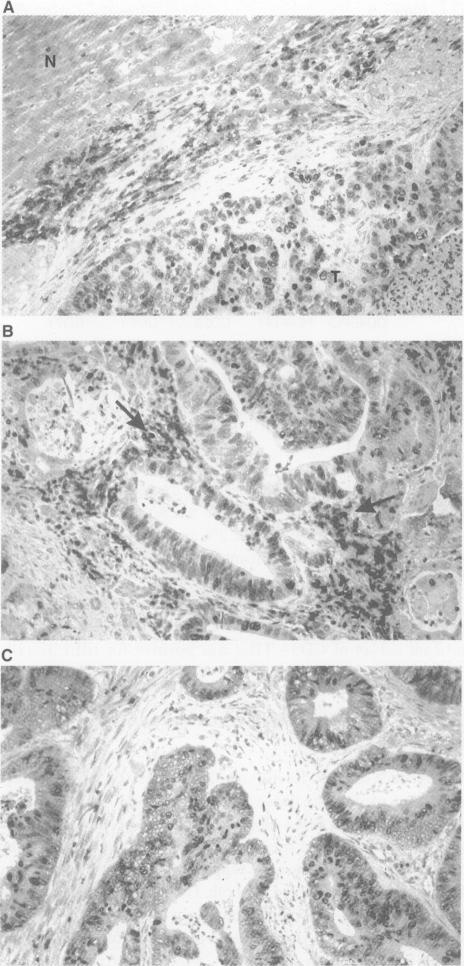
Metastatic colorectal cancer is usually progressive despite infiltration of the tumours by T lymphocytes, suggesting that these tumour-infiltrating lymphocytes (TILs) are functionally deficient. Recently, TILs from other tumours have been shown to express reduced levels of the T-cell receptor signal-transducing CD3-zeta chain. We were interested to determine whether a similar abnormality existed in TILs from human colorectal hepatic metastasis (CHM) and, if so, whether correcting the abnormality in vitro would restore anti-tumour activity and provide support for the development of immunotherapy for colorectal hepatic metastases. Twelve of 19 TILs from colorectal hepatic metastases were successfully expanded in vitro in high-dose recombinant interleukin 2 (rlL-2) and their specific anti-tumour cytolytic activity was determined. CD3-positive (CD3+) TILs were HLA-Drhigh and CD69high, suggesting that they had been activated by exposure to antigen but expressed low levels of CD25, CD71 and the nuclear proliferation antigen Ki-67. Furthermore, they showed reduced expression of CD3-zeta compared with autologous peripheral blood T cells (PBTs) and failed to proliferate in the absence of high-dose rIL-2. Expansion of TILs in rIL-2 resulted in restoration of CD3-zeta expression and the ability to lyse K562 and Daudi cells but not autologous tumour cells. The absence of autologous tumour-specific cytolytic T-cell (CTL) activity may be due to the poor immunogenicity of colorectal tumour cells, which we found expressed only low levels of MHC I antigens and CD54 and failed to express MHC II antigens or the co-stimulatory molecules CD80, CD86 or CD106. The inability of rIL-2 to generate tumour-specific CTLs despite restoration of CD3-zeta expression and the presence of an intact lytic mechanism suggests that successful immunotherapy may require the development of strategies to increase the immunogenicity of this tumour.
转移性结直肠癌通常呈进行性发展,尽管肿瘤中有T淋巴细胞浸润,这表明这些肿瘤浸润淋巴细胞(TILs)功能存在缺陷。最近,已证明来自其他肿瘤的TILs表达的T细胞受体信号转导CD3-ζ链水平降低。我们感兴趣的是确定来自人类结直肠癌肝转移(CHM)的TILs中是否存在类似异常,如果存在,体外纠正该异常是否会恢复抗肿瘤活性,并为结直肠癌肝转移的免疫治疗发展提供支持。19例来自结直肠癌肝转移的TILs中有12例在高剂量重组白细胞介素2(rlL-2)作用下成功在体外扩增,并测定了它们的特异性抗肿瘤细胞溶解活性。CD3阳性(CD3+)TILs为HLA-Dr高表达和CD69高表达,表明它们已通过接触抗原而被激活,但CD25、CD71和核增殖抗原Ki-67表达水平较低。此外,与自体外周血T细胞(PBTs)相比,它们的CD3-ζ表达降低,并且在没有高剂量rlL-2的情况下无法增殖。在rlL-2中扩增TILs导致CD3-ζ表达恢复以及裂解K562和Daudi细胞的能力恢复,但不能裂解自体肿瘤细胞。缺乏自体肿瘤特异性细胞溶解T细胞(CTL)活性可能是由于结直肠肿瘤细胞免疫原性较差,我们发现其仅低水平表达MHC I抗原和CD54,且不表达MHC II抗原或共刺激分子CD80、CD86或CD106。尽管CD3-ζ表达恢复且存在完整的溶解机制,但rlL-2无法产生肿瘤特异性CTLs,这表明成功的免疫治疗可能需要制定提高该肿瘤免疫原性的策略。
 Zotero 插件