
T淋巴细胞刺激过程中半胱天冬酶的早期激活导致非凋亡细胞中的选择性底物裂解。
Early activation of caspases during T lymphocyte stimulation results in selective substrate cleavage in nonapoptotic cells.
作者信息
Alam A, Cohen L Y, Aouad S, Sékaly R P
机构信息
Laboratoire d'Immunologie, Institut de Recherches Cliniques de Montréal, Montréal, Québec H2W 1R7, Canada.
出版信息
J Exp Med. 1999 Dec 20;190(12):1879-90. doi: 10.1084/jem.190.12.1879.
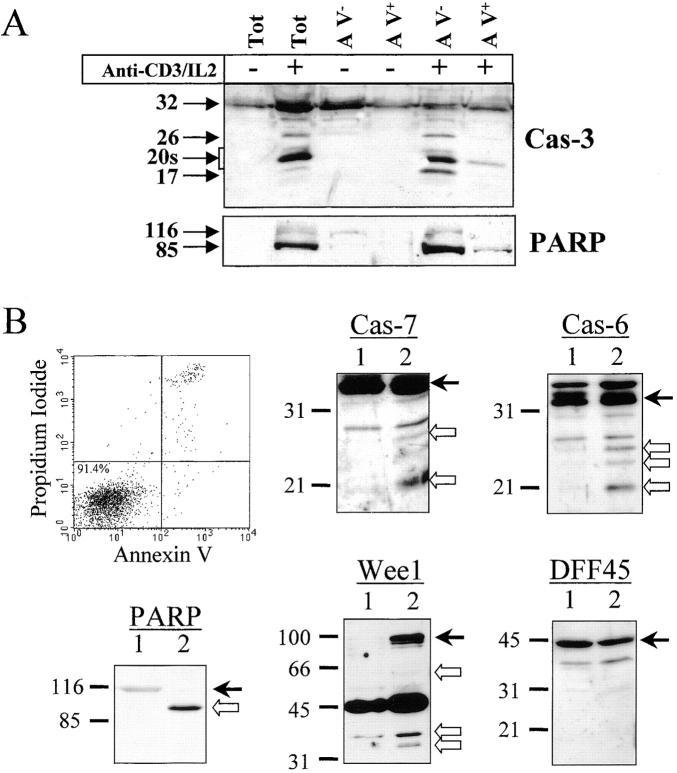
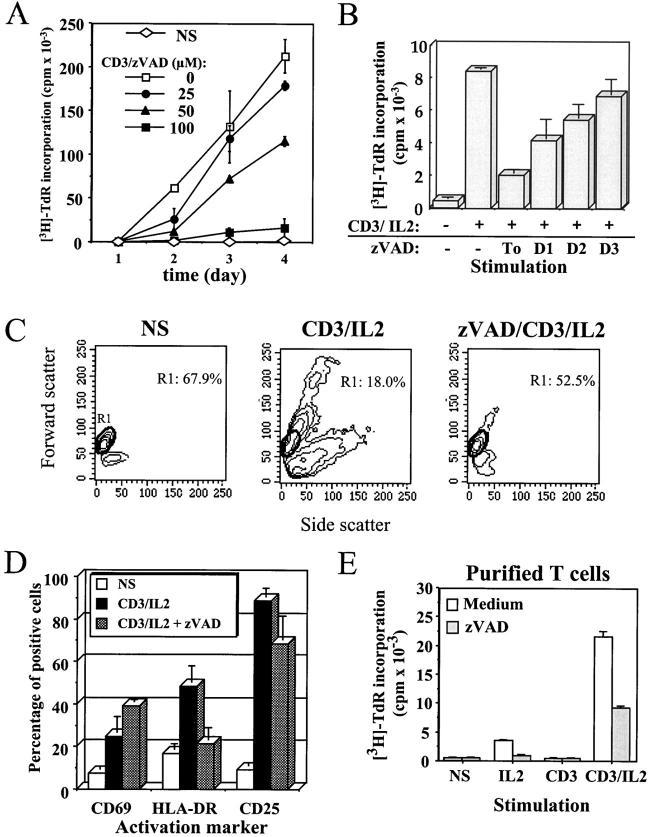
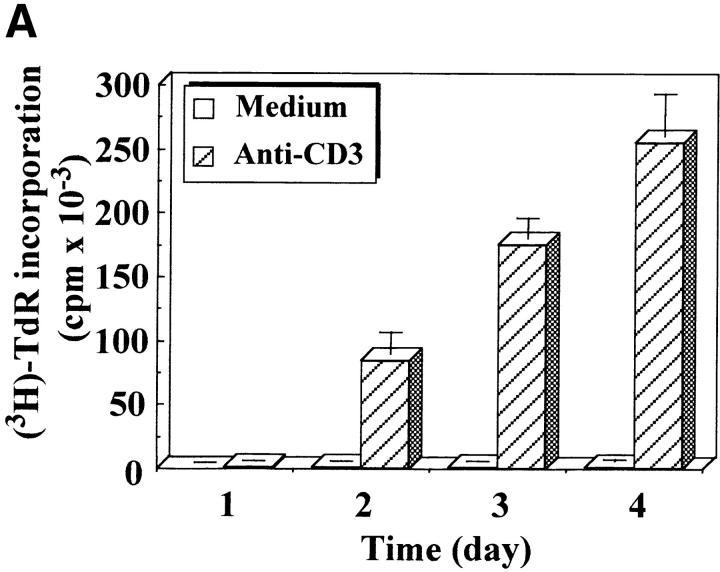
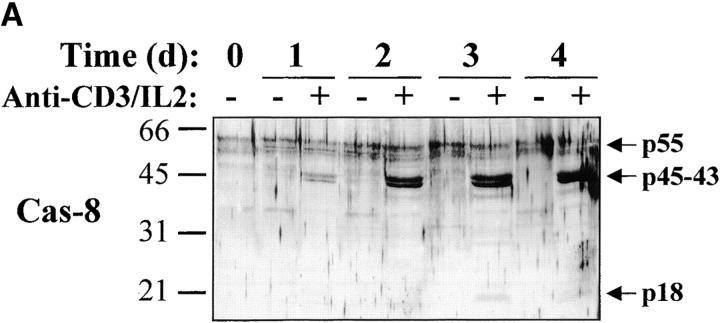
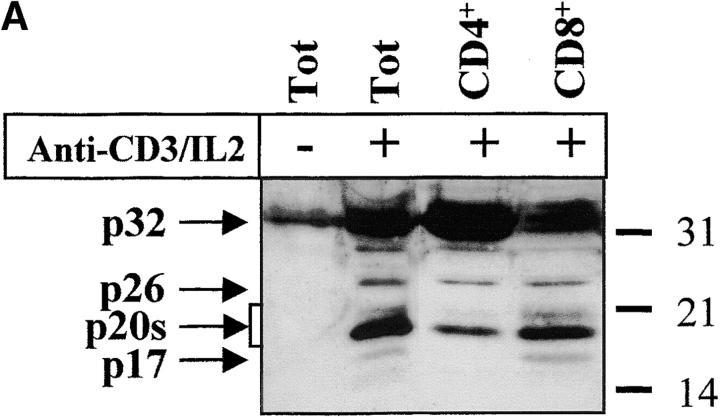
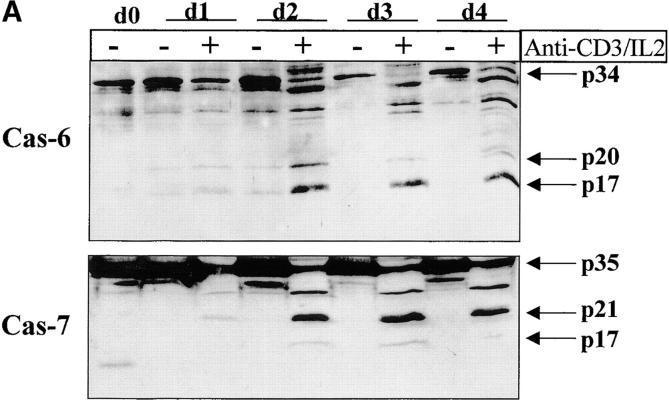
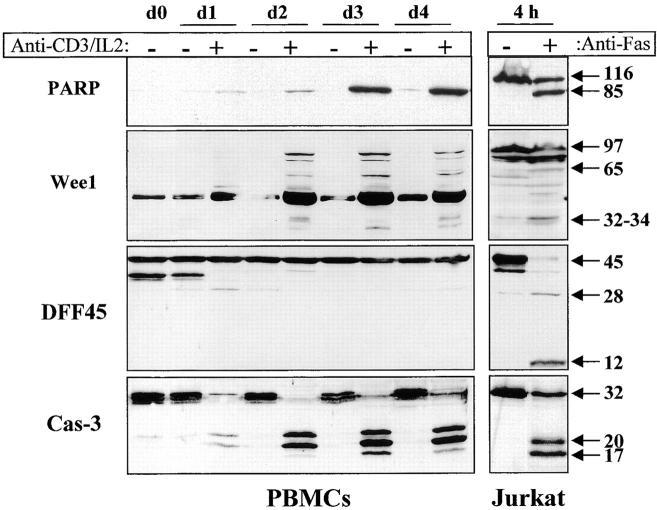
Apoptosis induced by T cell receptor (TCR) triggering in T lymphocytes involves activation of cysteine proteases of the caspase family through their proteolytic processing. Caspase-3 cleavage was also reported during T cell stimulation in the absence of apoptosis, although the physiological relevance of this response remains unclear. We show here that the caspase inhibitor benzyloxycarbonyl (Cbz)-Val-Ala-Asp(OMe)-fluoromethylketone (zVAD) blocks proliferation, major histocompatibility complex class II expression, and blastic transformation during stimulation of peripheral blood lymphocytes. Moreover, T cell activation triggers the selective processing and activation of downstream caspases (caspase-3, -6, and -7), but not caspase-1, -2, or -4, as demonstrated even in intact cells using a cell-permeable fluorescent substrate. Caspase-3 processing occurs in different T cell subsets (CD4(+), CD8(+), CD45RA(+), and CD45RO(+)), and in activated B lymphocytes. The pathway leading to caspase activation involves death receptors and caspase-8, which is also processed after TCR triggering, but not caspase-9, which remains as a proenzyme. Most importantly, caspase activity results in a selective substrate specificity, since poly(ADP-ribose) polymerase (PARP), lamin B, and Wee1 kinase, but not DNA fragmentation factor (DFF45) or replication factor C (RFC140), are processed. Caspase and substrate processing occur in nonapoptotic lymphocytes. Thus, caspase activation is an early and physiological response in viable, stimulated lymphocytes, and appears to be involved in early steps of lymphocyte activation.
T淋巴细胞中由T细胞受体(TCR)触发诱导的细胞凋亡涉及通过半胱天冬酶家族的半胱氨酸蛋白酶的蛋白水解加工而激活。在T细胞刺激过程中,即使不存在细胞凋亡,也有关于半胱天冬酶-3切割的报道,尽管这种反应的生理相关性仍不清楚。我们在此表明,半胱天冬酶抑制剂苄氧羰基(Cbz)-缬氨酸-丙氨酸-天冬氨酸(OMe)-氟甲基酮(zVAD)在刺激外周血淋巴细胞期间会阻断增殖、主要组织相容性复合体II类表达和母细胞转化。此外,T细胞活化触发下游半胱天冬酶(半胱天冬酶-3、-6和-7)的选择性加工和激活,但不包括半胱天冬酶-1、-2或-4,即使在完整细胞中使用可穿透细胞的荧光底物也能证明这一点。半胱天冬酶-3加工发生在不同的T细胞亚群(CD4(+)、CD8(+)、CD45RA(+)和CD45RO(+))以及活化的B淋巴细胞中。导致半胱天冬酶激活的途径涉及死亡受体和半胱天冬酶-8,半胱天冬酶-8在TCR触发后也会被加工,但不涉及半胱天冬酶-9,它仍以酶原形式存在。最重要的是,半胱天冬酶活性导致选择性底物特异性,因为聚(ADP-核糖)聚合酶(PARP)、核纤层蛋白B和Wee1激酶会被加工,而DNA片段化因子(DFF45)或复制因子C(RFC140)则不会。半胱天冬酶和底物加工发生在非凋亡淋巴细胞中。因此,半胱天冬酶激活是存活的、受刺激淋巴细胞中的一种早期生理反应,并且似乎参与淋巴细胞激活的早期步骤。

 Zotero 插件