
通过分析短序列的局部分布来鉴定植物启动子成分
Identification of plant promoter constituents by analysis of local distribution of short sequences.
作者信息
Yamamoto Yoshiharu Y, Ichida Hiroyuki, Matsui Minami, Obokata Junichi, Sakurai Tetsuya, Satou Masakazu, Seki Motoaki, Shinozaki Kazuo, Abe Tomoko
机构信息
Application and Development Group, RIKEN FRS, Hirosawa 2-1, Wako, Saitama 351-0198, Japan.
出版信息
BMC Genomics. 2007 Mar 8;8:67. doi: 10.1186/1471-2164-8-67.
BACKGROUND
Plant promoter architecture is important for understanding regulation and evolution of the promoters, but our current knowledge about plant promoter structure, especially with respect to the core promoter, is insufficient. Several promoter elements including TATA box, and several types of transcriptional regulatory elements have been found to show local distribution within promoters, and this feature has been successfully utilized for extraction of promoter constituents from human genome.
RESULTS
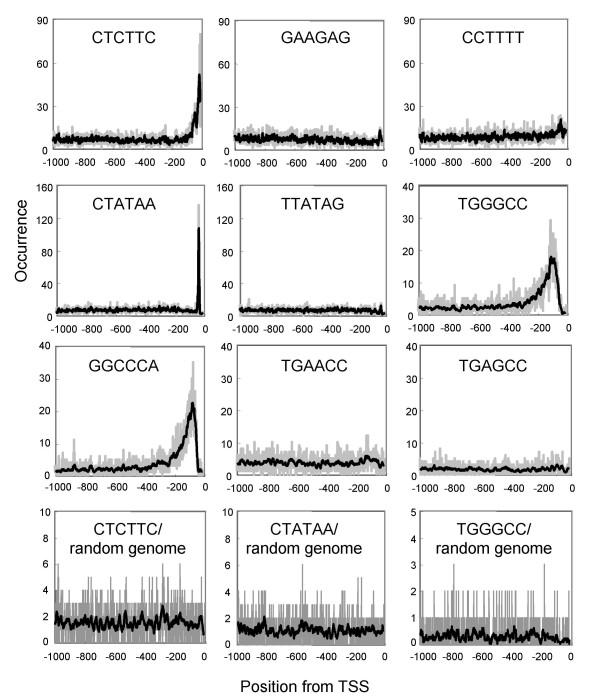
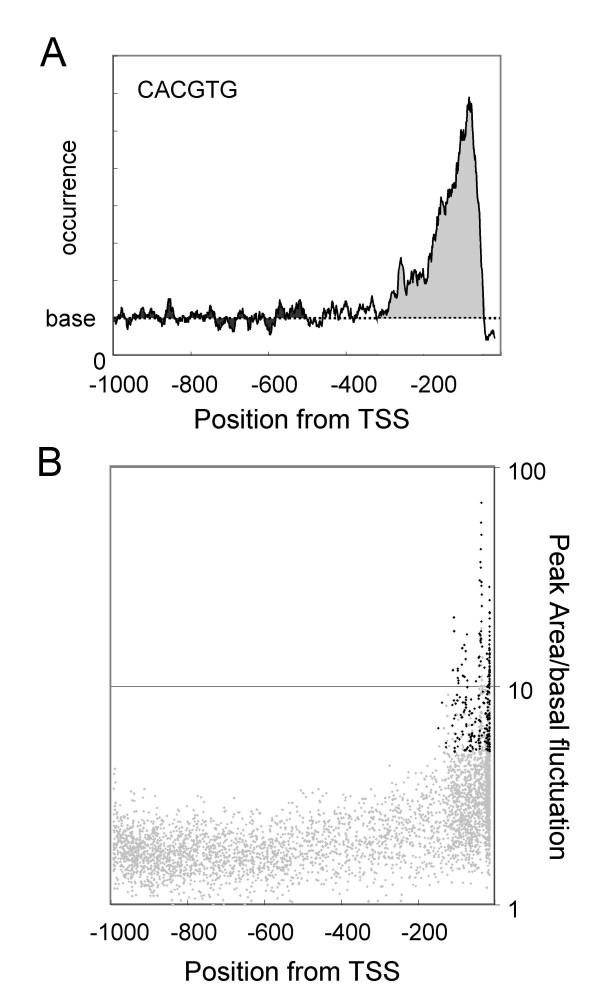
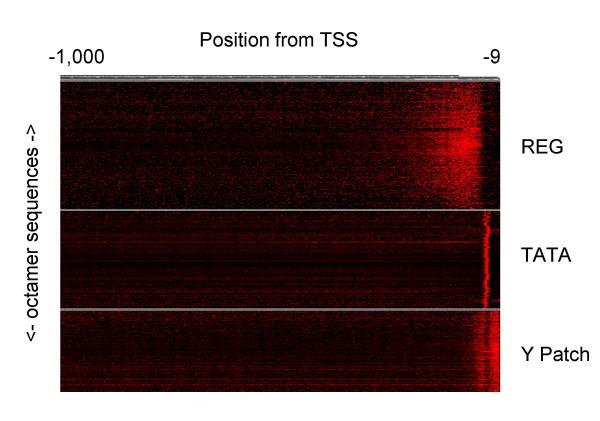
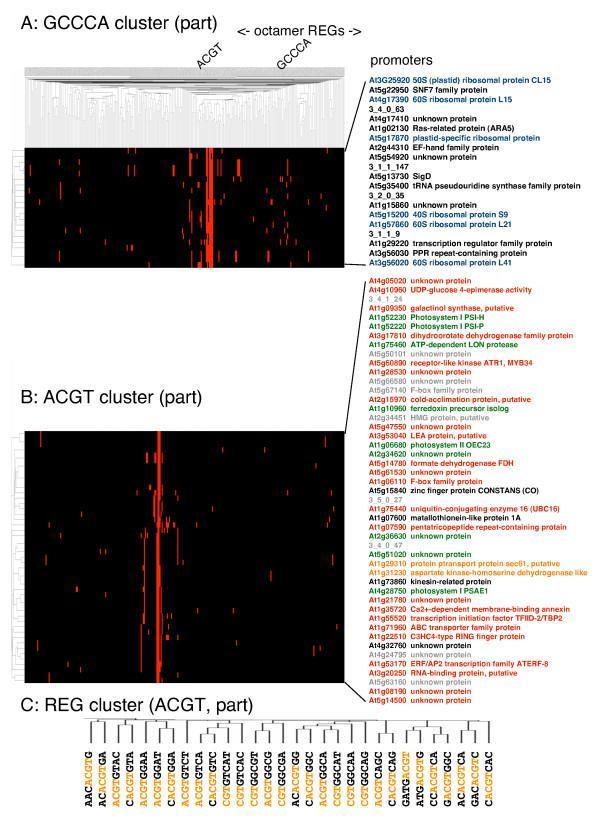
LDSS (Local Distribution of Short Sequences) profiles of short sequences along the plant promoter have been analyzed in silico, and hundreds of hexamer and octamer sequences have been identified as having localized distributions within promoters of Arabidopsis thaliana and rice. Based on their localization patterns, the identified sequences could be classified into three groups, pyrimidine patch (Y Patch), TATA box, and REG (Regulatory Element Group). Sequences of the TATA box group are consistent with the ones reported in previous studies. The REG group includes more than 200 sequences, and half of them correspond to known cis-elements. The other REG subgroups, together with about a hundred uncategorized sequences, are suggested to be novel cis-regulatory elements. Comparison of LDSS-positive sequences between Arabidopsis and rice has revealed moderate conservation of elements and common promoter architecture. In addition, a dimer motif named the YR Rule (C/T A/G) has been identified at the transcription start site (-1/+1). This rule also fits both Arabidopsis and rice promoters.
CONCLUSION
LDSS was successfully applied to plant genomes and hundreds of putative promoter elements have been extracted as LDSS-positive octamers. Identified promoter architecture of monocot and dicot are well conserved, but there are moderate variations in the utilized sequences.
背景
植物启动子结构对于理解启动子的调控和进化很重要,但我们目前对植物启动子结构的了解,尤其是关于核心启动子的了解还不够充分。已发现包括TATA盒在内的几种启动子元件以及几种转录调控元件在启动子内呈局部分布,并且这一特征已成功用于从人类基因组中提取启动子成分。
结果
已在计算机上分析了沿植物启动子的短序列的LDSS(短序列的局部分布)图谱,并且已鉴定出数百个六聚体和八聚体序列在拟南芥和水稻的启动子内具有局部分布。根据它们的定位模式,所鉴定的序列可分为三组:嘧啶斑块(Y斑块)、TATA盒和REG(调控元件组)。TATA盒组的序列与先前研究中报道的序列一致。REG组包括200多个序列,其中一半对应于已知的顺式元件。其他REG亚组以及约一百个未分类的序列被认为是新的顺式调控元件。拟南芥和水稻之间LDSS阳性序列的比较揭示了元件的适度保守性和共同的启动子结构。此外,在转录起始位点(-1/+1)鉴定出一种名为YR规则(C/T A/G)的二聚体基序。该规则也适用于拟南芥和水稻的启动子。
结论
LDSS已成功应用于植物基因组,并且已提取了数百个推定的启动子元件作为LDSS阳性八聚体。已鉴定出的单子叶植物和双子叶植物的启动子结构高度保守,但所利用的序列存在适度差异。





 Zotero 插件