
跨多样被子植物中稳定表达基因的比较分析揭示了基础启动子结构的灵活性。
A comparative analysis of stably expressed genes across diverse angiosperms exposes flexibility in underlying promoter architecture.
机构信息
Department of Biology, University of Washington, Seattle, WA 98105-1800, USA.
出版信息
G3 (Bethesda). 2023 Nov 1;13(11). doi: 10.1093/g3journal/jkad206.
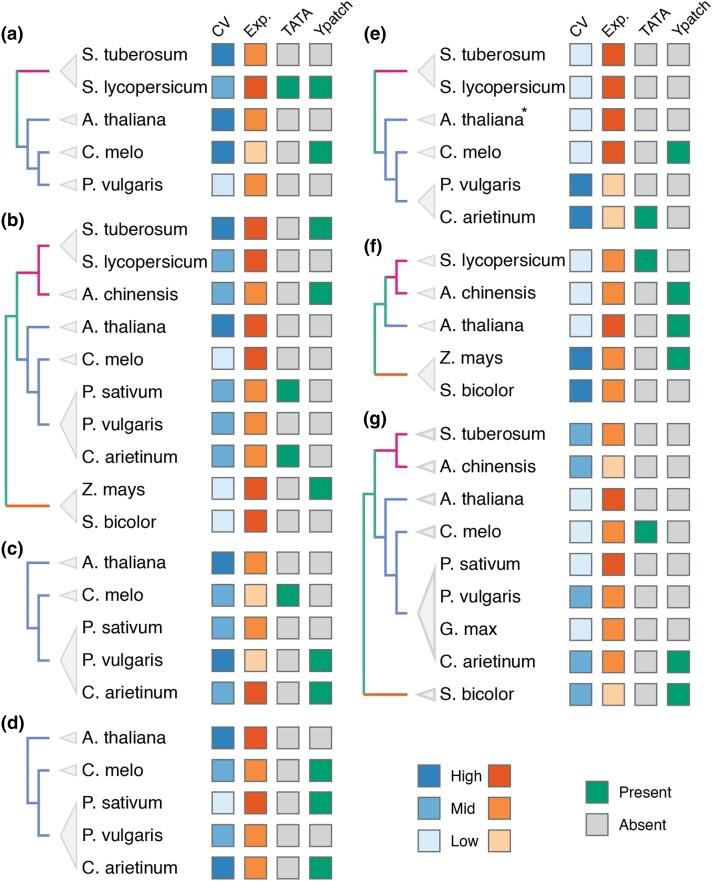
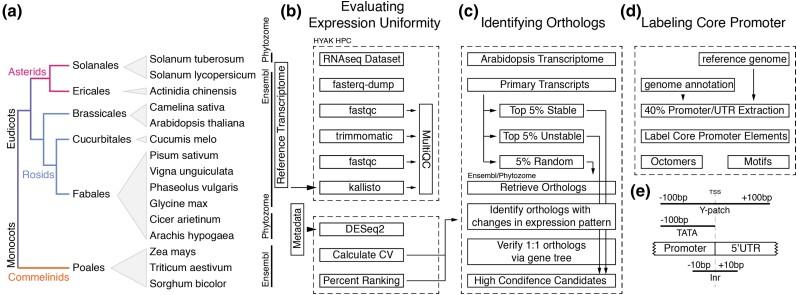
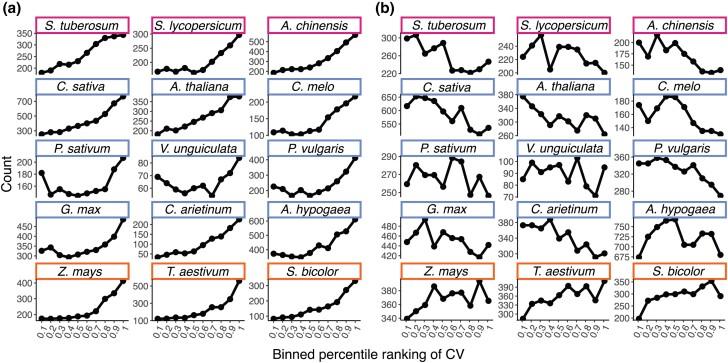
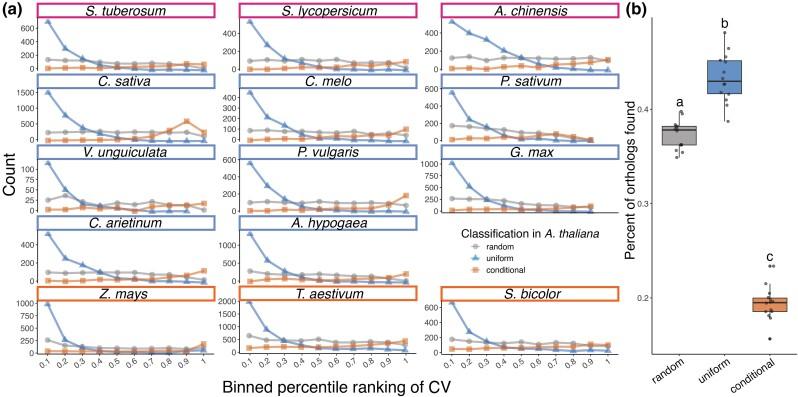
Promoters regulate both the amplitude and pattern of gene expression-key factors needed for optimization of many synthetic biology applications. Previous work in Arabidopsis found that promoters that contain a TATA-box element tend to be expressed only under specific conditions or in particular tissues, while promoters that lack any known promoter elements, thus designated as Coreless, tend to be expressed more uniformly. To test whether this trend represents a conserved promoter design rule, we identified stably expressed genes across multiple angiosperm species using publicly available RNA-seq data. Comparisons between core promoter architectures and gene expression stability revealed differences in core promoter usage in monocots and eudicots. Furthermore, when tracing the evolution of a given promoter across species, we found that core promoter type was not a strong predictor of expression pattern. Our analysis suggests that core promoter types are correlative rather than causative in promoter expression patterns and highlights the challenges in finding or building constitutive promoters that will work across diverse plant species.
启动子调节基因表达的幅度和模式——这是优化许多合成生物学应用所必需的关键因素。先前在拟南芥中的研究发现,含有 TATA -box 元件的启动子往往只在特定条件下或特定组织中表达,而缺乏任何已知启动子元件的启动子,因此被指定为无核启动子,往往表达更均匀。为了测试这一趋势是否代表一种保守的启动子设计规则,我们使用公开的 RNA-seq 数据在多个被子植物物种中鉴定了稳定表达的基因。核心启动子结构与基因表达稳定性的比较揭示了单子叶植物和双子叶植物核心启动子使用的差异。此外,当在物种间追踪给定启动子的进化时,我们发现核心启动子类型并不是表达模式的强有力预测因子。我们的分析表明,核心启动子类型在启动子表达模式中是相关的,而不是因果关系的,并强调了在不同植物物种中寻找或构建具有组成型表达的启动子的挑战。
 Zotero 插件