
转化生长因子β(TGF-β)及其高亲和力受体TβRI、TβRII和TβRIII(β聚糖)的可变剪接揭示了人类前列腺细胞中的新变体。
Alternative splicing of TGF-betas and their high-affinity receptors T beta RI, T beta RII and T beta RIII (betaglycan) reveal new variants in human prostatic cells.
作者信息
Konrad Lutz, Scheiber Jonas A, Völck-Badouin Elke, Keilani Marcel M, Laible Leslie, Brandt Heidrun, Schmidt Ansgar, Aumüller Gerhard, Hofmann Rainer
机构信息
Department of Urology, Medical Faculty, 35033 Marburg, Germany.
出版信息
BMC Genomics. 2007 Sep 11;8:318. doi: 10.1186/1471-2164-8-318.
BACKGROUND
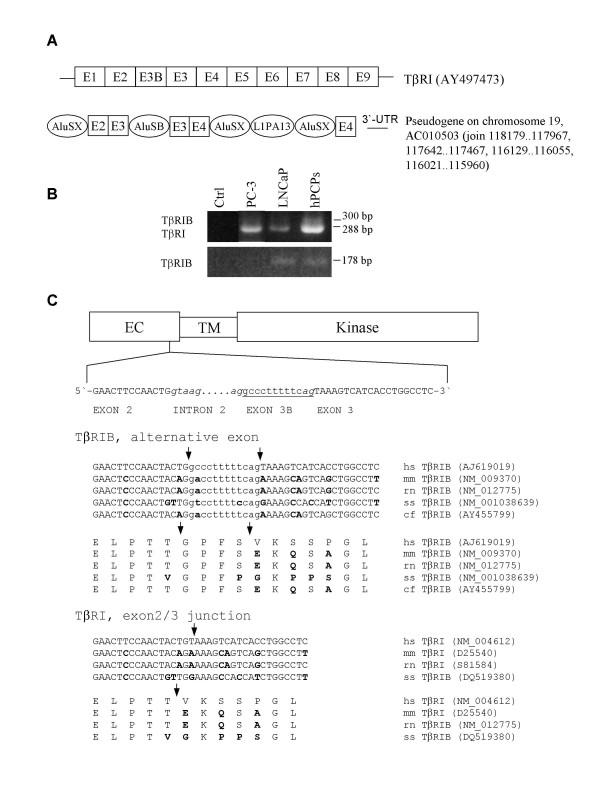
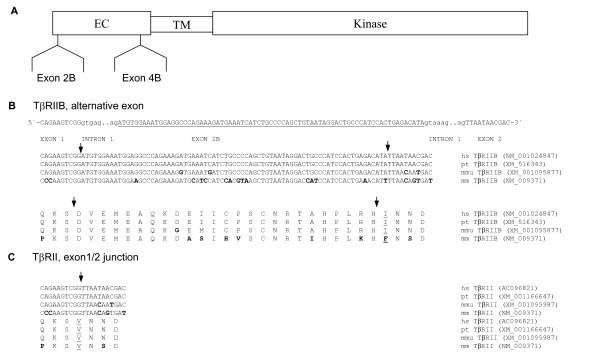
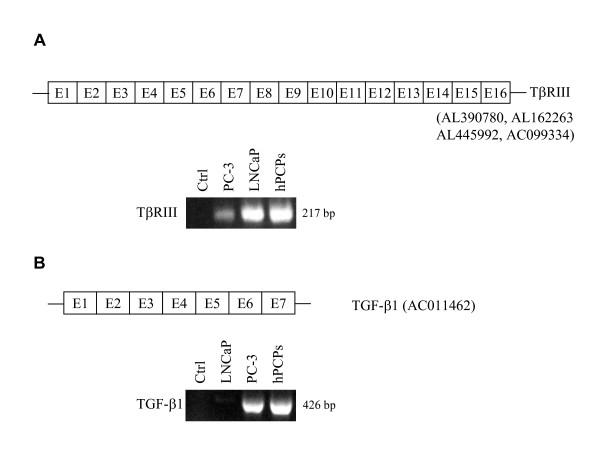
The transforming growth factors (TGF)-beta, TGF-beta1, TGF-beta2 and TGF-beta 3, and their receptors [T beta RI, T beta RII, T beta R III (betaglycan)] elicit pleiotropic functions in the prostate. Although expression of the ligands and receptors have been investigated, the splice variants have never been analyzed. We therefore have analyzed all ligands, the receptors and the splice variants T beta RIB, T beta RIIB and TGF-beta 2B in human prostatic cells.
RESULTS
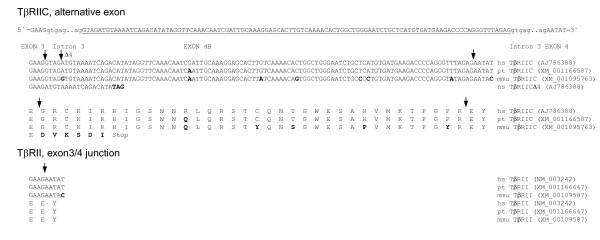
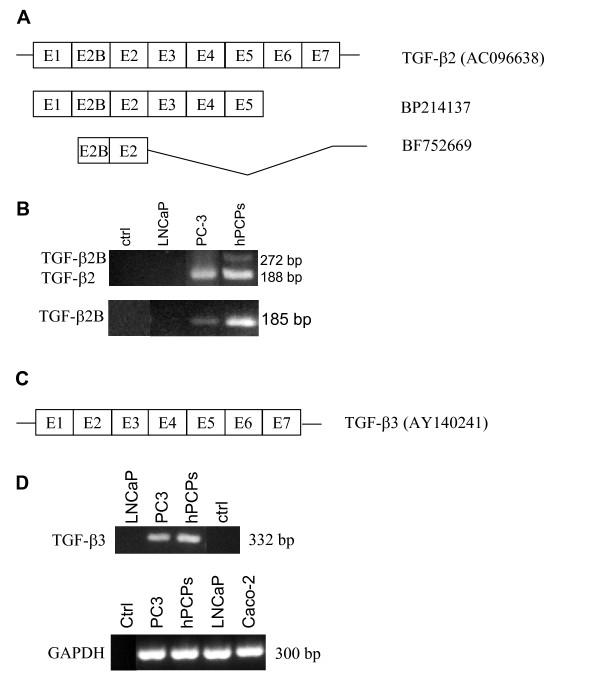
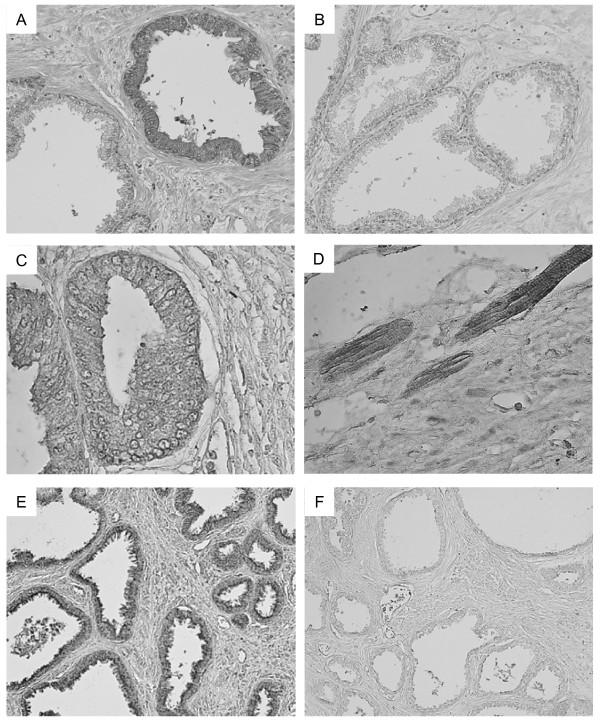
Interestingly, a novel human receptor transcript T beta RIIC was identified, encoding additional 36 amino acids in the extracellular domain, that is expressed in the prostatic cancer cells PC-3, stromal hPCPs, and other human tissues. Furthermore, the receptor variant T beta RIB with four additional amino acids was identified also in human. Expression of the variant T beta RIIB was found in all prostate cell lines studied with a preferential localization in epithelial cells in some human prostatic glands. Similarly, we observed localization of T beta RIIC and TGF-beta 2B mainly in the epithelial cells with a preferential localization of TGF-beta 2B in the apical cell compartment. Whereas in the androgen-independent hPCPs and PC-3 cells all TGF-beta ligands and receptors are expressed, the androgen-dependent LNCaP cells failed to express all ligands. Additionally, stimulation of PC-3 cells with TGF-beta2 resulted in a significant and strong increase in secretion of plasminogen activator inhibitor-1 (PAI-1) with a major participation of T beta RII.
CONCLUSION
In general, expression of the splice variants was more heterogeneous in contrast to the well-known isoforms. The identification of the splice variants T beta RIB and the novel isoform T beta RIIC in man clearly contributes to the growing complexity of the TGF-beta family.
背景
转化生长因子(TGF)-β、TGF-β1、TGF-β2和TGF-β3及其受体[TβRI、TβRII、TβRIII(β聚糖)]在前列腺中发挥多效性功能。尽管已经对配体和受体的表达进行了研究,但剪接变体从未被分析过。因此,我们分析了人前列腺细胞中所有的配体、受体以及剪接变体TβRIB、TβRIIB和TGF-β2B。
结果
有趣的是,鉴定出一种新的人受体转录本TβRIIC,其在细胞外结构域编码另外36个氨基酸,在前列腺癌细胞PC-3、基质hPCP和其他人体组织中表达。此外,在人类中也鉴定出具有另外四个氨基酸的受体变体TβRIB。在所有研究的前列腺细胞系中都发现了变体TβRIIB的表达,在一些人前列腺腺上皮细胞中优先定位。同样,我们观察到TβRIIC和TGF-β2B主要定位于上皮细胞,TGF-β2B优先定位于顶端细胞区室。在雄激素非依赖性hPCP和PC-3细胞中,所有TGF-β配体和受体均表达,而雄激素依赖性LNCaP细胞未能表达所有配体。此外, 用TGF-β2刺激PC-3细胞导致纤溶酶原激活物抑制剂-1(PAI-1)分泌显著强烈增加,其中TβRII起主要作用。
结论
一般来说,与众所周知的异构体相比,剪接变体的表达更具异质性。在人类中鉴定出剪接变体TβRIB和新异构体TβRIIC,显然增加了TGF-β家族的复杂性。



 Zotero 插件