
线粒体DNA单倍群分析显示,在韩国人群中,常见的遗传谱系与前列腺癌之间没有关联。
Mitochondrial DNA haplogroup analysis reveals no association between the common genetic lineages and prostate cancer in the Korean population.
作者信息
Kim Wook, Yoo Tag-Keun, Shin Dong-Jik, Rho Hyun-Wook, Jin Han-Jun, Kim Eun-Tak, Bae Yoon-Sun
机构信息
Department of Biological Sciences, Dankook University, Cheonan, Korea.
出版信息
PLoS One. 2008 May 21;3(5):e2211. doi: 10.1371/journal.pone.0002211.
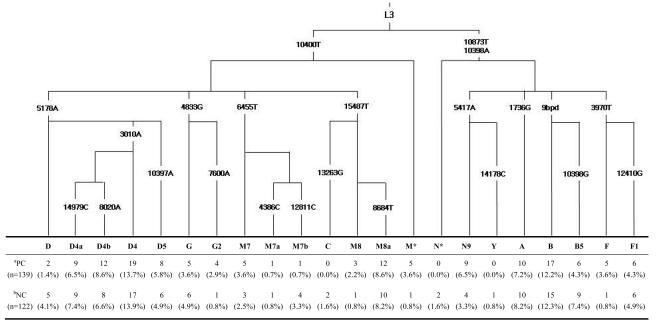
Mitochondrial DNA (mtDNA) variation has recently been suggested to have an association with various cancers, including prostate cancer risk, in human populations. Since mtDNA is haploid and lacks recombination, specific mutations in the mtDNA genome associated with human diseases arise and remain in particular genetic backgrounds referred to as haplogroups. To assess the possible contribution of mtDNA haplogroup-specific mutations to the occurrence of prostate cancer, we have therefore performed a population-based study of a prostate cancer cases and corresponding controls from the Korean population. No statistically significant difference in the distribution of mtDNA haplogroup frequencies was observed between the case and control groups of Koreans. Thus, our data imply that specific mtDNA mutations/lineages did not appear to have a significant effect on a predisposition to prostate cancer in the Korean population, although larger sample sizes are necessary to validate our results.
最近有研究表明,线粒体DNA(mtDNA)变异与人群中的各种癌症有关,包括前列腺癌风险。由于mtDNA是单倍体且缺乏重组,与人类疾病相关的mtDNA基因组中的特定突变会出现并保留在特定的遗传背景中,即单倍群。因此,为了评估mtDNA单倍群特异性突变对前列腺癌发生的可能贡献,我们对韩国人群中的前列腺癌病例和相应对照进行了一项基于人群的研究。在韩国人的病例组和对照组之间,未观察到mtDNA单倍群频率分布的统计学显著差异。因此,我们的数据表明,特定的mtDNA突变/谱系似乎对韩国人群中前列腺癌的易感性没有显著影响,尽管需要更大的样本量来验证我们的结果。
 Zotero 插件